MLK Day is January 15th!

march-on-washington-cover-nb3-700x906If you’re like me, you put a bow on the holidays and then breathed a sigh of relief as you headed home for the break. But here you are heading back to class and MLK Day is already upon you!  You have no time to lose when it comes to planning your MLK Day and Black History Month activities!  So, let’s get right to the point of this post: ReadAloudPlays.com specializes in Black History Month and MLK plays.

In 2021, despite all the Covid-related restrictions, the folks at the Palace Theatre in New Hampshire selected a couple of my plays to enact for Black History Month. I’ve posted the video here so that you can take a look. Whether or not these two plays inspire you to download any of my material, I hope you’ll still share the video with your students. Consider having them watch the production and then read the plays. Or, simply have them follow along with the script while viewing.

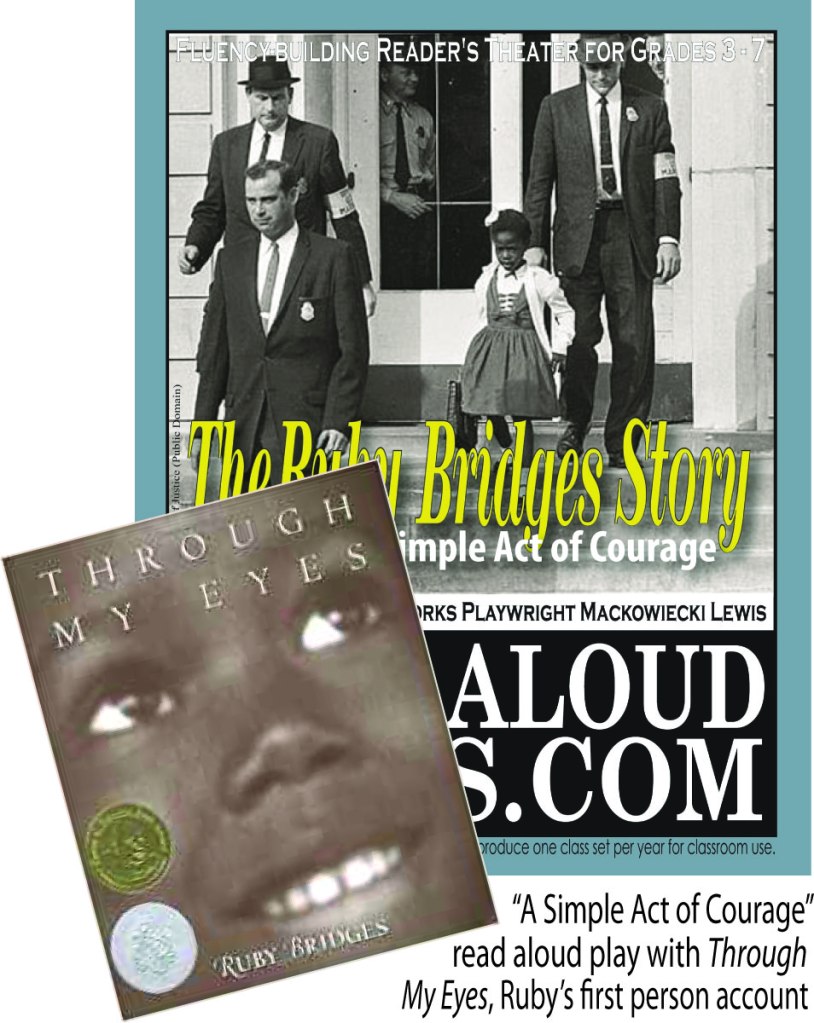
The two plays shown are Martin’s Big Dream, which reveals how incidents from King’s childhood inspired his work, and A Simple Act of Courage, which shares the role Ruby Bridges played in integrating America’s schools. They’re both available in my TpT and Etsy stores.

You’ll also find numerous other plays told from the perspective of Civil Right icons like Jackie Robinson, Claudette Colvin, and Sheyann Webb. One of the hallmarks of a quality historical play for kids is that the story is told through the eyes of a child witnessing the events firsthand. These plays all meet that standard.

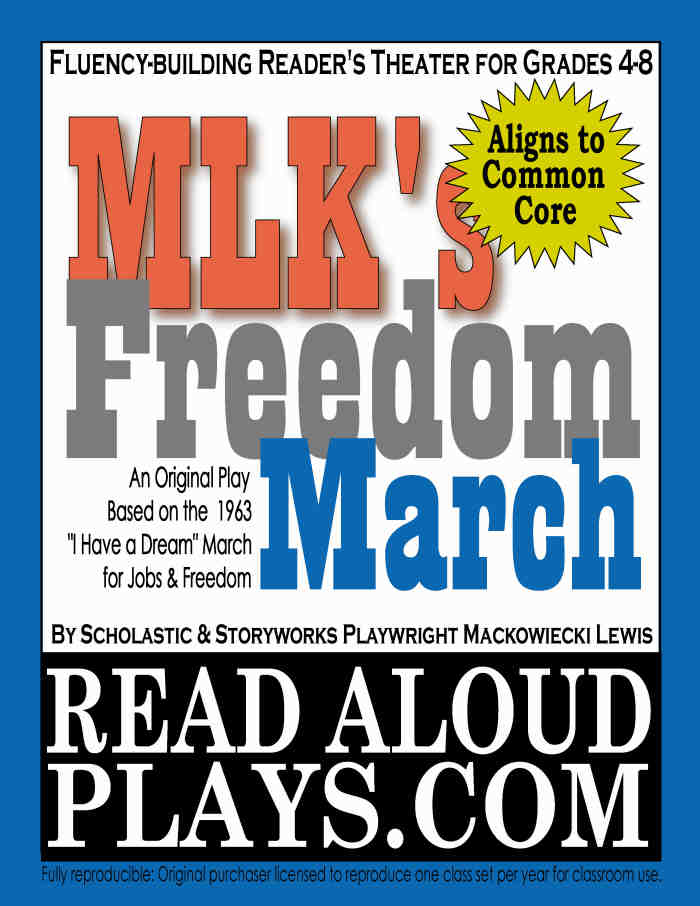
A favorite of mine is MLK’s Freedom March, which is told through the eyes of eleven-year-old Lucy. Her grandmother is dying of cancer, her father is worried about losing his job, and her brother is fired up about The March for Jobs and Freedom, the iconic event where Dr. King delivered his “I Have a Dream” speech. It’s a powerful play with multidimensional characters backed by King’s awe-inspiring speech. 

If you don’t know where else to start, download my free products, Tips for Teaching Marginalized Voices and Traumatic Events and Reader’s Theater Teaching Tips, which outlines best practice when using plays.  Be sure to also download the full previews of my plays deemed sensitive or potentially controversial. When unsure about a text, consider using it for traditional reader’s theater, podcast, or a discussion-based in-class reading rather than a stage production. In such cases, the important content still gets taught without running the risk of someone being offended by a “reenactment” of a traumatic event.

Thank you for continuing Dr. King’s work, and happy directing!

Laugh Out Loud Plays

During my twenty years crafting plays for Scholastic, my assignments have nearly always been of a more serious nature.  The plays, usually about American history, civil rights, or classic short story plays, have typically been well-received, and having used all of them with my own students, I know kids thoroughly enjoy enacting them. Secretly, though, I’ve been yearning to write plays that elicit giggles, guffaws, and belly laughs. I know this because most of the recent titles I’ve crafted—these exclusively for my ReadAloudPlays.com brand— are what I would call “Laugh Out Loud Plays.”

Today I’m releasing two new ones, both crafted with student enjoyment foremost on my mind. The Goldilocks story has no doubt been done nearly to death, but I think my version is unique. Imagine Goldi as a television home renovation expert. With the help of her three little pig contractors, she dares to turn the bears’ dreary, worn out space into their “forever home.” If only the bears were in on it!

The second play, Barbed Wire, is a revision of Guy de Maupassant’s classic cautionary tale, A Piece of String. My editors at Storyworks once termed my String play the best thing I’d ever written (to that point in my career, I hope). String is still available on my TpT store, but there’s little doubt it’s more appropriate for middle school and up. It’s a great play, but again— kind of serious. By changing the setting to the Wild West, making the characters animals, and giving those characters a western dialect, I’ve aged it down while “funning it up.”  

My serious plays remain important. Plays are an exceptional format for introducing students to Claudette Colvin, the Birmingham Children’s Crusade, and Juneteenth. Stories from American history, such as that of the Secret Soldier and the burning of the White House, are a lot more memorable when taught through reader’s theater. And though archaic language is often a barrier to understanding classic short stories like The Monkey’s Paw and Tell-Tale Heart, acting them out gives students “a window of comprehension” and a willingness to engage.   

For certain, there are also important lessons embedded in my newer plays, but none more so than that reading, acting, and performing should be a ton of fun.  You and your kids will love enacting The Pied Piper, Nature Talks Back, The Nose, and now Barbed Wire, and Goldilocks. They’re all ideal for kicking off the school year. Take a gander on my TpT storefront. You can also see videos or hear podcasts of many of the plays—as performed by elementary kids—by clicking on the Performances tab.

Happy directing!

Why Your Students Can’t Pay Attention

When LeBron James drains a three-pointer, he gets more than a big chunk of change. He also gets a hit of endorphins. It’s this hit of hormones that makes him want to score again and again. I’m not a neurologist (nor even much of a brainiac), but I’ve read enough about neurotransmitters such as dopamine and serotonin to understand a bit of the brain science behind motivation. What happens in Lebron’s brain is the same thing we all experience when something gives us pleasure or excitement. It’s especially profound in the developing brains of our students. It’s what motivates a kid to learn to read, to pass tests, to win at wall ball, to make friends, and . . . to level up in Fortnite.

Video games, it seems, are designed to stimulate endorphin production. (So too are the algorithms in social media.) It is what makes video games addictive. In a typical video game, the early levels are easy. A player experiences immediate success and therefore an immediate dopamine hit. As the player advances to higher levels, success is harder to come by, but the player sticks with it because their brain is seeking those endorphins. The problem is that getting endorphins in an artificial environment such as a video game is fun and easy, which means it highjacks a person’s motivation to pursue endorphins in the real world. It’s why your video game addict often lacks the work ethic to become a voracious reader, to earn straight A’s, or to drain three-pointers. Small Spaces may be a great book, but it just can’t compete with Roblox.  

Johann Hari spells all this out in his book, Stolen Focus. He’s compiled vast amounts of research to show how addiction to devices is undermining not just education, but society as a whole. It’s a great read—and it’s especially applicable to educators.

Hari contends that today’s kids are being raised by devices from the time they’re born. When our toddlers need attention, instead of actually parenting we merely hand them a tablet. Neither parent nor child learn to deal with whatever the actual problem is because the device serves as a pacifier.

Hari also contends that ADHD is over-diagnosed. Chronic sleep deprivation due to Internet Gaming Addiction (IGA) is the root cause of classroom hyperactivity and focus issues.  Gamers over-stimulate their brain in the evening hours and consequently can’t fall asleep. Rarely do they reach REM sleep. The chronic fatigue manifests itself just like ADHD, but the solution isn’t daily doses of Ritalin; it’s as simple (and as hard) as turning off devices two hours before bedtime.

We’ve all heard the ed gurus telling us for a while now that kids with laptops, tablets, or cell phones will accomplish whole new levels of academic success. The pandemic, though, exposed the many flaws of such digital thinking, yet today, despite plunging test scores, alarmingly low literacy rates, decreasing motivation, and increasing hyperactivity, we’re still subjecting our kids to online platforms–many of which look a lot like video games.

Maybe it’s time we put away all the devices and got back to some fundamentals such as cursive handwriting (it does all kinds of great stuff in the brain), holding actual books in our hands, counting back change, using measuring tape, microscopes, and beakers.

And performing plays.

You can check out Stolen Focus at most any bookseller or public library. (I’m not including a hot link because I want you to know I’m recommending the book solely on its merits, but here’s as honest a review as you’ll ever find.) You can also check out my plays—most of which were originally published by Scholastic—in my TpT store. Consider welcoming kids back to school with my Winnie-the-Pooh reader’s theater. I’ve taken five of Milne’s best stories and crafted them as one-act plays, each with just 4 or 5 actors. Try splitting your class into small groups and have each learn and perform an act during the first week of school! They’ll love it!

Or, I suppose you could instead just assign them some more time on an online reading app.

(Don’t do it! Use a play!)

Happy directing!

Testing Absurdity

When I first started teaching thirty years ago, the state test was a pencil and paper bubble test. It was spread over a three day period, one hour at a time. The results came back a few weeks later and they were used to inform practice. If our students showed weakness on, say, “locating information,” we knew where we needed to beef up our instruction.  I have no issue with testing students in such a way. These days, however, standardized testing seems to be cumbersome, expensive, bureaucratic, punitive, and time-consuming.              

Frankly, it’s absurd.

At my schools we’re trying to compensate by cramming in all the enjoyable and authentic learning experiences we can. Right now our students are deeply engaged in The Checkbook Project, my free financial literacy / behavioral management / practical math system. Students in our 4th and 5th grade classes have been managing their bank accounts since mid-February, renting or purchasing their desk space, applying for jobs, paying taxes, and buying stuff at auction. As we head into the final trimester, they’ll be starting businesses, buying stocks, and donating to actual charities. This program dominates their every moment in class. When they’re well into adulthood, they’ll reflect on “Checkbooks” as a significant piece of their elementary education.

Our Fact Car Rally Race math facts program is winding down. About a third of the students have either already crossed the finish line or are drawing near the checkered flag. Another third of the class is on pace to demonstrate mastery by year’s end. That leaves the remaining kids in need of tow trucks and roadside mechanics to help catch them up.

Of course, we’re also doing all the customary kinds of work: fractions, figures of speech, physical fitness—and writing. You know kids: they’ll limit their written responses to a single paragraph—or even a single sentence if they can get away with it. But that won’t do given the emphasis on writing multi-paragraph responses on that absurd state test mentioned earlier. So, we’re using my Perfect Paragraphs program to show kids how to expand single paragraphs into multi-paragraph essays. By teaching them how to use their “reason why” supporting sentences as topic sentences for the additional paragraphs, they’re better prepared for that darn test, and more importantly, their future school years.

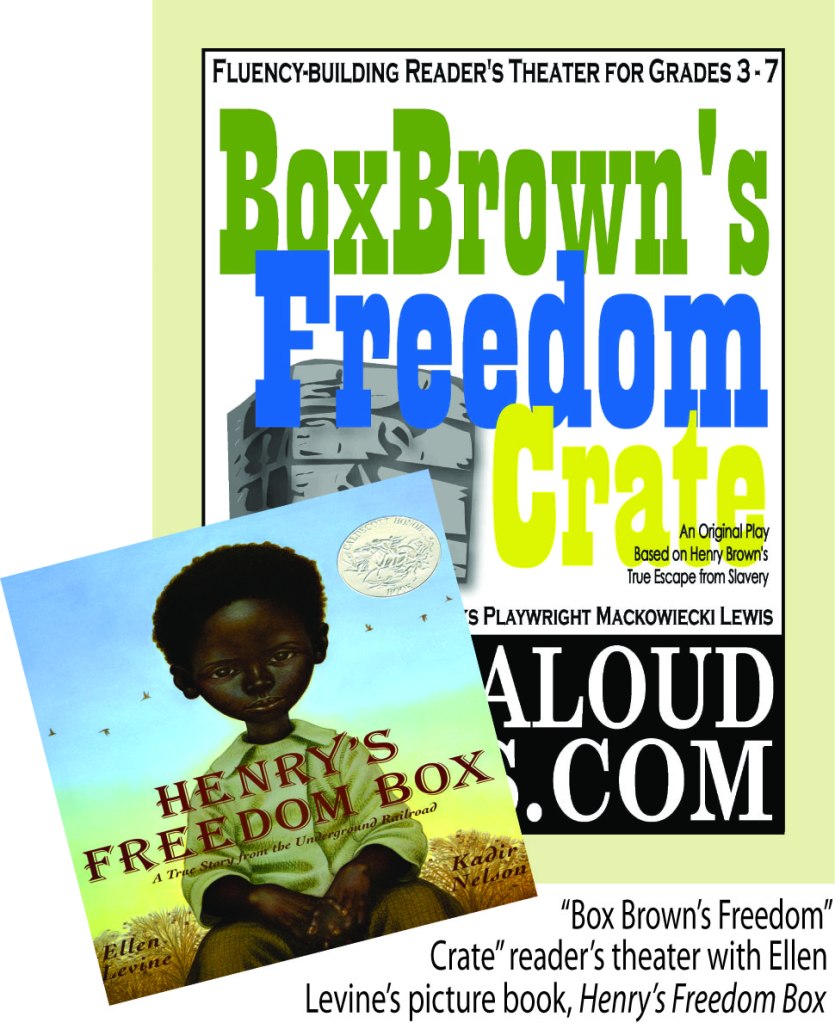
Despite political controversy, we’re delving into slavery.  I’m convinced the likes of Harriet Tubman, Harriet Beecher Stowe, and Dred Scott should be and can be shared tactfully. Among other things, we’ll be reading my researched-based reader’s theater scripts about Box Brown and Juneteenth.   

Speaking of theater, we’re preparing a full stage presentation of my play The Nose, replete with a giant papier-mâché nose costume. It’s based on Gogol’s classic short story of the same name and it’s full of mind-bending humor about bureaucratic absurdity. It’ll take a couple of months to put it all together, but it’ll make for a mind-bending conclusion to a yet another school year full of silliness and absurdity—all the stuff kids remember after all that standardized testing has been forgotten.

To check out any of my programs for use this year or next, visit my storefronts at TpT or Etsy. Be sure also to visit my school page, DailyPlatypus.org.   

Happy directing!

Plays and Paired Texts for Black History Month

Here are ten compelling paired texts with which to recognize black history month while meeting numerous Language Arts standards. All the plays are based on the given event–not it’s paired text (in most cases the play was published before the given book). That means each pairing represents distinctly unique points of view (Literature CCSS #6), making for livelier discussions and quality comparisons (CCSS Lit #7). And because these plays are based on real events, they’ll also satisfy CCSS Informational Text #6. Each includes a comprehension activity, too, assuring your students will satisfy numerous other standards as well. And because almost all my plays were originally commission by and published in Scholastic’s Storyworks and Scope magazines, they’ve been professionally vetted, making them the best reader’s theater available. Only six of the ten are shown here–just click on the image to preview or purchase on my Etsy or TeachersPayTeachers storefront. Also be sure to check out these recorded performances of “Martin’s Big Dream” and “Ruby Bridges: A Simple Act of Courage” by The Palace Youth Theater. Happy directing!

Plays: A Series of Good Times

My colleague popped in my room the other day to share his experience using my Sleepy Hollow play. His hope is to stage a simple production for Halloween, but after the first reading, he very nearly punted. His class of Covid-delayed readers, he said, could barely get through the script. Still, rather than thinking the script is too difficult, he stuck with it. A second reading was better—especially after he’d reviewed a few key vocabulary words.  Then, after sharing segments from the 1949 Sleepy Hollow Disney cartoon, Ichabod and Mr. Toad, the class bought-in and were soon fighting over who’d get to be Knickerbocker, Brom Bones, and Gunpowder. Now they’re practicing independently, their enthusiasm lending itself to improved fluency.

I share this because this is the way read aloud plays work. The magic comes when scripts are read multiple times. Yes, they’ll slog through the first reading, but when they read it repetitively, their fluency improves (dare I say) dramatically. I’d go so far as to say we ought to be having our kids read everything twice: every play, every article, every chapter of every book.  As Narnia author C.S. Lewis once said, “If you haven’t read a book at least twice, you haven’t read it.” The thing about a play is that kids are willing to read it over and over again.

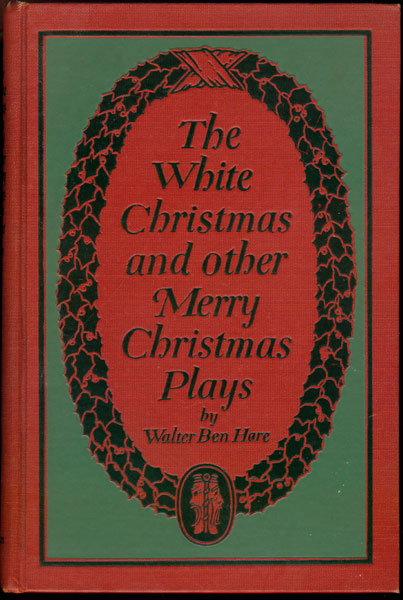
In researching prospective new plays to share this Christmas, I came across the work of Walter Ben Hare. Back in 1917 he wrote a book called The White Christmas and Other Merry Christmas Plays. His work is too dated to re-use, but the notes he included in the prologue are charming and spot-on.

“The director’s aim should be to establish a happy co-operation with the players that will make the whole production, rehearsals, dress rehearsals and final performance, a series of good times crowned by a happy, if not perfect, production,” says Hare. “The director should always strive to be cheerful and happy, ever ready to give advice and ever ready to ask for advice, even from the youngest players. Take them into your confidence. Discuss color schemes, costuming, property making, lighting and scenic effects with your actors.”

I like that! Producing a play should be fun. It’s not a time to be handing out letter grades, nor a time to channel your inner Kubrick. In fact, it doesn’t really matter if the play turns out to be a “perfect production,” as Ben Hare would have you aim. A “happy” performance is the greater goal!  

That doesn’t mean it’ll be easy. Your students will stumble. They’ll stutter. They’ll leave their scripts at home. But some tenacity and determination like that of my colleague will be worth it in the end. As Hare concludes, “The pleasure of the work and the pride in a production well done, will amply repay an ungrudging lavishment of time and labor.”

For a pleasurable production this Halloween, Veterans’ Day, or Christmas, start with a visit to my storefront at TpT or Etsy.. Most were originally published in Scholastic’s Storyworks magazine, so you know they’re of the highest quality.

Happy directing!

Build better Readers, Writers, and Math Masters from Day One

My Fact Car Rally program is overdue for an update, but that doesn’t mean you can’t snag a copy right now and use it to lead your elementary students toward mastery of the math facts. When the update comes out, you’ll have full access to the revision. Did I say that kids love Fact Car Rally? They do! Much more so than competing programs—and it’s more effective, too! Follow the simple directions to create your racetrack during pre-service week, and then give your kids some low-key time during Week One to create their “fact cars.” By the second week, your students will be well on their way to true mastery of the facts–the foundation of all things math. Preview or purchase FCR here, and be sure to check out the tutorial video here.

In addition to building math masters, build better writers in grades 3 through 7 with my Super Sentences and Perfect Paragraphs program. It’s a teacher-friendly, student-friendly, daily writing method—the only thing you’ll need all year. No complicated teacher editions to wade through. No workshops to attend. It’s practically plug and play! Check out both the full version, the various ala-carte pieces, and the tutorial videos.

If you’ve never read my shtick about repetitive reading and how read aloud plays build beautiful readers, check it out here, and then snag some fun plays plays to start the year.  Peter Rabbit, Nature Talks Back, and my latest, a “slightly twisted” version of The Pied Piper (see previous post) are all fantastic icebreakers. They’re all available on my TpT storefront.

While you’re there, don’t forget that Halloween is just around the corner, so grab copies of The Monkey’s Paw, Tell-Tale Heart, the Birth-mark, or the Mad Scientist’s Daughter for your Gothic RT!

Happy directing!

Greatness Isn’t Born

I don’t usually do reviews, but I just finished an awesome book called The Talent Code by Daniel Coyle (2009, Bantam). Greatness isn’t born, argues the author. It’s grown. Think about that for a minute and then apply it to your classroom.

Greatness isn’t born. It’s grown.

There are no “naturally gifted” kids. Your students didn’t inherit their spelling/math/reading deficiencies from a parent. In fact, Coyle shows that IQ and physical attributes are largely irrelevant.

And he proves it using brain science.

Now, I’ve written about neuroscience before. Brain research by Lev Vygtsky and other experts is the basis for using reader’s theater to build fluency. The repetitive, “slow reading” nature of practicing a play builds the neural pathways that make mastery possible. Coyle, though, takes it further, citing more contemporary research. I’m stoked because Coyle’s work not only justifies using reader’s theater, it also affirms the effectiveness of my Super Sentences writing program, which relies on targeted, mistake-focused practice. And Perfect Paragraphs, which has to do with being imitative. And my Fact Car Rally program, too!

The book is chock full of concepts important to learning. It explains why special education kids are often mistakenly perceived as having short-term memory disabilities. It reveals what’s behind vacation “brain drain,” and how speed-focused oral reading fluency leads to mediocrity, and why stuff like Harry Potter and Twilight can ignite an entire generation of writers.

It also honors great teachers. What we do can’t be delivered by an online platform, nor scripted in a textbook!

So, I encourage you to grab a copy of The Talent Code off Ebay. (A copy used is less than $10 and you’ll be able to write notes in it!) Despite being all about neurons, synapsis and myelin, it’s an engaging read. (It’s kind of gone viral within my school setting.) Plus, it’ll have a huge impact on your teaching.

And while we’re on the subject, consider building some slow-reading, mistake-focused readers with some deep practice using my read aloud play scripts! For Women’s History Month you might want to try Girl. Fighter. Hero! about “the female Paul Revere,” or The Secret Solider, which tells the story of Deborah Samson, America’s first female soldier. You could also try my original play about Sacagawea, or my story from the Montgomery Bus Boycott about Claudette Colvin.   

Happy directing!   

Monster Plays for Spring

I recently surveyed my fifth graders about what they’d like more of. It probably won’t surprise you that “more Zoom” received zero votes. “More plays,” on the other hand, won hands-down. Sure it did! Whether in-person or remote, reader’s theater works. Plays teach kids to read purposefully and thoughtfully rather than merely for speed. They always have developmentally-appropriate parts for both your advanced readers and your most reluctant ones. And once parts are assigned, you don’t have to prompt kids to chime in. Best of all, plays are fun.

With my kids coming back to class, I want to have fun again, so I’m busting out my favorite monster play: Cyclops. It has some campy lines and a gruesome story, making it super appealing to kids (hint: Cyclops likes Greek food). Here are some other enjoyable plays for spring: Peter Rabbit (it seems too young for 5th and 6th graders, but they love doing it—especially when they get to perform it for youngers); How Jackie Saved the World (The Peanut Vendor and the Hot Dog Man emerge from the grandstands to tell Jackie Robinson’s story); And Fly Me to the Moon (it features Walter Cronkite stuffed inside a TV-shaped box!).

This time of year, many classrooms are focused on the American Revolution.  Though the subject matter is more serious, the plays are just as fun: The Secret Solider (how Deborah Samson disguised herself as a man in order to join the military); Girl. Fighter. Hero.  (“the female Paul Revere”); Betsy Ross: Fact or Fiction (more about examining historical proof than it is about Betsy herself); And Two Plays from the American Revolution (2 for 1–the bald eagle and the Liberty Bell).

I hope you’re as excited as I am to have kids back in class, but whether you’re in-person or remote, give my critically-acclaimed RT a try.  Most of it was originally published by Scholastic, it always comes with standards-based comprehension activities, and need I say it again? It’s fun! You kids will love it. Happy directing!

Ten Plays for Black History Month

February is Black History Month. While I encourage you to acknowledge it with some dedicated activities, I’m also reminded that black history is American history; it need not be limited to a single month! The end of the Civil War, Jackie Robinson’s breaking of baseball’s color barrier, and MLK’s “I Have a Dream” speech certainly rank among some of the most significant moments in American history. With that in mind, here are ten great paired texts with which to recognize Black History Month while also meeting numerous standards. All the plays are based on the given event–not it’s paired text (in most cases the play was published before the given book). That means each pairing represents distinctly unique points of view. Each includes a comprehension activity, too, and all were originally commission by or published in Scholastic’s Storyworks and Scope magazines, so they’ve been professionally vetted, making them the best reader’s theater available. Clicking on an image will take you to either my Etsy or TpT stores. You can also download free previews of each play on my Black History & Civil Rights page, and you’ll find FREE Google Docs versions of the comprehension quizzes on TpT. Happy directing!