The Miracle of Public Education

People like to talk about how there’s a Starbucks on every corner. Whether true or not, the Starbucks brand is impressive. In fact, there are about 16,000 Starbucks locations in the U.S. That’s really incredible!

Yet it’s totally junior varsity compared to America’s Public School System. While we’re all impressed by Starbucks, our School System has around 100,000 locations. One hundred thousand! That means we’re running six schools for every Starbucks. Now think about how much more challenging it is to run a school than a coffee franchise—let alone six schools—or how much more challenging it is to be a teacher than a barista.  

McDonald’s raves about how many burgers it’s served: “Billion and Billions” it says on its signs.  Well, on average, McD’s serves 6 1/2 million burgers per day. That’s an impressive number—unless you compare it to America’s Public School System. We teach 74 million students per day. Seventy-four million! That’s 11 kids for every burger sold. No matter how you pickle it, there’s no comparing frying up a burger to teaching eleven kids how to read, write, and calculate the surface area of a hamburger wafer. 

Yes, I know all these school districts and schools are “independent” entities, but so too is a Starbucks franchise. The fact is, given the enormous task of teaching, feeding, nurturing, and babysitting America’s kids, there is no corporation in the world that can compare with the American Public School System. None. Not even Amazon.

And yet, when surveyed, only 19% of Americans says our school system is doing a good job.  Wait. Stop the press. When those same people are asked about the school system in their own state, suddenly 44% say the schools in their own state are doing well. But hang on yet again! When those people are then asked about their local schools, 79% give them favorable grades. How can this be?

Setting aside media bias and political propaganda (there’s enough of that to cover every Big Mac ever made with a double portion of special sauce), it suggests that the closer one is to the action, the more they appreciate what’s going on. You see, we have a distant view of the school system as a whole, yet because own kids and grandkids go to the local school, we tend to be more aware and appreciative of all the hard work being done there.  At the local level, too, people tend to see the students and their families as accountable, not just the school itself, which leads us to the gist of this post. You see, there’s also research that shows the more involved one is as a parent, the better one’s child will do in school.

Well of course!

When parents read with their kids, check their homework, communicate regularly with the teachers, hold their children accountable, and validate report cards, kids do better.

When parents attend assemblies, chaperone trips, encourage their kids to participate, and insist that vacations be taken during actual vacation periods, kids do better.

Hands-on parenting benefits kids. Having done this gig for more than 30 years, I can attest to the validity of such research. 

Our schools are not without their problems, weaknesses, and failures. But our system of Public Education really is miraculous. Now, allow me to make a small connection to my specialty, reader’s theater.

One way to encourage parent involvement is to use plays. When given a play script to learn, your kids will be more likely to read at home, and their parents will be more likely to read with them. When you use plays, parents will want to be more involved, such as with set building and costuming.  And finally, when kids are going to be on stage, their parents are more likely to show up.

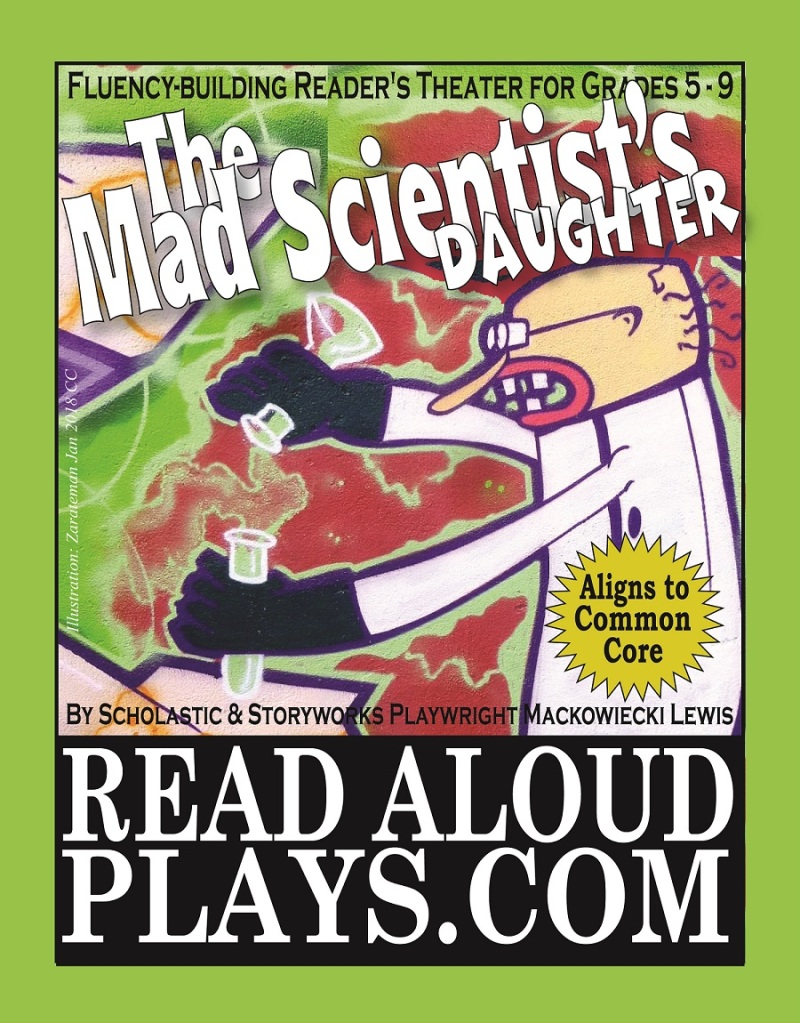
Encourage the parents of your students to be actively involved in the miracle of public school by producing a play. October is a great time to try one of my Gothic classics: The Monkey’s Paw, The Birth-mark, the Mad Scientist’s Daughter, and Tell-Tale Heart.

Happy directing!

Why Your Students Can’t Pay Attention

When LeBron James drains a three-pointer, he gets more than a big chunk of change. He also gets a hit of endorphins. It’s this hit of hormones that makes him want to score again and again. I’m not a neurologist (nor even much of a brainiac), but I’ve read enough about neurotransmitters such as dopamine and serotonin to understand a bit of the brain science behind motivation. What happens in Lebron’s brain is the same thing we all experience when something gives us pleasure or excitement. It’s especially profound in the developing brains of our students. It’s what motivates a kid to learn to read, to pass tests, to win at wall ball, to make friends, and . . . to level up in Fortnite.

Video games, it seems, are designed to stimulate endorphin production. (So too are the algorithms in social media.) It is what makes video games addictive. In a typical video game, the early levels are easy. A player experiences immediate success and therefore an immediate dopamine hit. As the player advances to higher levels, success is harder to come by, but the player sticks with it because their brain is seeking those endorphins. The problem is that getting endorphins in an artificial environment such as a video game is fun and easy, which means it highjacks a person’s motivation to pursue endorphins in the real world. It’s why your video game addict often lacks the work ethic to become a voracious reader, to earn straight A’s, or to drain three-pointers. Small Spaces may be a great book, but it just can’t compete with Roblox.  

Johann Hari spells all this out in his book, Stolen Focus. He’s compiled vast amounts of research to show how addiction to devices is undermining not just education, but society as a whole. It’s a great read—and it’s especially applicable to educators.

Hari contends that today’s kids are being raised by devices from the time they’re born. When our toddlers need attention, instead of actually parenting we merely hand them a tablet. Neither parent nor child learn to deal with whatever the actual problem is because the device serves as a pacifier.

Hari also contends that ADHD is over-diagnosed. Chronic sleep deprivation due to Internet Gaming Addiction (IGA) is the root cause of classroom hyperactivity and focus issues.  Gamers over-stimulate their brain in the evening hours and consequently can’t fall asleep. Rarely do they reach REM sleep. The chronic fatigue manifests itself just like ADHD, but the solution isn’t daily doses of Ritalin; it’s as simple (and as hard) as turning off devices two hours before bedtime.

We’ve all heard the ed gurus telling us for a while now that kids with laptops, tablets, or cell phones will accomplish whole new levels of academic success. The pandemic, though, exposed the many flaws of such digital thinking, yet today, despite plunging test scores, alarmingly low literacy rates, decreasing motivation, and increasing hyperactivity, we’re still subjecting our kids to online platforms–many of which look a lot like video games.

Maybe it’s time we put away all the devices and got back to some fundamentals such as cursive handwriting (it does all kinds of great stuff in the brain), holding actual books in our hands, counting back change, using measuring tape, microscopes, and beakers.

And performing plays.

You can check out Stolen Focus at most any bookseller or public library. (I’m not including a hot link because I want you to know I’m recommending the book solely on its merits, but here’s as honest a review as you’ll ever find.) You can also check out my plays—most of which were originally published by Scholastic—in my TpT store. Consider welcoming kids back to school with my Winnie-the-Pooh reader’s theater. I’ve taken five of Milne’s best stories and crafted them as one-act plays, each with just 4 or 5 actors. Try splitting your class into small groups and have each learn and perform an act during the first week of school! They’ll love it!

Or, I suppose you could instead just assign them some more time on an online reading app.

(Don’t do it! Use a play!)

Happy directing!

Your Juneteenth Playlist

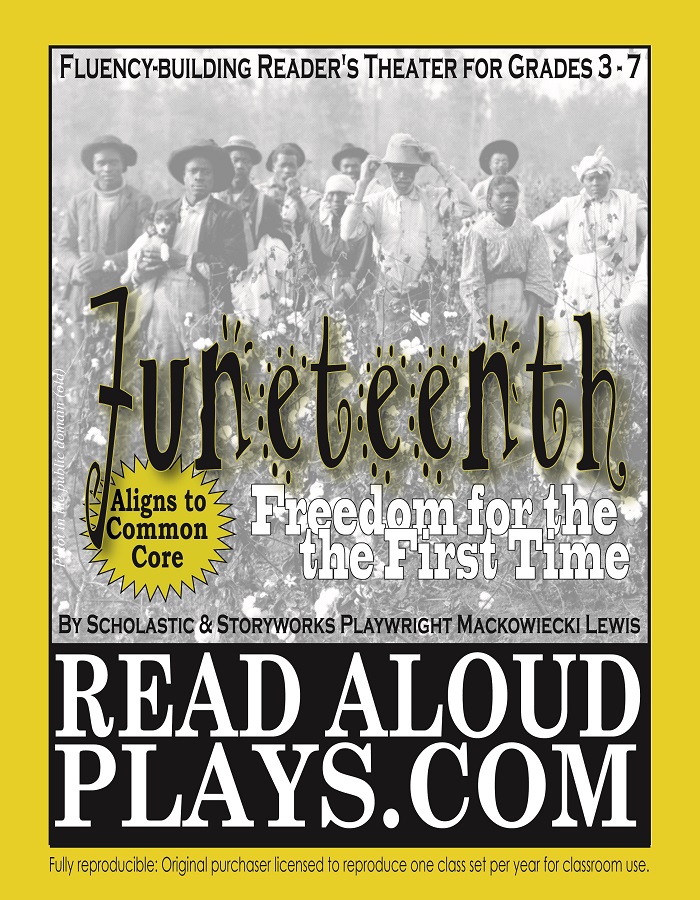
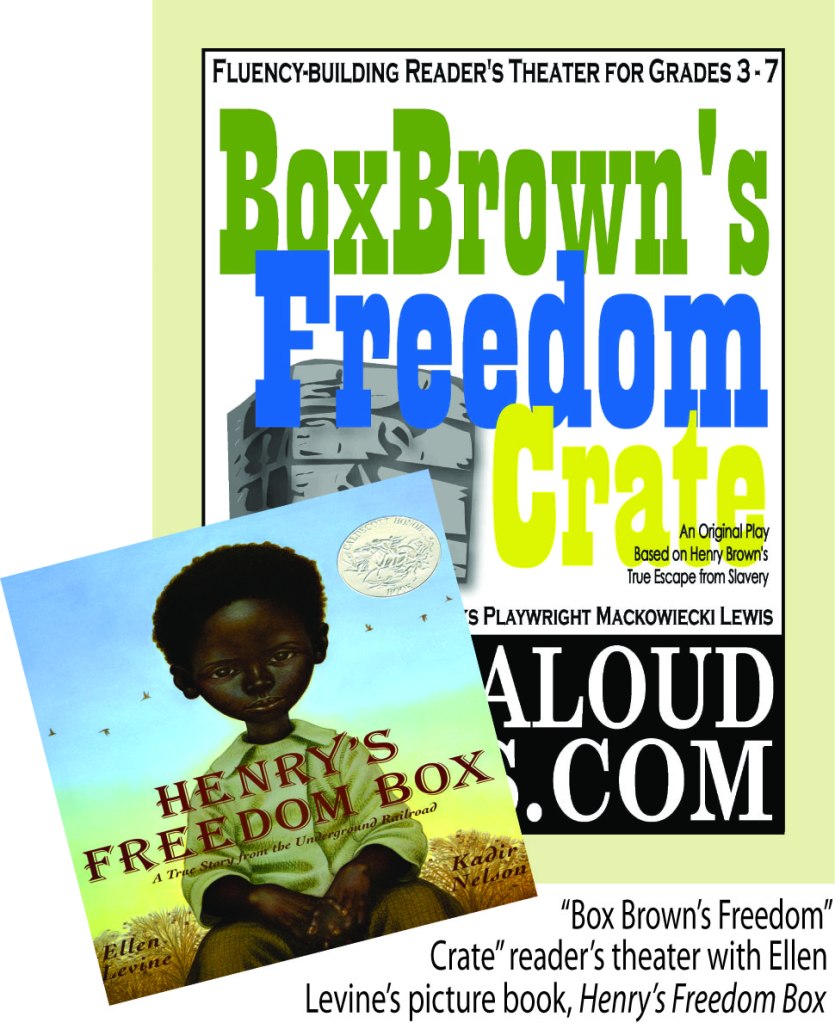
My most poignant play—and it’s perfect for celebrating Juneteenth! Based on actual slave narratives, Freedom for the First Time is historically-accurate, kid-friendly, and comes embedded with comprehension questions and historic photos. It’s the narrative of ten-year old Tyree, a slave during the time of the Civil War. Like many slaves, Tyree believes whatever her masters say. But when Tyree’s brother, Sweet Walter, arrives with a band of Union soldiers to tell her the war is over, she and her family experience their day of Jubilee, the day they know freedom for the first time. Pair it with Days of Jubilee, Patricia and Frederick McKissack’s exceptional non-fiction book about slavery and the Civil War. Click here to see the fantastic things the kids at the Baker Montessori School in Houston did with the script! It’s available on TpT and Etsy, and like all my plays, it includes performance rights. Be sure to also check out Box Brown’s Freedom Crate and Richard Wright & the Library Card. Happy directing!

Plays and Paired Texts for Black History Month

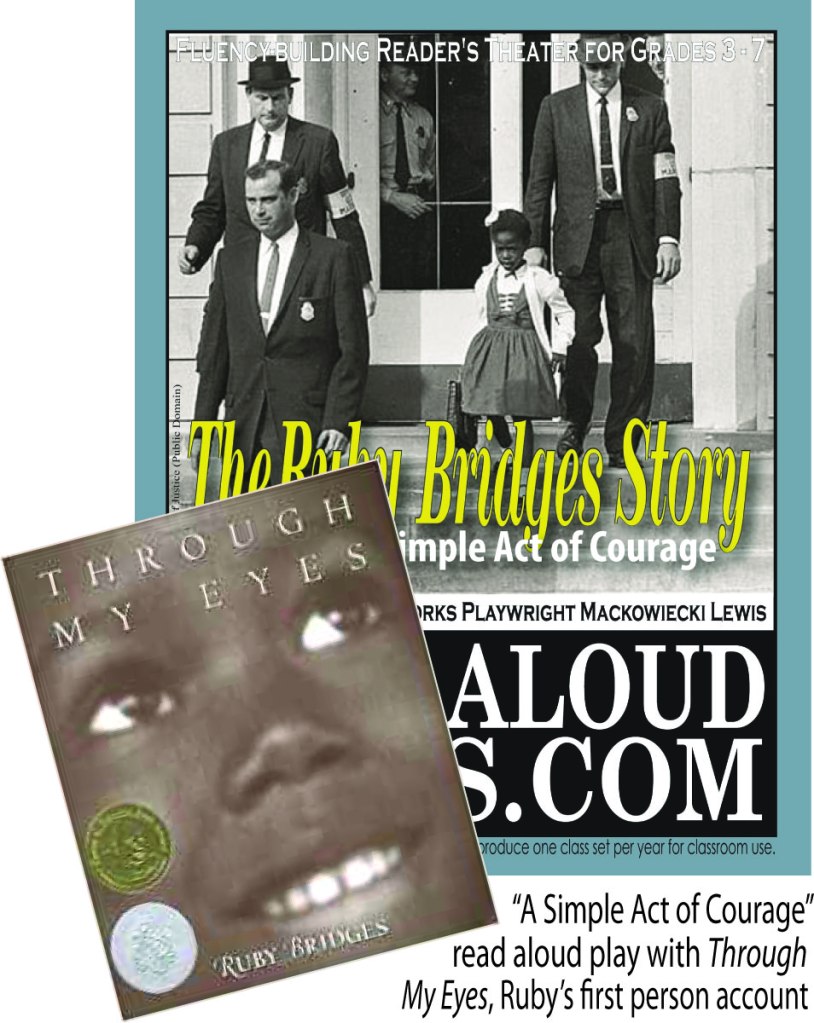
Here are ten compelling paired texts with which to recognize black history month while meeting numerous Language Arts standards. All the plays are based on the given event–not it’s paired text (in most cases the play was published before the given book). That means each pairing represents distinctly unique points of view (Literature CCSS #6), making for livelier discussions and quality comparisons (CCSS Lit #7). And because these plays are based on real events, they’ll also satisfy CCSS Informational Text #6. Each includes a comprehension activity, too, assuring your students will satisfy numerous other standards as well. And because almost all my plays were originally commission by and published in Scholastic’s Storyworks and Scope magazines, they’ve been professionally vetted, making them the best reader’s theater available. Only six of the ten are shown here–just click on the image to preview or purchase on my Etsy or TeachersPayTeachers storefront. Also be sure to check out these recorded performances of “Martin’s Big Dream” and “Ruby Bridges: A Simple Act of Courage” by The Palace Youth Theater. Happy directing!

Greatness Isn’t Born

I don’t usually do reviews, but I just finished an awesome book called The Talent Code by Daniel Coyle (2009, Bantam). Greatness isn’t born, argues the author. It’s grown. Think about that for a minute and then apply it to your classroom.

Greatness isn’t born. It’s grown.

There are no “naturally gifted” kids. Your students didn’t inherit their spelling/math/reading deficiencies from a parent. In fact, Coyle shows that IQ and physical attributes are largely irrelevant.

And he proves it using brain science.

Now, I’ve written about neuroscience before. Brain research by Lev Vygtsky and other experts is the basis for using reader’s theater to build fluency. The repetitive, “slow reading” nature of practicing a play builds the neural pathways that make mastery possible. Coyle, though, takes it further, citing more contemporary research. I’m stoked because Coyle’s work not only justifies using reader’s theater, it also affirms the effectiveness of my Super Sentences writing program, which relies on targeted, mistake-focused practice. And Perfect Paragraphs, which has to do with being imitative. And my Fact Car Rally program, too!

The book is chock full of concepts important to learning. It explains why special education kids are often mistakenly perceived as having short-term memory disabilities. It reveals what’s behind vacation “brain drain,” and how speed-focused oral reading fluency leads to mediocrity, and why stuff like Harry Potter and Twilight can ignite an entire generation of writers.

It also honors great teachers. What we do can’t be delivered by an online platform, nor scripted in a textbook!

So, I encourage you to grab a copy of The Talent Code off Ebay. (A copy used is less than $10 and you’ll be able to write notes in it!) Despite being all about neurons, synapsis and myelin, it’s an engaging read. (It’s kind of gone viral within my school setting.) Plus, it’ll have a huge impact on your teaching.

And while we’re on the subject, consider building some slow-reading, mistake-focused readers with some deep practice using my read aloud play scripts! For Women’s History Month you might want to try Girl. Fighter. Hero! about “the female Paul Revere,” or The Secret Solider, which tells the story of Deborah Samson, America’s first female soldier. You could also try my original play about Sacagawea, or my story from the Montgomery Bus Boycott about Claudette Colvin.   

Happy directing!   

Promoting the Work and Words of Dr. King

At the height of Covid restrictions, the Palace Youth Theatre in New York state crafted this wonderful pairing of my Ruby Bridges script and my play about Martin Luther King’s childhood. With MLK Day just a few weeks away, and Black History Month right behind it, consider sharing these professionally-produced performances with your students. Perhaps you’ll be inspired to try a few of my other critically-acclaimed plays promoting the work and words of Dr. King and other crusaders. They’re available on my TeachersPayTeachers and Etsy storefronts. Happy directing!

War Stories

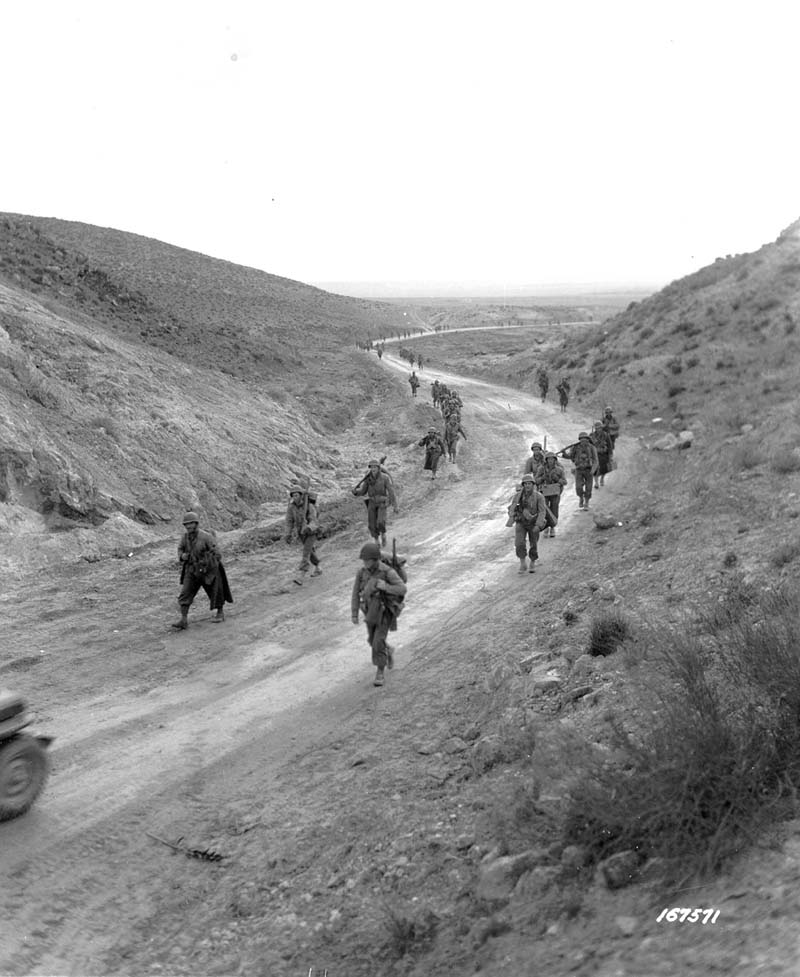
Kasserine Pass, Feb. 1943 (PD McGary)

Both my parents served in the military. My mom had a short stint as a WAC in DC before landing in the secretarial pool at the White House. She eventually had a temporary assignment working for Matthew Connelly, Harry Truman’s executive secretary. She used to tell a story about sneaking down a long corridor in hopes of seeing the presidential swimming pool before being caught by a guard and sent back to her post. Despite her brush with security, she was eventually offered a permanent position but, regretfully I suspect, turned it down because the bus commute from her quarters in Virginia was too long.  Those, she would later tell me, were the best years of her life.

My dad, meanwhile, served in both World War II and Korea. I’m told his experiences were vast and extreme, that he piloted a plane, that he commanded a POW camp, that he was at the disastrously fierce Battle of Kasserine Pass. But he himself never spoke of any of it. Not a word. For him it was far too painful—as it is for many veterans. 

It was with them in mind that I crafted “War Stories” for Scholastic several years ago.  It speaks to the pain of war, the sacrifice of those who’ve served, and the meaning of Veterans’ Day. I encourage you to share it with your students in grades four and up prior to the holiday on November 11.

Happy directing.    

A New Play for Halloween

Back a hundred years ago, ghoulishness was captured in short stories rather than comic books. Writers like Poe, Shelley, and Stevenson creeped out their audiences with dark tales of superstition, mystery, and insanity. The Gothic themes they created have been permeating literature, television, and cinema ever since. Case in point, for the last couple of years I’ve been not-quite-binge watching episodes of Dark Shadows, the Gothic TV show about Barnabas Collins—arguably the world’s second-most famous vampire (Step aside, Edward). The show’s witches, werewolves, and headless dudes had me mesmerized when it originally aired back in the 1960’s. Now, viewing the rather campy soap through adult eyes, I’m recognizing that all its creepiness came from classic short stories like The Cask of AmontilladoFrankenstein, and The Headless Horseman. They’re all in there! Go figure.

Your students know these themes, too. They’ve seen them on the Simpsons and Family Guy, in Goosebumps and Marvel Comics. But do they know from whence they come?  Though the archaic language and complex structures of these classic tales present barriers for most middle grade readers, you can make the stories more accessible by pairing them with reader’s theater. And what better a time to do it than Halloween?

So what if your students are mesmerized by Venom and Doctor Octopus? There are plenty of mangled monsters and the criminally insane in W.W. Jacob’s classic, The Monkey’s Paw, Poe’s The Tell-Tale Heart, and Hawthorne’s The Birthmark. They’ll also find that familiar ol’ headless horseman in Sleepy Hollow, and a hapless ghost in Twain’s A Ghost Story. Finally, I’ve just released my version of Rappaccini’s Daughter.  No, your kids won’t find it Pennywise-creepy or Slenderman-scary, but its chemical concoctions and mad scientists make it very nearly as engaging. Most certainly, it’s a key to unlocking the original’s subtleties and complexities.    

All these plays are available on my TeachersPayTeachersEtsy, and Amazon storefronts. They’re critically-acclaimed. They’re cheap. And they each come with a comprehension exercise. Suitable for reader’s theater, podcast radio drama, or full stage production, they’re perfect for fifth graders and up— but get started early to have them well-rehearsed by Halloween.

Happy directing!

Six New Plays!

When last November a friend chided me for never having any free time, I decided to go on a one month writing sabbatical. It soon became a two month writing sabbatical—then six and eventually eight. I must admit, I didn’t miss the grind of slogging through another chapter, the gut punch of yet another rejection letter, or the stress of trying to balance my personal life on top of teaching on top of writing. But with summer came my annual furlough and the chance to reconnect with my keyboard. Though I’ve yet to tackle the enormous task of researching lit agents and crafting queries, I did manage to put together six new plays. Six! Granted, most of these plays were already written—usually for Scholastic—so they merely needed to be re-packaged, but you’d be surprised how much work goes into the task.

No play I’ve ever written has been more fun than The Nose. It’s Nikolai Gogol’s short story about a Russian man who awakes one morning to discover that his nose has fled his face. When he goes looking for it, he realizes the nose is masquerading as a government official. It’s an unforgettable example of farce. The events in the story cannot be explained—though students may have a lot of fun trying. They’ll have a fun time staging it, too.  In my classroom, we built a papier mâché nose and stuck a kid inside. We also worked on our Russian accents, holding a “Talk Like a Russian Day” in which we did all our lessons while trying to emulate the cosmonaut from the movie Armageddon. We had a blast. The play is from my Scholastic book, Read Aloud Plays: Classic Short Stories, which is now out-of-print. I’ve wrapped it up with a comprehension activity and a new easier-to-read format. It’s perfect for back-to-school whether in-person or online. Start the school year talking to your kids in a Russian accent, you say? What a great way to break the ice!

Along with The Nose, I’m also releasing three other plays, but you’ll have to visit one of my digital download sites to check them out. They’re all available on TeachersPayTeachers, my Etsy store, as well as Amazon. In the next couple of weeks I’ll also be releasing the fifth and sixth plays: The Mad Scientist’s Daughter and Nature Talks Back. I’m excited about both of them. I hope you will be too.

Cheers to a successful new school year! Let’s hope we finally get past the pandemic!

Happy directing!

Commemorating Juneteenth

My most poignant play—and it’s perfect for celebrating Juneteenth! Based on actual slave narratives, Freedom for the First Time is historically-accurate, kid-friendly, and comes embedded with comprehension questions and historic photos. It’s the narrative of ten-year old Tyree, a slave during the time of the Civil War. Like many slaves, Tyree believes whatever her masters say. But when Tyree’s brother, Sweet Walter, arrives with a band of Union soldiers to tell her the war is over, she and her family experience their day of Jubilee, the day they know freedom for the first time. Pair it with Days of Jubilee, Patricia and Frederick McKissack’s exceptional non-fiction book about slavery and the Civil War, or try creating a podcast performance or Zoomer’s Theater play. Click here to see the fantastic things the kids at the Baker Montessori School in Houston did with the script! It’s available on my Etsy storefront, and like all my plays, it includes performance rights. Happy directing!