MLK Day Inspiration

Click on the cover to preview at TpT!I’ve been fortunate to have forged a lasting relationship with Scholastic publishers, particularly the wonderful editors at Storyworks and Scope magazines. Through my work with them I’ve developed a reputation for writing compelling reader’s theater about Martin Luther King and African-American history in general. Somehow, I’ve been able to accurately represent the historical events and, more importantly, convey the spirit of Dr. King’s work through such plays as “Sitting Down for Dr. King.” With MLK Day upon us, and given that February is Black History Month, I want to encourage you to give some of my reader’s theater scripts a try.

I’m particularly proud of “Sitting Down.” I remember struggling over it when I was writing it back in 2002.There I was, bouncing one bad idea after another off my laptop screen, regretting having accepted the contract at all, when I realized how very simple my task was in comparison to the mammoth challenge undertaken by Dr. King. Soon thereafter I crafted the fictional story of “David,” a twelve-year-old white kid frustrated that these African-American college students were getting in the way of his birthday shortcake at the Woolworths. “Sitting Down” has since appeared in three different Scholastic venues including Storyworks, a text book series, and a leveled reading set, but I’m proud of it because it has a powerful ending that I believe Dr. King would have respected.

Click on the cover to preview or purchase!I think my play, “Gonna Let it Shine” also conveys the spirit of Dr. King’s work. It’s based upon the true story of Sheyann Webb, who was just eight years old when she braved tear gas and posse men while marching alongside Dr. King. She became known as “Dr. King’s Youngest Freedom Fighter,” and her story is the subject of the Disney movie, “Selma, Lord, Selma.” The play originally appeared in Storyworks under the title “Pigtails & Protests.” In the process of re-writing it for release on TeachersPayTeachers, I had the privilege to talk with Sheyann herself, who is today–some fifty years later–a public speaker and Civil Rights advocate. It was surreal to speak with someone who in my writing was still just a child. It was inspiring to connect with someone who not only knew Dr. King and numerous other heroes of the Movement, but was in fact a Civil Rights hero in her own right.

We Shall Overcome” tells the story of the Birmingham Children’s Crusade. That’s the event where students, some nearly young as Sheyann, were attacked by police dogs and knocked to the ground by blasts from fire hoses. News coverage of their sacrifice swayed worldwide public opinion in favor of desegregation.

The Girl Who Got Arrested,” meanwhile, tells the true story of Claudette Colvin, the first person to be hauled off a city bus and tried in court for defying Montgomery’s segregated busing law. Her story is depicted in the book, “Twice Toward Justice.” I certainly don’t want to diminish the work of Rosa Parks, but in my humble opinion, Claudette’s story is far more compelling.

One of my “under sung” plays is “MLK’s Freedom March.” It’s a work of historical fiction about a girl named Lucy who helps her ailing grandmother get to Washington to hear MLK’s “I Have a Dream” speech. There’s also “In the Jailhouse with Dr. King,” about a troubled teenage who turns it around when he witnesses King’s calm demeanor in the face of violence during the Bus Boycott. These and other plays capture the essence of MLK’s work. Consider celebrating MLK Day and/or Black History Month in your classroom by picking any three, dividing your class into three groups, practicing for a couple weeks, and then presenting them with opportunity for discussion in between. In so doing, you’ll be giving your students a strong foundation in MLK history, and perhaps the inspiration to make history themselves.

Happy Directing!

Thanks!

SCOPE-110113-PlayAs we wrap up 2014, I just want to thank you for making this the best year yet for Read Aloud Plays. In the coming year, watch for a variety of new plays to become available including A Piece of String, which was originally published in the Nov. 2013 issue of Scholastic’s Scope magazine, and I Have a Dream, the story of Martin Luther King’s childhood, which originally appeared in the January 2000 issue of Storyworks. I also plan to revamp the formatting on nearly all my plays, making sure that each comes with a comprehension activity designed to help your students meet the Common Core. No need to wait to purchase them, however. One of the great features on TeachersPayTeachers is that buyers can download updated versions without additional charge. Each time I update a play, I’ll let you know that a new version is available. Here’s to a great 2015 full of fluency-building reader’s theater for the classroom!

Happy directing!

Don’t Be a Troll

Most-excellent illustration by J. TaliaferroOne of my favorite scenes in literature is in Tolkien’s The Hobbit. Three bumbling trolls capture Bilbo and then argue about how to cook him. The trolls, which have the ridiculous names of Bert, Tom, and Bill, remind me of a trio of Julia Childs. It’s a silly scene in stark contrast to the grisly Trolls found elsewhere in the novel. I actually like these trolls. Most trolls, though, are nasty creatures who take unholy pleasure in dismembering other living things. They don’t exist in the real world . . . that is, except on the Internet.

Trolls, I’m told, is the term used to describe people who leave unjustly harsh reviews online. They hide behind the anonymity of their gravatar to dismember people with low ratings, negative reviews, and nasty comments. They seem to take pleasure in it. Typically, the bad reviews are undeserved, but even when they are warranted, trolls tend to go overboard with their attack. If you’re a blogger, or if you sell products online, or even if you’ve just posted a few comments on forums, you may have encountered a few trolls. I ran into one the other day and I’m still reeling from it. Drafting this post is perhaps my therapy.

In my case, a person purchased my read aloud play, Ebenezer Scrooge from TeachersPayTeachers. Apparently it wasn’t to his liking so he hammered me with a low rating and a snarky comment about finding a “freebie” on Google that was better. I initially replied with an equally-snarky answer: “And Happy Holidays to you, too. I hope you learn a little something from Scrooge.” But responses like that seem to empower trolls to even greater heights of hatred, so I deleted it and instead pointed out that TpT products have free previews. Buyers can download the preview before purchasing and thereby make sure the product meets their need. Conceivably, given TpT’s preview feature, a product should never receive a negative review. If a buyer hasn’t bothered to take a look at the preview or read the description, he or she doesn’t really have a basis for complaint. It’s especially true when it comes to artistic endeavors. A negative review isn’t justified simply because you don’t like the work. There are a lot of authors, artists, directors, and musicians whose work does not appeal to me, but that’s the nature of art. Matters of personal taste do not warrant bad reviews.

I recall another troll who downloaded a copy of my modernized Tell-Tale Heart script, Penelope Ann Poe’s Amazing Cell Phone, and then had the gall to complain that it was “too weird.” Of course it’s weird. It’s Poe! Had she bothered to read the description or download the preview, she would have seen that it was weird before “wasting” her money. I suspect most TpT users saw the two stars she gave my product and realized she was rating her own intelligence level, or at the very least her own diligence. Trolls, like the bunglers in The Hobbit, are easy to spot.

I ended up telling the Scrooge Troll that Scholastic had valued my script enough to publish it not once, but three times, rewarding me handsomely each time. In fact, since Storyworks originally publishing it in 1998, Scholastic has commissioned me to write nearly fifty classroom plays. The editors at Scope, Storyworks, Scholastic News, and other divisions of the world’s biggest children’s publishers apparently think my work is pretty darn good. So take that Mr. Troll.

So, if you’re shopping on TpT, whether on my storefront or someone else’s, don’t be a troll. Take the time to read the descriptions and check out the previews before placing an order. That way you won’t be surprised or disappointed. Certainly, if you download one of my Read Aloud Plays and have an issue with it, just shoot me an e-mail. I’ll find some way to make it right.

And if you’ve been victimized by a troll, take heart! When the cloak of darkness—their anonymity—is removed, they merely turn to stone. Just like Bill, Tom, and Bert.

Happy directing!

Selma Movie, Selma Play

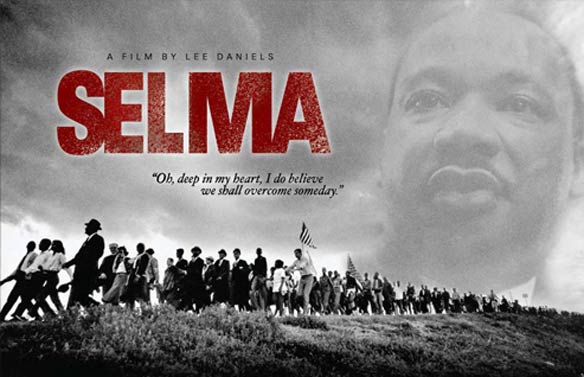
Selma, Oprah Winfrey's new movie about MLKBuzz about Oprah Winfrey’s new movie Selma is shining a light on the Selma to Montgomery March. The film, which depicts the 1965 events in Alabama, drew standing ovations at its screening in New York. Says film critic Roger Friedman, “Watching ‘Selma’ you really feel like all the plays, movies, TV shows, songs– every theater piece about King– all of it culminates in this film.” (Click here to see the trailer.)

Selma was the site of protests over voting rights. African-Americans there and in neighboring counties were routinely denied the right to vote through the use of poll taxes, threats of retribution, proficiency tests, and other manipulations. Today, that all sounds pretty vanilla, but make no mistake, Selma was a terrifyingly murderous place.

Dr. King, Hosea Williams, James Bevel, and other civil rights leaders organized a march to the state capital where they hoped to confront then-Governor George Wallace. But when the marchers arrived at the Edmund Pettus Bridge on the outskirts of town, state troopers—including many on horseback—violently attacked the marchers with clubs and tear gas. It became known as Bloody Sunday. International news coverage of the violence led directly to the signing of the Voting Rights Act, a turning point in the civil rights struggle.Click on the cover to preview or purchase

The movie’s release date (Christmas Day) is timed to take advantage of the annual focus on MLK Day in January and Black History Month in February. But this is an important bit of history regardless of one’s race. We live in an era of voter apathy, a time when we tend to take our right to vote for granted. If our students have any hope of changing the world, one would think they’ll need to reclaim the voting booth. Our kids need to know this story both for what it means to America’s history and for what it means for America’s future. “There’s a lump in your throat at the end of ‘Selma,’” says Friedman. Kids need to experience that lump in the throat.

I don’t know what the movie will be rated, but due to its mature content, I doubt any of us will ever be able to share it in our elementary or middle school classrooms. But you can take advantage of the interest in the film by using the read aloud play, Gonna Let it Shine. It depicts the Selma campaign from the perspective of Sheyann Webb, who was eight at the time. Sheyann, along with her friend Rachel West, became known as “Dr. King’s youngest freedom fighters.” Sheyann was there at the rallies, at the funerals, and on the bridge. She experienced the sting of teargas. She ran from Sheriff Clark’s posse. Her story is a great way to introduce students to the civil rights struggle and to help them appreciate their future voting rights.

The play is available at TeachersPayTeachers and ReadAloudPlays.com. Happy directing!

Too Late to Stage The Best Holiday Pageant Ever?

Gabriel Grub holiday playI was recently contacted by a theater company in Maryland which wants to add my adaption of “The Gift of the Magi” to its annual Victorian Christmas Collection. They wanted to know how much I charge for performance rights. Normally, when you perform a play from publishing companies, you’re required to pay a substantial licensing fee. The Samuel French Company, for example, owns the rights to The Best Christmas Pageant Ever. If you want your students to perform it for the annual PTO bazaar, it’ll set you back $100 or 10% of the gate receipts, whichever is greater—and that’s often in addition to buying the scripts themselves (which run $8 or $9 each).

I craft my plays so that teachers can use them to build strong readers, self-confident speakers, and engaged learners. I don’t charge schools to perform my plays. Your three bucks gives you license to photocopy as many scripts as you need for your class AND the rights to perform the play in your school. Three bucks sounds like a pretty good deal compared to traditional publishers.

I’m pleased the Gift of the Magi is getting some love in Maryland, but I’m even happier that my holiday plays are finding their way into classrooms all over the country. It isn’t too late to work in a reading or even a quick performance of one of my Halloween plays into yours. The Birth-mark, which is based on the short story masterpiece by Hawthorne, is a good place to start. Says one purchaser of The Birth-mark:

“My students love Reader’s Theater. They loved reading this. They said that they were able to express the ‘darker side of themselves.’”

Also consider The Monkey’s Paw, the Legend of Sleepy Hollow, and the Tell-Tale Heart. The Monkey’s Paw originally appeared in Scholastic’s Scope magazine, while the latter two are available in my book, Read Aloud Plays: Classic Short Stories (Scholastic). You can purchase it as an e-book and have it ready for your students right away.

If you enjoy Poe, consider pairing the original story of Tell-Tale Heart with my modernized version: Penelope Ann Poe’s Amazing Cell Phone. It retells the story in a unique way. Says one user:

“My 8th grade students LOVED this assignment. I let them use their cell phones and make the ring tone noises while reading. It kept them engaged and we read it three different times during the class so they could read different parts. Highly recommend.”

Finally, I have a handful of engaging Christmas plays, too. Gabriel Grub–from Charles Dickens’ The Pickwick Papers—is my newest script, and it’s as eerie as any Halloween tale. I also have two versions of A Christmas Carol. For a limited time, you can download my traditional version from TpT–or you can re-imagine Scrooge as a woman by using my Classic Short Stories version (which also includes Magi, by the way). No, it isn’t too late to stage the Best Holiday Pageant Ever.

Happy Directing!

Six Tips on Writing Your Own Classroom Plays

Every so often I get a request from a reader to draft a play based on a specific book: The Hobbit, or To Kill a Mockingbird, or Roald Dahl’s The Twits, for example. I’m certain they’d all make wonderful plays and they’d be fun to write, but due to copyright restrictions, I’d be unable to legally publish any of them. That doesn’t mean you—or even your students—couldn’t attempt to turn your favorite book into a play on your own. If you’re ready to give it a try and bring “The Twits” to a stage near you, here are a few pointers:

SCOPE-110113-PlayKeep it short. Most of my plays, particularly those that have appeared in Storyworks, are limited to about 1500 words. If too much longer, the students tend to lose interest. Such brevity requires cutting every extraneous scene, line, and word. It can be quite painful (which is why I sometimes cheat and leave the hard cuts up to my editors).

Avoid narration. “Too much exposition,” as the saying goes on Broadway, will kill your play. While you’ll need narration to quickly advance the story, keep the narrator’s lines to a minimum. Never let a narrator speak more than three sentences in a row, and whenever possible, find unique ways to narrate. In my play about Jackie Robinson, for example, it’s the peanut vendor and hot dog man telling the story from the grandstands of Yankee Stadium.

Use a child’s perspective. Kids relate to kids. That’s why many of my civil rights plays are told through the eyes of a child. “MLK’s Freedom March”–my play about the day Dr. King delivered his “I Have a Dream Speech”—might be rather dry were it not seen through the eyes of a child with a story of her own to tell.

Imagine your play acted out on stage, even if you intend it just for reader’s theater. Avoid changing settings within a given scene, and always try to include some action. Plays where the characters merely stand around and talk are easy to write and stage but boring to watch and perform.

Emphasize the literary elements you do when teaching literature such as setting, conflict, rising action, and climax. A powerful ending like the one in “Freedom for the First Time” when Mama strides into the Big House to reclaim her youngest daughter, will make the play memorable for your students. In less-serious plays, create endings that let your students ham it up, such as in my “Cyclops” play.

Incorporate dialect. There’s nothing better than having a kid growl like a pirate, drawl like a redneck, or pontificate like an English gent. I’ve had kids bring down the house with their countrified version of Mr. McGregor in my “Peter Rabbit” play. You can do the same simply by having your narrator refer to the way a character speaks.

So, rather than waiting until 2060 for me to publish a play adaption of James and the Giant Peach, consider trying it yourself. Not so inclined? Too busy? Then check out my long list of professionally published titles such as Charles’ Dickens’ Christmas goblin story, “Gabriel Grub,” coming next month, and Maupassant’s “A Piece of String,” available on TeachersPayTeachers in January. Like all my plays, just a few dollars buys you the license to print and use a class set every year. In the meantime, keep sending your ideas for story adaptions and re-enactments of historical events to lewis@jeffnet.org.

Happy Directing!

Why this Play is Important

Click on the cover to preview or purchaseStudents will quickly connect with eight-year old Sheyann Webb. When African-Americans were being denied the right to vote, she became Martin Luther King’s “Smallest Freedom Fighter” by joining marches on the local courthouse. As the events in 1965 Selma, Alabama, escalated, Sheyann began sneaking out of the house to attend meetings at Brown Chapel. She was there, too, on the Edmund Pettus Bridge when Selma exploded with tear gas and Billy clubs. The event became known as Bloody Sunday, and it directly led to the signing of the Voting Rights Act of 1965. But what makes this story compelling is the perspective. We’re used to hearing about the Civil Rights struggle from the viewpoint of adults, yet here is the true story of a little girl who not only saw it, but was there on the front lines risking the same dangers as her adult counterparts. What better way to engage your students in the Civil Rights Movement!

My new play, “Gonna Let it Shine,” shares Sheyann Webb’s emotional, often frightening childhood experience. Carefully researched, it improves upon an earlier version that appeared in Storyworks in 2012. It’s important to your students because it’s a kid’s story. Your students will relate to Sheyann. They’ll admire her courage. They’ll wander if they’d have been as strong. And they’ll root for her, regardless of their own race. Most of all, they’ll be inspired by her. Sheyann will show your students that one doesn’t have to be a grown-up to have a grown-up influence on the world.

Gonna Let it Shine is available on my storefront at TeachersPayTeachers for preview or purchase. As with all my plays, the original purchaser is licensed to reproduce one class set per year for use in his or her own classroom.

Along with the play, I also created a free vocab and comprehension activity that aligns the play to specific Common Core standards. Be sure to share with your students the Disney movie, Selma, Lord, Selma. It depicts Sheyann’s story with typical Disney flare. There’s also an accurate and intriguing YouTube video detailing Sheyann’s contribution to Civil Rights that can be found here. Consider comparing and contrasting all three.

Finally, the Sheyann Webb of today has remained an advocate for children and civil rights. Find out more about her work by visiting the Sheyann Webb Group.

Happy Directing!

Grow Some Neurons!

Many kids begin school already knowing how to read. They haven’t had formal lessons. Their parents haven’t been trained in the latest methodology. They haven’t used a single worksheet or text book. Yet here they are reading. Why?

What Does Brain Research Show About Fluency?

Consider for a moment how your own children learned to read. If they’re like many kids, they had a few favorites in their book bin. I recall my oldest boy latching on to Amos & Boris and a Sesame Street book entitled Don’t Forget the Oatmeal. As a preschooler, he would ask us to read these books over and over again. Soon, he started reading them to us. “He’s not really reading,” we’d tell ourselves, “He’s heard the book so many times, he’s just memorized the words.”

But based on brain research dating back to the days of psychologist Lev Vygtsky (left), some experts believe the difference between reading and memorization is slight. Kids get an emotional charge out of reading proficiently—whether memorized or not. The positive charge actually produces chemicals that form the neural pathways that make reading (and learning) possible. Because our son had consumed Don’t Forget the Oatmeal so frequently, he’d mastered the text, prompting his brain to construct new pathways.

Can Reading Physically Damage a Child’s Brain?

No, reading won’t damage a child’s brain, but could poor instruction? Consider what we often do in the classroom. We take a book, article, or story and ask kids to read it one time. We expect mastery on the first attempt. We ask kids to pass computerized tests, complete worksheets, and discuss content after just a single reading. We’ve assumed that language is language, that if they can decode they should be able to read anything at their grade level. It’s a fallacy and a tragedy. If Vgotsky was right, instead of experiencing a positive emotion that builds pathways, many kids in this situation suffer a negative emotion that causes them to withdraw and resist reading altogether, possibly even causing those neural pathways to shrink. And don’t assume it’s just your low-performing students either. Watch carefully when you ask students to read aloud in class; many of your brightest kids are just as reluctant as your poor readers. It’s not simply that they’re shy; they don’t want to risk experiencing the negative emotions they feel when they stumble over or mispronounce a word. There are, however, a number of ways teachers can prevent those neurons from shrinking, one being the use of “repetitive reading” techniques.

How is Repetition Beneficial?

Asking a young reader to read aloud a piece of text he or she is looking at for the very first time is akin to asking a musician to perform in public a piece of music he or she has never played before. Only the most talented can do it, and even they rarely do. Just as music is a language that requires repetition for mastery, so too does reading. Your students need opportunities to “sight read,” to practice, and then to “perform” the material you want them to master. Plays are the perfect format.

Because we’ve inadvertently trained kids that a book is something to be read only once, few third graders are willing to give James and the Giant Peach a second round. Few second graders will read Stellaluna more than once or twice. Give children a script and schedule a public performance, however, and they’ll be willing to read and reread it twenty to thirty times. Twenty to thirty times! By the time they’re asked to read it in front of the class, even your struggling readers will be able to read with reasonable fluency. Even your “shy” kids will be willing to read out loud.

Read Aloud Plays give you the opportunity to teach repetitive reading without the resistance you get when asking a child to re-read a traditional text. Students acquire mastery, which chemically changes the brain, making them superior readers who are better able to comprehend. If Mr. Vgotsky were alive today, I think he’d approve.

Are You Ready to Grow Those Pathways?

If you’re not already using read aloud plays in your instruction, this is a great time to start. Not only will all that repetitive reading help grow some neurons, but drama can be used to fulfill a significant number of Common Core State Standards. Kick off the school year with a trio of explorer plays such as Fly Me to the Moon, The Fountain of Youth, and Lewis & Clark and Bird Girl. Or consider a set of American Revolution plays such The Secret Soldier, A Bell for the Statehouse, and Fact or Fiction: The Legend of Betsy Ross. Or browse ReadAloudPlays.com to mix and match.

Happy Directing!

Text Books vs Read Aloud Plays

Common Core logoAdmit it. You’re using one of those big fat textbooks to teach reading, one of those monstrosities brought to you by publishers determined to make sure its refrigerator-box full of materials met every standard ever concocted in Texas, California, Pennsylvania, the U.S. Protectorates, and Saturn’s Ring. Too bad the kids are yawning.

If you’re like most people, the new Common Core Standards might have you a bit flustered. You can rely on those textbooks, which will provide certain coverage of the standards but will drive your students back to their video games, or you can delve into literature, classroom magazines, and reader’s theater, which will require more documentation on your part but will more likely create lifelong readers. The truth is, using what administrators like to call “supplementary material” is more engaging to students, more enjoyable to teach, and not so hard to justify against the CCSs. Consider this: “drama” is mentioned nearly fifty times in the Standards! That being the case, reader’s theater is more relevant than ever.

Here are just a few examples from the Reading Standards for Literature (RL) where drama or an element of drama is explicitly referenced:

RL4.5Explain major differences between poems, dramas, and prose….
RL5.4Explain how a series of chapters, scenes or stanzas fits together….
RL5.6Describe how a narrator’s or speaker’s point of view influences how events are described.
RL6.3Describe how a particular story’s or drama’s plot unfolds in a series of episodes….
RL7.3Analyze how particular elements of a story or drama interact.

cyclops coverAnd don’t assume that using drama is only useful in teaching drama. One user of my play adaption of the classic short story, The Monkey’s Paw, commented how reading the play helped her students comprehend the original text. Because plays have to break stories down to their essence, using adaptions of classic stories is likely to help students meet the RL standards for any number of otherwise challenging texts at the high end of the “complexity band” (RL4-8.10)

But plays also help students meet standards in Reading Fluency. Consider RF 4.4cUse context to confirm or self-correct word recognition and understanding…. Because drama puts the reader in the moment, and because the playwright cannot waste words within a 20 minutes classroom script, students are more able to make immediate contextual connections. In fact, drama is ideal for improving reading fluency in general. Because it mimics the repetition beginning readers use when first learning to read, it actually forms new neural pathways. (Check out the brain research by Vgotsky and others, or for a shortcut, read my article “Why Use Drama.”)

Recently, a former student of mine provided a powerful endorsement of using drama to teach literature. I hadn’t seen this young man for over four years, but he told me he’d just been thinking of me the day before. He’d been sitting in his 8th grade English class yawning over yet another mundane text book assignment when his mind drifted back to my then-third grade classroom. “I was just thinking about hopping around our classroom stage when we did that Aesop’s Fables play,” he said. “I enjoyed that.” That seems pretty telling to me.

Ready to set aside that textbook for a while and give drama a try? You can find a wide variety of read-aloud plays at my TeachersPayTeachers store. Stock up on titles for the next school year. Nearly all my plays have been previously published in Scholastic classroom magazine’s such as Storyworks and Junior Scholastic, so you can rest assured that they meet the highest standards. Not sure how to make it all work? Click here. For samples of kids performing classroom plays click on the “podcasts” tab up top. And for still more validation of using drama to meet the CCSs, check out this article from the New York Times or this podcast from the folks at Literacy Special Interests.

Happy directing!

Why You Should End the Year with Algebra

The Little RascalsI think much of what I know about teaching, about kids, about life itself, I learned from Spanky and Our Gang.

Like many of us here near the end of the school year, exhaustion has just about got the best of me. The wide-variety of year-end responsibilities and activities coupled with the cumulative day-to-day stress of the job itself has become a bit overwhelming. It has me looking for some fun but easy lessons to wrap up the last few weeks of school. It got me thinking that I’d like to share with my students some Little Rascals episodes, so I went looking for them on YouTube. If you’re not familiar with the Little Rascals, it’s the depression-era film shorts featuring the antics of impoverished kids such as Spanky, Alfalfa, Darla, and Stymie (and a mule named Algebra). I grew up watching “Spanky and Our Gang” on Channel 42 out of San Francisco—beamed to my home in Oregon via the relatively new innovation called cable-tv.

Sure enough, YouTube has a wide variety of clips and as I watched a few, my wife suggested that my love for kids and my destiny to become a teacher may have roots in the Little Rascals. The more I think about this, the more I believe it. There’s no doubt I admired the ingenuity and resiliency displayed by these kids. There were rarely any adults on the show. The kids had to solve complex problems and overcome difficulties without the assistance, guidance, or even supervision of grown-ups. I think this “can-do” attitude has helped me forge my way through life. And there’s no doubt I enjoyed the innocence and sweetness of all these kids. Yes, I think “Our Gang” had a profound impact on my career choices, as well as my penchant for using plays in class.

I have particularly strong recollections of the Our Gang “Follies,” in which the kids built a make-shift theater in a barn and staged a vaudeville show. Although these were not among my favorite episodes, I’m certain they influenced my teaching. In 1998, when I built a stage inside my classroom, I sewed together a heap of scrap fabric to make curtains that, not surprisingly, looked a lot like those that parted for Alfalfa’s performance of “I’m in the Mood for Love” or Darla’s tap and baton-twirling routine. I’m still using those curtains today, and I think about the Little Rascals every time I put them up for a play.

I intend on ending the year with an algebra lesson (that is, a segment of Little Rascals featuring Algebra the Mule), but another good activity with which to fill these last days of schools is reader’s theater. I believe read aloud plays are most beneficial when they’re read repetitively, when kids read and re-read the same text over and over again as they practice for an eventual performance. However, this time of year, there’s nothing wrong with giving kids a set of scripts and letting them wing it. Give them a session or two to utilize their “Spanky-esque Can Do Attitude” and then watch the follies unfold. To help you along, here’s a free PDF of my play based on O.Henry’s depression-era story, A Retrieved Reformation, but you should also try Peter Rabbit, Penelope Ann Poe’s Amazing Cell Phone, A Tell-Tale Heart, and Fly Me to the Moon, all of which are available on my TeachersPayTeachers page, as well as The Nose, Rikki Tikki Tavi, and The Open Window, from my book: Read Aloud Plays: Classic Short Stories. Finally, Read Aloud Plays: Symbols of America contains Argument at Mount Rushmore, As American as Apple Pie, and Eagles Over the Battlefield, each of which make for fun, impromptu entertainment that beats a real algebra lesson any day.

Happy directing!