Prevent Zombies: Teach the Arts!

Is standardized testing turning us into zombies? In my school we’ve taken to referring to our state-of-the-art music room as the “Musicless Room.” Oh, it still says “Music” on the door, but after elementary music was cut a few years ago, it’s since been used as a computer lab, a professional development site, a Title I room, and this coming year, a regular ed classroom. Hence the name.

Way back in 2008, President Obama criticized No Child Left Behind legislation because its overemphasis on core subjects contributed to the loss of arts education. “Studies in Chicago have demonstrated that test scores improved faster for students enrolled in low-income schools that link arts across the curriculum than scores for students in schools lacking such programs,” read the President’s official statement on the Arts. Unfortunately, Obama’s Race to the Top initiative, the Common Core, and the Smarter-Balanced test all seem to have heightened the emphasis on testing and, as a result, further undermined the Arts.

But there’s hope! If you need help convincing your administrator to allow more time for the Arts, including the use of Read Aloud Plays, here are ten studies compiled by the staff writers at OnlineColleges.net that show a strong connection between arts education and academics:

1. A 2002 report by the Arts Education Partnership revealed that schoolchildren exposed to drama, music and dance are often more proficient at reading, writing, and math.

2. The 2006 Solomon R. Guggenheim Museum study on art education showed a link between arts education and improved literacy skills.

3. In 2007, Ellen Winner and Lois Hetland published a study stating the arts don’t actually improve academic performance, but it shouldn’t matter.

4. A 2005 report by the Rand Corporation called “A Portrait of the Visual Arts” argues that art education does more than just give students a creative outlet. It can actually help connect them to the larger world, ultimately improving community cohesion.

5. Teachers and students alike benefit from schools that have strong art climates, a 1999 study called “Learning In and Through the Arts” demonstrated.

6. The Center for Arts Education published a report in 2009 that suggests arts education may improve graduation rates.

7. A 2011 study called “Reinvesting in Arts Education” found that integrating arts with other subjects can help raise achievement levels.

8. A study of Missouri public schools in 2010 found that greater arts education led to fewer disciplinary infractions and higher attendance, graduation rates and test scores.

9. In “Neuroeducation: Learning, Arts and the Brain,” Johns Hopkins researchers shared findings showing that arts education can help rewire the brain in positive ways.

10. A 2009 survey, part of the “Nation’s Report Card: Arts 2008″ report, found that access to arts education opportunities hasn’t changed much in a decade.

Of course, all these studies really do is show that one can prove just about anything with a study. Just as these ten support arts education, there are numerous others that suggest there’s no correlation at all. This New York Times article does a pretty succinct job of debunking any notion that the Arts lead to improved scores in reading, writing, and math.

But so what? Whether or not the Arts contributes to better test scores shouldn’t be the question. I, for one, believe classroom activities that emphasize creativity build more well-rounded people and consequently better prepare students for professional life. While there are no doubt plenty of jobs out there that require workers to never deviate from a scripted set of instructions, there are also plenty of professions that value creative thinking, which is really what the Arts are all about. It was creative thinking that brought us Facebook, Starbucks, Dave Matthews Live at Red Rocks, and the device on which you’re reading this blog. If we want our schools to produce the next generation of worker drones and zombie-like consumers, then sure, let’s keep on “racing to the,” er, “top.” But if we want our schools to produce engineers, entrepreneurs, and the people who will solve the world’s problems, then for cryin’ out loud, let’s toss aside the textbooks and scripted programs and restore the Arts to our classrooms.

One easy method of embedding the Arts in the classroom while still fulfilling the Common Core requirements is to include Read Aloud Plays in your instruction (“drama” is referenced 47 times in the Common Core). For around three bucks you get performance rights (assuming you represent a school) and reproduction rights so that you can copy a full classroom set every year. Also, many of the plays come with supplemental activities or questioning strategies. For a fairly complete list of available titles, navigate through the tabs (at left if on a computer) or below (if on a mobile device).

Thank you for inspiring the next generation of creative thinkers and decision-makers!

Happy directing!

Why You Should End the Year with Algebra!

The Little RascalsI think much of what I know about teaching, about kids, about life itself, I learned from Spanky and Our Gang.

Like many of us here near the end of the school year, exhaustion has just about got the best of me. The wide-variety of year-end responsibilities and activities coupled with the cumulative day-to-day stress of the job itself has become a bit overwhelming. It has me looking for some fun but easy lessons to wrap up the last few weeks of school. It got me thinking that I’d like to share with my students some Little Rascals episodes, so I went looking for them on YouTube. If you’re not familiar with the Little Rascals, it’s the depression-era film shorts featuring the antics of impoverished kids such as Spanky, Alfalfa, Darla, and Stymie (and a mule named Algebra). I grew up watching “Spanky and Our Gang” on Channel 42 out of San Francisco—beamed to my home in Oregon via the relatively new innovation called cable-tv.

Sure enough, YouTube has a wide variety of clips and as I watched a few, my wife suggested that my love for kids and my destiny to become a teacher may have roots in the Little Rascals. The more I think about this, the more I believe it. There’s no doubt I admired the ingenuity and resiliency displayed by these kids. There were rarely any adults on the show. The kids had to solve complex problems and overcome difficulties without the assistance, guidance, or even supervision of grown-ups. I think this “can-do” attitude has helped me forge my way through life. And there’s no doubt I enjoyed the innocence and sweetness of all these kids. Yes, I think “Our Gang” had a profound impact on my career choices, as well as my penchant for using plays in class.

I have particularly strong recollections of the Our Gang “Follies,” in which the kids built a make-shift theater in a barn and staged a vaudeville show. Although these were not among my favorite episodes, I’m certain they influenced my teaching. In 1998, when I built a stage inside my classroom, I sewed together a heap of scrap fabric to make curtains that, not surprisingly, looked a lot like those that parted for Alfalfa’s performance of “I’m in the Mood for Love” or Darla’s tap and baton-twirling routine. I’m still using those curtains today, and I think about the Little Rascals every time I put them up for a play.

I intend on ending the year with an algebra lesson (that is, a segment of Little Rascals featuring Algebra the Mule), but another good activity with which to fill these last days of schools is reader’s theater. I believe read aloud plays are most beneficial when they’re read repetitively, when kids read and re-read the same text over and over again as they practice for an eventual performance. However, this time of year, there’s nothing wrong with giving kids a set of scripts and letting them wing it. Give them a session or two to utilize their “Spanky-esque Can Do Attitude” and then watch the follies unfold. To help you along, here’s a free PDF of my play based on O.Henry’s depression-era story, A Retrieved Reformation (expired), but you should also try Peter Rabbit, Penelope Ann Poe’s Amazing Cell Phone, A Tell-Tale Heart, and Fly Me to the Moon, all of which are available on my TeachersPayTeachers page, as well as The Nose, Rikki Tikki Tavi, and The Open Window, from my book: Read Aloud Plays: Classic Short Stories. Finally, Read Aloud Plays: Symbols of America contains Argument at Mount Rushmore, As American as Apple Pie, and Eagles Over the Battlefield, each of which make for fun, impromptu entertainment that beats a real algebra lesson any day.

Happy directing!

How to Counteract the Terrible Test

Read Aloud Play: A Retrieved ReformationI can gripe with the best of ‘em, and every year the teaching profession seems to provide plenty of new stuff to gripe about. My biggest gripe this year isn’t about class size (though I’ve had an exhausting 36 fourth graders), but instead, it’s about all the new bureaucracy associated with Common Core and the Smarter Balanced test. It seems to me our politicians and administrators have painted us into an academic corner. They’ve made teaching so complicated that it’s venturing toward the impossible

In my school, we’re currently mid-stream on the Smarter Balanced test. We’re finding the “performance task” to be a farce akin to safe-cracking and the test itself to be unnecessarily tricky and technologically unwieldy. It’s no wonder people all across the country are “opting-out”—156,000 in New York alone. The test is so bad and so unpopular that many of us are wondering if we’ll soon see the proverbial pendulum forced in the opposite direction. Let’s hope so. If you ask me, all this emphasis on testing is sucking the joy out of the classroom.

HBO’s “Tonight with John Oliver,” which you can find on YouTube, has a rant about standardized testing worth seeing (though it includes mature language). Oliver points out that the typical American public school student must complete as many as 130+ standardized tests during his or her school career. He also points out that since NCLB was enacted, our academic performance compared to the rest of the globe has actually decreased. So much for standardized testing saving the school system. Instead, the big winners in the testing game appear to be the test publishers. Corporate America. Go figure.

The experts say the point of all these tests is so that we can identify which of our students need extra help. Really? My hand is up! Pick me, please! I can already tell you which of my students need extra help. I can already tell you which of my students are unlikely to graduate. I can already tell you which of my students are likely to have a rough go of it in the real world. I don’t need a standardized test to figure it out. I can also tell you that testing these kids isn’t going to solve their problems.

I’m feeling sorry for my students right now. That they have to trudge down to our computer lab four times a week to endure this punishment is a travesty. I think they should love coming to school, so I’m trying to counteract the test by concluding the year with another bank of Read Aloud Plays. This week we’re splitting into three groups, assigning parts, and reading and re-reading our plays around a table and at home. Next week we’ll go outside into our courtyard and choreograph our on-stage movements, and a week or two later we’ll invite a couple of other classes to come watch. It’s simple, it’s academically valid, and it’s fun for kids–a nice contrast to the torture and unnecessary complexity of standardized testing.

Some enjoyable plays with which to end the year include Cyclops (that famed one-eyed monster!), O’ Henry’s A Retrieved Reformation (about safe-cracking ex-con Jimmy Valentine) and Penelope Ann Poe’s Amazing Cell Phone (a spoof of A Tell-Tale Heart). If you have my book, Read Aloud Plays: Classic Short Stories, try “The Nose”, “Rikki-Tikki-Tavi,” and “The Open Window.” Really, though, any of my Read Aloud Plays will do. This time of year it shouldn’t matter which CCSS or content strand they fit (although they fit many). This time of year, with that doggone standardized test soon behind us, it should just be for fun. For the love of reading. For the love of school.

Do something this month to make your kids love school. Try a set of Read Aloud Plays.

Let me help you get started: click here for a free download of “A Retrieved Reformation” (expired) and here for an always free copy of “Why Use Drama,” my popular guide to using reader’s theater in the classroom. If you like these products, please visit my storefront at TeachersPayTeachers and take a gander at my wide variety of classroom plays.

Happy directing!

How to Appreciate a Teacher

Click here to visit the EZSubPlans page at TpT!I told my students the best thing they could do for me for Teacher Appreciation Week is to stay home. I was kidding, of course. But there’s no doubt that I’d feel more appreciated if I knew people were out there trying to make my job a little more doable. This time of year, as fatigue starts to take its toll, I’m probably the one who needs to stay home once in awhile. But who wants to do all that sub planning? Well, one of my contributions toward making your job easier is EZSubPlans. These emergency absence plans provide seven hours of standards-based lessons that can be implemented at the press of a button, and this week, in honor of Teacher Appreciation Week, they’re on sale at TeachersPayTeachers. Click on the banner to go directly to EZSubPlans at TpT, or click here to learn more about how having a couple of sets of EZSubPlans handy will make your next absence worry-free.

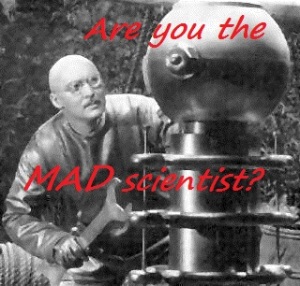
Are You the Mad Scientist?

Mad-sciJust as all television families seem to live in mini mansions, whenever TV-world students put on plays, the sets are extravagant and the costuming looks as if a team of seamstresses have worked ‘round the clock for months on end. Think Spanish Man-o-Wars in full regalia, or Elizabethan jodhpurs, not cardboard swords and Dollar Store wigs. It’s as if the teacher has but 15 students and no other task at hand but to produce that play! Those of us who’ve directed class plays in the real world, however, know that’s not typically how it works. When staging a Read Aloud Play, you needn’t try to emulate what you see on TV. A few carefully-selected props and a bit of personalization is all that’s needed to turn a simple reading activity into a smash hit.

A teacher using my Read Aloud Play, “A Retrieved Reformation,” recently left this comment: “We added a train as a prop to get the actors on and off stage and from one scene to another. We also localized the locations by using the name of our city and nearby towns.”

What fantastic modifications! And simple, too.

In my classroom, whenever we enact “Fly Me to the Moon,” we put the student playing Walter Cronkite into a cardboard 1960’s television set. In “How Jackie Robinson Saved the World,” the peanut vending narrators actually toss bags of peanuts to audience members (who are themselves cast members). When we perform “Box Brown’s Freedom Crate,” we put Henry inside a cardboard box painted to look like a wooden crate (and when the curtains close on that scene, we replace him with a dummy so that the audience thinks he’s still in there when the crate is being roughly tossed from wagon to train to ship).

Read Aloud Plays are designed to build reading fluency and comprehension skills. The repetitive process of practicing for a performance or class reading simulates the process kids go through when they’re first learning to read from favorite picture books. This alone justifies making them part of your reading curriculum. But including props and personalizing the plays makes them that much more enjoyable and effective. For fictional stories like “A Piece of String” and “The Birth-mark,” consider letting your students change the names of characters and places. (Maybe they’ll name the mad scientist in Birth-mark after you!) Whether fiction or non-fiction, consider creating a few key props. Perhaps baskets of “cotton” would make sense for “Freedom for the First Time,” or if you’re performing “Cyclops,” consider creating a giant-sized (and especially hideous) mask for the student playing the monster to wear.

You can give your students creative license as well. In my last set of plays I asked students to research their characters and come up with one costuming element that represented who they were. A student playing Franklin D. Roosevelt, for example, rolled in on a wheel chair (borrowed from the health room), and a little gal playing Abe Lincoln showed up with a top hat.

What key props or creative modifications have you tried with my Read Aloud Plays? My readers and I would like to hear from you. You can leave a comment about your props and mods on my TpT storefront, or email me directly at lewis@jeffnet.org (I do not retain or compile email addresses).

Happy directing!

Okay kids, fork over those taxes!

Jamie's Checkbook RegisterNo doubt you’ve had kids ask, “Why do we need to know this stuff?” In my classroom, we spend a lot of time talking about the “real world,” and nothing we do is more “real world” than The Checkbook Project. In my building, we implement it around this time of year with all our 4th and 5th graders. If we waited any longer, the kids would riot!

I created The Checkbook Project nearly a decade ago to combat what I call “academic apathy.” Over the years it has consistently proven itself to be an engaging way to get kids invested in their studies, teach work ethic, and give kids “real world” experience in the safety of the classroom. And because I believe these are essential lessons every kid needs, it’s also free. Every last bit of it. For more details on how it works, click here.

I want to encourage you to give it a try—and this is a great time of year to do so—but before you do, heed this warning:

In The Checkbook Project, kids maintain checkbook registers. They earn money by completing assignments, attending class, and passing tests. School is their job. They also pay taxes, pay fines for “breaking the law,” and rent or buy their desks. Kids who work hard and consistently attend class tend to do well, accumulating upwards of three grand by the end of May. Kids with poor study skills, poor attendance, or poor spending habits tend to struggle—so much so that some even end up in “the homeless shelter.”

The homeless shelter is a single desk around which kids gather when they don’t have the resources to rent their desks. Granted, it sounds a bit harsh. It may even be a bit controversial. Certainly, it gives me no pleasure to see Stevie, Pablo, or Cynthia crowded around a single desk at the front of the room. But isn’t it better Stevie, Pablo, and Cynthia experience the consequences of poor work ethic in fifth grade rather than on the mean streets of real life when they’re twenty? After all, homeless shelters do exist in the real world, and perhaps it’s the threat of landing there that keep many of us working hard.

Poverty and homelessness are serious problems in America. There are plenty of folks out there facing such grim prospects despite their best efforts. The Checkbook Project isn’t meant to degrade them. Better, the project prompts numerous discussions on the subject. One of my favorites is about how the guy holding that sign on the freeway ramp got there. Students have a host of preconceived notions and theories about homelessness, including that he might not be standing there at all had his fifth grade teacher used The Checkbook Project.

I’ve also seen the Homeless Shelter bring about the best in my students. If you implement The Checkbook Project, you’ll see neighbors help neighbors make rent. You’ll see students push their buddies to get their work done. One year I even had a kid start a charity organization. He maintained a second register in which he collected donations from his classmates and doled out grants to needy students who were short on rent.

I recently received a text from a former student-teacher telling me her administration has told her to disband or at least rename her “homeless shelter.” I wish I’d been there to lobby her principal and parents, but she’s half way across the country. The best I can do is suggest some politically-correct alternatives. “Group house”, “hostel”, and “shared housing” come to mind. So too does “Dickens’ House” and “Grandma’s Basement.” (Okay, that last one may not be so politically-correct.) Regardless of the name, whether it’s a homeless shelter or merely communal living, it will likely motivate struggling students to work a bit harder.

The Checkbook Project is a splendid behavior management system and a great way to teach kids about money. For more information, including how to download all the forms and procedures, click here.

Tongue In, Mouth Closed

Click here to preview or download this free sampler pack!McKenna, one of my most “with-it” fourth graders, came up with a new concept I think is worth sharing here. The class was working from my book Super Sentences & Perfect Paragraphs (2009, Scholastic), writing “Dialogue Sentences with Alternate Tags.” My book teaches kids to use the phrases “open mouth” and “closed mouth” to describe open and closing quotation marks. Such a concrete image seems to help them understand where to place the marks. But another necessary punctuation mark in a dialogue sentence is that little comma separating what was said from who said it.

“I’d sure like a package of Necco Assorted Wafers,” drooled Freddie as he stared through the front window of Candy’s Candy Shop.

That little comma between “wafers” and “drooled” is often neglected by young writers, and even when remembered, it’s sometimes incorrectly placed outside the closing quotes. Young McKenna came up with a solution by referring to is as “the tongue.” “You need to pull your tongue in before you close your mouth,” she said, and the rest of the class has quickly capitalized on it.

I’m not surprised. Because “Super Sentences” facilitates thoughtful discussion of and feedback about writing, my students are constantly coming up with unique perspectives—and great sentences. True, they’re still just 4th graders and therefore subject to all the forgetfulness and sloppiness familiar to intermediate and middle school teachers everywhere. But Super Sentences has certainly improved their writing skills. You can purchase and immediately download a PDF version of Super Sentences from Scholastic Teacher Express for just a few bucks. You can also download a free sampler of Super Sentences and Perfect Paragraph here.

In an era when we seem to be over-complicating teaching to the point that we’re nearly dysfunctional, Super Sentences & Perfect Paragraphs is simple, easy-to-use, and fun to teach. It’s as straight forward as “pulling your tongue in before you close your mouth.”

Pairing Plays and Picture Books for Black History Month

Read on for a free Common Core activityWith Black History Month upon us, two bits of news caught my eye last week: the State of South Carolina issued a stirring acknowledgement of the injustices suffered by African-Americans in the 1950s and 60s when it apologized to “The Friendship Nine,” nine young men who, in 1961, were sentenced to thirty days on a chain gang simply for participating in a Sit-in.

The second item was an excellent post at the Center for Teaching Quality. Educator Liz Prather writes that the controversial elements of the recently-released Selma movie makes the film “a great discussion engine for subjects like non-violent activism, Dr. King, and the civil rights movement.” The Common Core, notes Prather, requires that we teach students to “evaluate authors’ differing points of view on the same historical event or issue by assessing the authors’ claims, reasoning, and evidence.” While the Selma movie is too mature for elementary and middle school students, it got me thinking about pairing Read Aloud Plays with developmentally-appropriate books and films so to compare and contrast point of view. Here are a few:

* The Disney movie, Selma, Lord Selma, and the Read Aloud Play, Gonna Let it Shine.
* My play from the Montgomery Bus Boycott, The Girl Who Got Arrested, and Phillip Hoose’s book about Claudette Colvin, Twice Toward Justice.
*Sitting Down for Dr. King, which depicts the Greensboro Lunch Counter Sit-ins of 1960, and Andrea Davis Pinkney’s book, Sit-in: How Four Friends Stood Up by Sitting Down.
* Peter Golenbrock’s book, Teammates, depicting the relationship between Jackie Robinson and Pee Wee Reese, and the Read Aloud Play, How Jackie Changed America.
* We Shall Overcome, my play about the Birmingham Children’s Crusade, and Cynthia Levinson’s non-fiction book, We’ve Got a Job: The 1963 Birmingham Children’s March.
*Days of Jubilee, by Patricia and Fredrick McKissack, and my play, Freedom for the First Time, which is based on slave narratives from the Civil War.
*The Read Aloud Play, Box Brown’s Freedom Crate, and Ellen Levine’s book, Henry’s Freedom Box.

To get your classroom discussion going, I’ve developed a simple short-answer comparison activity covering Craft & Structure (Literature item 6 and Informational Text item 6). You can download it for free here and use it with my plays and any paired text to satisfy these standards by having students “analyze multiple accounts of the same event or topic.”

Happy directing!

Celebrate Your Slow Readers

Free Black History Play (through Jan 31)I recently read an article about how “slow reading” is gaining acceptance as an academic approach. Though the piece was aimed at high school and college instructors, the gist remains the same at the elementary and middle school levels: let’s slow our kids down and have them read meaningfully. To this I say, “hot dang!” I’ve long been an advocate of focusing on accuracy and beauty rather than speed.

The purveyors of Oral Reading Fluency measures no doubt developed their program with good intentions. They saw a correlation between quality reading and speed. They found that good readers, when tested by the minute, can read fast. Consequently, oral reading fluency has become the king of qualifiers for Special Ed and Title I services. The flaw is that the formula isn’t commutative (if I may borrow a math concept for a moment): good readers may be able to read fast, but it doesn’t work in the opposite direction. Emphasizing ORF scores teaches kids to read fast, but that doesn’t mean they’ll read well. In fact, all this emphasis on speed is probably causing kids to struggle more than ever.

The emphasis in my classroom is on reading with accuracy, personality, and comprehension. Obviously, I believe plays are the perfect vehicle for doing just that, though the process of re-training kids who have been under the ORF thumb for so long isn’t without its tribulations. My students just recorded their first set of radio dramas. When it came time to record, there was a lot of mumbling, stumbling, and stammering from some, while others read their parts like people actually talk. And, get this, there was no correlation between such quality reading and their ORF scores! In fact, some of my lowest “per minute” readers read the most beautifully; some of my highest, rather poorly. You guessed it: the factor of greatest influence was whether or not a given student read independently at home during the two weeks leading up to the recording session.

This month you can encourage great reading by staging a trio of plays for Black History Month in February. Plays such as Freedom for the First Time and Box Brown’s Freedom Crate teach about slavery while giving kids the chance to practice their slow southern drawls. Plays such as Sitting Down for Dr. King and The Girl Who Got Arrested re-enact inspiring moments from the Civil Rights Movement. There are several other Black History titles available (including this one–a free gift to my readers during January!), but whether you use my plays or not, consider jumping on the “slow reading” band wagon and let February be about teaching your students to read beautifully.

Happy directing!

MLK Day Inspiration

Click on the cover to preview at TpT!I’ve been fortunate to have forged a lasting relationship with Scholastic publishers, particularly the wonderful editors at Storyworks and Scope magazines. Through my work with them I’ve developed a reputation for writing compelling reader’s theater about Martin Luther King and African-American history in general. Somehow, I’ve been able to accurately represent the historical events and, more importantly, convey the spirit of Dr. King’s work through such plays as “Sitting Down for Dr. King.” With MLK Day upon us, and given that February is Black History Month, I want to encourage you to give some of my reader’s theater scripts a try.

I’m particularly proud of “Sitting Down.” I remember struggling over it when I was writing it back in 2002.There I was, bouncing one bad idea after another off my laptop screen, regretting having accepted the contract at all, when I realized how very simple my task was in comparison to the mammoth challenge undertaken by Dr. King. Soon thereafter I crafted the fictional story of “David,” a twelve-year-old white kid frustrated that these African-American college students were getting in the way of his birthday shortcake at the Woolworths. “Sitting Down” has since appeared in three different Scholastic venues including Storyworks, a text book series, and a leveled reading set, but I’m proud of it because it has a powerful ending that I believe Dr. King would have respected.

Click on the cover to preview or purchase!I think my play, “Gonna Let it Shine” also conveys the spirit of Dr. King’s work. It’s based upon the true story of Sheyann Webb, who was just eight years old when she braved tear gas and posse men while marching alongside Dr. King. She became known as “Dr. King’s Youngest Freedom Fighter,” and her story is the subject of the Disney movie, “Selma, Lord, Selma.” The play originally appeared in Storyworks under the title “Pigtails & Protests.” In the process of re-writing it for release on TeachersPayTeachers, I had the privilege to talk with Sheyann herself, who is today–some fifty years later–a public speaker and Civil Rights advocate. It was surreal to speak with someone who in my writing was still just a child. It was inspiring to connect with someone who not only knew Dr. King and numerous other heroes of the Movement, but was in fact a Civil Rights hero in her own right.

We Shall Overcome” tells the story of the Birmingham Children’s Crusade. That’s the event where students, some nearly young as Sheyann, were attacked by police dogs and knocked to the ground by blasts from fire hoses. News coverage of their sacrifice swayed worldwide public opinion in favor of desegregation.

The Girl Who Got Arrested,” meanwhile, tells the true story of Claudette Colvin, the first person to be hauled off a city bus and tried in court for defying Montgomery’s segregated busing law. Her story is depicted in the book, “Twice Toward Justice.” I certainly don’t want to diminish the work of Rosa Parks, but in my humble opinion, Claudette’s story is far more compelling.

One of my “under sung” plays is “MLK’s Freedom March.” It’s a work of historical fiction about a girl named Lucy who helps her ailing grandmother get to Washington to hear MLK’s “I Have a Dream” speech. There’s also “In the Jailhouse with Dr. King,” about a troubled teenage who turns it around when he witnesses King’s calm demeanor in the face of violence during the Bus Boycott. These and other plays capture the essence of MLK’s work. Consider celebrating MLK Day and/or Black History Month in your classroom by picking any three, dividing your class into three groups, practicing for a couple weeks, and then presenting them with opportunity for discussion in between. In so doing, you’ll be giving your students a strong foundation in MLK history, and perhaps the inspiration to make history themselves.

Happy Directing!