Act Aloud Plays

The Lewis Hine photo that serves as an inspiration for the fictional AnielaThat you’re visiting my blog tells me you’re most likely already a fan of reader’s theater, so I needn’t tell you how reader’s theater makes literature class that much more compelling, or how drama is referenced 47 times in the Common Core, or how nearly all my plays are first “vetted” by the editors of Scholastic classroom magazines where they’re published long before hitting TeachersPayTeachers. Instead, let me tell you how my Read Aloud Plays could just as easily be called “Act Aloud Plays.” My evidence? Well, every so often I stumble upon a classroom webpage featuring a videocast of a school play or musical that turns out to be mine. And because most publishers charge a pound of flesh, a fatted cow, and a hefty fee for performance rights, I frequently get emails from polite teachers verifying that such rights are indeed included in the original purchase price (they are). I also get requests to adapt my stories or include them in performances outside the school setting. For example, last year a community theater in Carolina included my adaption of A Christmas Carol in its holiday dinner theater, and the Tshwane Children’s Theatre in Irene, South Africa, performed my Peter Rabbit play in rural African schools. Pretty cool.

I think the popularity of these plays stems from the fact that they’re written to be acted out, not merely read aloud. When I create a play for Scholastic, I imagine students performing it on stage. How will the kids move across the floor? How simple can the set be? What must the characters say and do to help the audience grasp what’s going on? Is the setting consistent throughout the scene? How can I minimize the presence of the narrator? Such questions help build plays teachers can use on the actual stage.

Click on the cover to preview or purchaseSays Officer Lockstock, the narrator in the Broadway musical Urinetown, “nothing can kill a show like too much exposition.” Save for the occasional soliloquy, narration is rare in 3-act shows, yet it’s often necessary in classroom plays. It quickly provides the background information required to reduce a complex story to a 15 or 20 minute performance. Still, as I craft scripts, I ‘m constantly looking for ways to minimize the exposition or find creative ways to deliver it. In my Jackie Robinson play, for example, the narration is delivered by the hot dog and peanut vendors. They set-up Jackie’s story while simultaneously hawking ballpark franks and Cracker Jacks. It’s as if they themselves are characters speaking to a grandstand full of spectators.

Though my latest TpT release utilizes narrators, it was most certainly designed with the stage in mind. The Newsies first appeared in the March 2015 issue of Scholastic’s Scope magazine. It tells the story of the New York newsboy strike of 1899 through the eyes of a 12-year-old Polish immigrant. Aniela Kozlowski goes to work selling newspapers just as the strike unfolds (no pun intended, just questionable blogging). Ani’s character is based upon one of my own students who shares with me a Polish heritage, so I was particularly thrilled to watch her play the role late this past school year. Historically-accurate, rich with dialect, and embedded with great pictures from famed photographer Lewis Hine, The Newsies is unquestionably one of my best plays to date. Not only is it a play about actual kids showing the grit, determination, and unity necessary to overcome some pretty extreme challenges, it’s also a nice reminder that battles had to be fought to establish some degree of balance between the interests of big business and the common laborer, that unionism has played a significant role in establishing the American Dream.

You can preview or purchase The Newsies at TeachersPayTeachers. I encourage you to pair it with Stolen Childhoods, my play from the same era about Lewis Hine’s crusade to end child labor. Or, take The Newsies to a whole other level and make it a musical. I did this very thing with a Br’er Rabbit script this past year. Though initially rather daunting, something magical happened once the kids started singing (and eventually dancing) to Zippity Doo Dah and Sinatra’s High Hopes. Br’er Rabbit ended up being the highlight of our school year. By incorporating songs from the 1890s, The Newsies will be a smash hit, too. You’ll find Ta-ra-ra Boom de-ay, The Sidewalks of New York, A Hot Time in the Old Town Tonight, In the Good Ol’ Summer Time, and My Wild Irish Rose all on Youtube and/or Amazon. I can see places in the script for all of them.

Of course, there are dozens of other “act aloud plays” on my webpage and TpT site. Any one of them might be just what you need to get your students up and active on stage—to bring a little extra magic to your language arts class.

Happy directing!

How to Host an “Old School” Writers’ Festival

Anthology of Public School WritingWhen seven-year-old Kelsey Drake stepped to the microphone, she hesitated. Perhaps she felt nervous about presenting her writing before such a large audience. Then again, maybe it was just the mouthful of prize-winning devil’s food cake she was chewing. After a moment’s pause and a hard swallow, without regard for the goo smeared all over her face, or the chocolate finger prints across her otherwise fresh copy of Yeah Huh!, she calmly clutched the mic and in a sometimes stuttered, sing-songy voice, read her masterpiece:

One day I went hunting with my dad and my big brother and their friends in the woods. I got the biggest deer and it had very big antlers. The big boys cried. We took the deer home and Mom said, “The boys are big babies.” I said, “Maybe next time, babies.”

Though clearly a beginner, in that moment Kelsey received everything real writers want. True, her byline came in a book you can’t buy through Amazon. And her audience was merely a gym full of kids. It’s also unlikely Roald Dahl ever accepted payment in the form of a pecan kiss, a piece of German lebkuchen, or a slice from a cake shaped like a big yellow school bus. But the exhilaration for Kelsey is the same. At that moment, she’s a real writer.

Professionals write to express themselves to a wide audience, to make money, and for that oft-elusive byline. Kids, however, seldom have this opportunity. In fact, rarely do we give them any more motivation to write than to assign a topic and wave their report card at them. These days my students routinely publish their writing on the Web, but while doing so seemed really cutting-edge a decade ago, it now seems to be losing its appeal. The Web appears so vast that a fifth grader’s eloquently-crafted poem about donut holes can quickly disappear in the mud we call bandwidth.

All this has me thinking about simpler days when we used to print real books full of student-writing, books you could hold in your hand and re-read over and over again. I have a number of such books in my classroom. While it would be rare for a current student to go back through the archives of my school webpage to read student-writing from even a few years ago, they still pick up my copies of Fresh Corn, Yeah Huh!, and Mmm!, three lovely little anthologies from more than a decade ago.

I miss those days.

So, I dug out an article I published in Instructor on organizing a school-wide writers’ festival. It’s excerpted below. My hope is that it’ll germinate into getting such an event started at my current school. And, I challenge you to do the same at yours.

At my old school, every student who submitted material–generally about 70% of the k-5 population–became a published author. They also attended a dessert banquet where they scarfed down a smorgasbord of sweets concocted by staff members and parents. They received their contributor’s copy of the anthology, gathered the autographs of their fellow authors, and had the chance to read their work into an open mic. It was all designed to motivate students to hone their skills and reward them for their effort.

“It’s a good feeling,” said then-student Casey C. when recalling the festival. “It’s kind of cool to see your writing in a book.” She credited the event for her enthusiasm for writing. “Before the festival, I didn’t think I was much of a writer. Now I feel like I’m pretty good, so I really enjoy it.”

The anthology validates the kids’ work,” explained fourth grade teacher Matt D. “It makes it more meaningful. Consequently, they put more effort into it.”

Back in those days, the festival went beyond just encouraging young writers. It contributed to a favorable school climate, one that enriched learning in general. Perhaps that’s why those kids were so comfortable with a mic.

“I like reading into the microphone best,” noted one student. Her younger sister Olivia agreed. Unfortunately, she found herself at the end of the line and didn’t get the chance. “It would have been embarrassing,” said Olivia, “but I still wanted to do it.”

Still, are the benefits enough to justify all the work that goes into developing your own festival? Certainly. It promotes a school-wide focus on a subject that, due to its inherent difficulty, is sometimes neglected. The open mike also gives students practice with public speaking, and the anthology itself encourages reading. “I keep the old copies in my classroom,” said one teacher. “The kids like to go back and look for their friends.” Third grader Tim B. admitted to being too scared to read his work aloud. “But I read all the other kids’ when they were up there,” he said. “I was following along.”

If all that’s not enough to convince you to start your own festival, just have a chat with then-third grader Doug V. “When you’re focused on being graded,” said Doug, “you get all worried. But when you’re writing for fun, you do better. The Writers’ Festival makes it fun.”

Ready to give it a shot? Here are the steps we followed:

Promote it. Begin by visiting classrooms. Your personal sales pitch will generate immediate interest. Point out the joys of being published and the gastronomical pleasures of the dessert banquet. You could even share some food samples during your pitch! Also, be sure to send a flyer home with every student. It’s often the parents of a student who most encourage participation.

Give it an identity. Generate extra excitement by holding a school-wide contest to name the anthology. We looked for quirky, easy-to-remember titles that captured the personality and youthfulness of our students. Our first edition, based on a sign along the road near the school, was entitled Fresh Corn. Later additions bore names such as Pinky Toe. Each edition is also subtitled “An Anthology of Public School Writing.” Also hold a cover art contest. In addition to selecting a winner (to whom we awarded a $5 to $10 gift certificate) we also used the best of the rest to dress up the inside of the anthology. Be careful, though, about distracting students from their stories. Wait until after the deadline for written submissions has passed before opening your cover contest.

Enlist the cooperation of your staff. Encourage teachers to devote class time to generating entries. The writing their students do for the festival can double as an in-class assignment, or students can simply select their entry from a portfolio of material they’ve written during the school year. The latter approach promoted reflection and self-evaluation. It also resulted in a broader range of modes appearing in the anthology, though we found we got better material when we encouraged first-person narratives.

Print it. With modern computer technology, publishing a respectable anthology is relatively simple. Still, if you have to type one hundred or more manuscripts yourself, your book may never reach the printing press. Therefore, don’t accept hard copies. Consider using Google Docs or some other mechanism to have kids “drop” their manuscript to a pre-determined electronic location. This will allow you to focus your energies on formatting and editing rather than typing. Because our anthology was produced by a single individual, these requirements were essential. Also allow yourself some time to play with formatting. It’s accomplished with relative ease by adjusting margins and font headings, but in order to get the pages in just the right order and printing front to back, plan on doing some experimenting.

We always wanted our publication to look as much like a book as possible. After reviewing “real” literary anthologies, we decided to avoid spiral binding and instead used a half-sheet format. Standard 8 ½ x 11 inch sheets are turned horizontally and folded, then bound using a binding stapler. The result is a 5 ½ x 8 ½ inch book with black printing. For the cover we used good quality color stock with a grey tone art. If you have an excessive number of entries–more than seventy pages worth–produce two volumes. Be sure to allow plenty of time. Our first year, I had to turn my third grade class into an assembly line to collate, then stayed up nights folding and stapling by hand.

Print enough for every participant—and then print a few more. We put a $1 “suggested donation” price tag on ours. It lent an element of prestige to the book, and the twenty or thirty additional copies we sold in our office paid for some of the printing costs. The kids get excited when their moms come in to buy one for Grandma or to mail to an aunt.

Make the authors’ reception a big event. It’s the payoff for the kids: their name in print, an audience for their work, and a tangible–in our case, edible–reward. If all those sweets worry you, or if your school has a prohibition against homemade baked goods, we discovered that most kids favor watermelon over just about anything. A more formal, evening event with fruit punch or lemonade and lace is another worthy idea. Regardless, this is the time to “release” the anthology and give students a chance to be acknowledged as writers. “It felt good,” said third grader Megan S. when discussing her work in Mmm! “It was the first book I was ever in. But I was also nervous because everybody was reading my story.”

It will feel good for you as well. When the festival is all over, you’ll be as proud of your accomplishment as you are exhausted from your effort, but it’s the joy in the voices of the kids that will drive you to take on the challenges of this project year after year. One of my favorite festival memories took place as I wiped down tables after our first dessert banquet. Everyone had gone back to their classrooms except for one little primary student. It didn’t matter to her that I was the only one who’d hear her story. Perhaps she didn’t even realize it. She stepped up to the mic and belted it out as if reciting to a capacity crowd. It’s as I listened that I began making plans for the next year’s festival.

A Few More Tips:

Don’t hold your festival too early. Give teachers time to develop a writing program with their current students. Give students time to develop a portfolio from which to choose their entry. February is late enough in the year to have honed some writing skills, yet early enough to complete all the printing.

Include everyone. The purpose of your anthology should be to encourage writing and build confidence. Even the one sentence story from the first grader has value.

Establish a maximum length.
We used to tell our students that their hand-written rough draft must be three pages or less. Less tends to be better, as elementary students tend to ramble.

Edit. Published writers have editors, so too should your student authors. Even your most advanced students will submit work needing further polishing, particularly because they’ll be more likely to attempt techniques beyond their developmental level. However, limit your editing to the basics.

Include an index or table of contents. Students get frustrated if they can’t quickly locate their friends’ stories, but creating this page can be a challenge. Wait until all the stories have been processed and the pages numbered, then go through and develop your contents page.

Recruit parents to help with purchasing and/or preparing the items you plan to serve at the reception. Check on your district’s food policy. Some schools prohibit homemade food from being served. Also arrange some help with clean-up.

Limit your mic time. While most of the stories your students will be reading will be short, suggest to your more advanced writers that they read only the first few paragraphs to “hook” the audience into continuing on their own.

Alert the media. Invite your local news people to attend your dessert banquet. Make sure they get copies of your anthology. Favorable publicity is always beneficial to your school and public education in general.

Allow your festival to develop its own personality. All that really matters is that your students have fun becoming “real writers.”

Finally, (here’s my sales pitch), use my book Super Sentences & Perfect Paragraphs to teach your kids foundation writing skills. It’s a complete daily and weekly writing program in a straight-forward, systematic format. Published by Scholastic, it’s available through Amazon, Scholastic, and Teacher Express. You can also pick up a free sample activity from TeachersPayTeachers.

Happy directing, er, emceeing.

Why You Should Teach Baseball on April 15th

Click here to preview or purchase on TpTThe Major League Baseball season is underway, which seems a trivial point in the broad scheme of academics. Yet were it not for Jackie Robinson’s breaking of the color-barrier, education in America might look alarmingly different.

When I was growing up, I was a sports fanatic. By then, professional sports had already been integrated, so it was easy for me–as Dr. King would say--to judge a man by his character rather than the color of his skin. The grit and tenacity of Matty Alou on the baseball diamond and Terry Metcalf on the gridiron made them my heroes and helped teach me to be “color-blind.” But the fact that Alou and Metcalf were out there at all was the direct result of Jackie Robinson’s own grit and determination.

There was never any doubt that Robinson had the talent to play in the Major Leagues. The issue was whether or not he’d have the character necessary to withstand the racist slurs and physical violence that followed him everywhere he went, both on and off the ballfield. Imagine what would have happened had Jackie responded in kind, perhaps taking a swing at a white player who’d deliberately spiked him, or kicking dirt at an umpire who refused to call a fair game. He would have been quickly drummed out of baseball. Integration of all our institutions, including education, would have been delayed for decades.

No doubt you have a crop of kids in your classroom who idolize professional athletes. Whether black, white, or striped (as Pee Wee Reese is quoted as saying), learning about Jackie Robinson will help them judge their fellow man by his character just as they judge their sports heroes by their grit.

April 15th is Jackie Robinson Day, the day every Major League player wears number 42 in Jackie’s honor. The league doesn’t celebrate it because Jackie was a great player, but because of the importance and difficulty of Jackie’s accomplishment. It’s a great time to enact How Jackie Saved the World. Kids consistently tell me it’s one of their absolute favorites to perform. I’m confident your students—especially your young sports fans—will enjoy it as well. You can preview and/or purchase it from TeachersPayTeachers by clicking here. You can also listen to some of my students performing it by following this link.

Happy directing!

Ten Plays for Black History Month

MLK Plays Preview3 700x900The Daring Escape of Henry “Box” Brown is making a reappearance in the January issue of Scholastic’s Storyworks magazine. In addition to a new look with original illustrations, it means Storyworks subscribers have access to a host of top-notch CCSs comprehension activities via Scholastic’s web-based library. Pretty sweet. Coincidentally, the TpT version also just went through an update that adds a couple of comprehension activities and improved formatting, so you’re in luck either way.

But “Box” isn’t the only reader’s theater title suitable for Black History Month or MLK Day celebrations. In fact, I have a wide assortment. You can quickly preview four of them with my newest product: MLK Plays Free Preview Pack. It includes summaries and the first couple of pages of four MLK reader’s theater scripts including Martin’s Big Dream (The Childhood of Martin Luther King, Jr.), MLK’s Freedom March (lovely historical fiction set against the March on Washington where King delivered his most famous speech), In the Jailhouse with Dr. King (another potent work of historical fiction set during the Bus Boycott), and Gonna Let it Shine (non-fiction about the “Bloody Sunday” events in Selma, Alabama). You can download the free PDF preview at TpT.

But there’s still more. Click on the Read Aloud Plays tab to uncover wonderful reader’s theater about Jackie Robinson, Claudette Colvin, the Greensboro Four, and others. In all cases, $3 gives the original purchaser reproduction rights to copy a full class set each year for use in his or her own classroom. It even includes school performance rights!

In my classroom, my 76 fifth graders will be learning and presenting six of these plays over the next two months. It’s going to make for a memorable Black History Month. Join us. Celebrate the legacy of Dr. King with engaging reader’s theater from ReadAloudPlays.com.

Happy directing!

A Good Time to Say Thanks.

This week I just want to say THANK YOU to all you FANTASTIC teachers who have used Read Aloud Plays in class. I hope they’ve brought you and your students a ton of enjoyment and value. Thank you also for all your positive comments. With 38 fifth graders demanding my attention every day, I simply don’t have enough time to respond to many of them, but here are a few recent ones I think are especially fruitful.

"Twice Toward Justice" play, one of many Civil Rights plays first appearing in StoryworksYour plays are wonderful and they make the original texts more approachable to my students! Thank you! ~ Laura M. (regarding The Monkey’s Paw gothic masterpiece)

I think we can all relate to the challenges of reading a piece of Victorian literature. Why subject yourself to the yawns of middle school readers when you can first wake them up with a read aloud play?

I added songs in between each of the scenes and used this for our Black History Month performance! The children enjoyed it, and learned a lot in the process. Thank you! ~ Linsey P. (Jackie Robinson black history play)

Two of my plays—“We Shall Overcome” and “Gonna Let in Shine”—have the songs built in to the play, but several others are easily adapted. Black History Month is just around the corner, so take Lindsey’s advice and consider staging a Civil Rights musical.

I like how it’s short and to the point. After reading the novel, the 6th grade wants to make a movie and we’re using that script. Thanks! ~ Barbara Ann M. (Ebenezer Scrooge: A Christmas Carol play)

Thank you! Because the majority of my plays were first published in classroom magazines including Scope and Storyworks, they’re specifically designed to be short and to the point. My goal is to capture the essence of the original story while limiting the play to about fifteen minutes in length. Still, I encourage teachers and students to edit and adapt. A few years ago my 5th graders also used this script to make a movie, but they added several short scenes, modernized the setting, and changed several lines to suit what they wanted to portray. I consider that 16 minute movie (which can be viewed here, if you’re interested) as one of the highlights of my career.

Lewis never disappoints. This will be terrific as part of my Spooktober unit for theater class. ~ Lu J. (Hawthorne’s The Birthmark Gothic Reader’s Theater)

What a wonderful compliment! Thank you. And I love the idea of a Spooktober theater event. I’m going to try that next year!

Great resource and student engaging. You can practice RT daily to work on fluency and comprehension. Thank you! ~ Heather W. (Lewis & Clark and Bird Girl: Sacagawea play )

Fluency practice is really the academic justification for reader’s theater, isn’t it? But I think the foundation is that most kids love it. Simply put, Read Aloud Plays make school fun. Admittedly, my plays are geared to intermediate and lower middle school, but when you can find good material, even jaded upper middle school and high school kids enjoy RT.

Excellent play. This tied in perfectly with my Civil Rights unit. ~ Dayan S. (Montgomery Bus Boycott MLK “Twice Toward Justice” Play)

Thank you. I’m particularly proud of my civil rights plays. My editors at Storyworks recently asked me to work on a new one for this spring. To create a consistent “feel,” I re-read some of the old ones. I think the “Twice Toward Justice” play is indeed powerful, but I also rediscovered what I think is a real gem in the play entitled “MLK’s Freedom March.” I highly recommend it.

Next month, I’ll be releasing on TpT my very first Civil Rights play. “I Have a Dream: the Childhood of Martin Luther King, Jr” first appeared in Storyworks sixteen years ago. How fortunate I am that my editors liked it so much. They’ve been feeding me much-loved Black History assignments ever since.

Our high school graciously offered to perform this for my middle school class. To prepare in a jiffy, we did this reader’s theater and the kids loved it – especially the ghost noises. Turns out the HS play was very ‘stylized’ and there is NO WAY my kids would have known what was happening if they hadn’t had this resource as a basis to get the underlying plot. This was absolutely perfect. Many thanks. ~ Michelle C. (Ebenezer Scrooge: A Christmas Carol play)

I love this. Haven’t we all at some point shared a story, taken our students to a performance, or watched a movie that was beyond the developmental level of our students? How nice it is to have a Read Aloud Play to introduce kids to the story or historical event before hitting them with the original text or text book account.

Thanks again, and cheers to a new year of Read Aloud Plays! I have a lot of great items planned for 2016, so stay with me, won’t you?

Happy directing!

No Santa Hats Allowed!

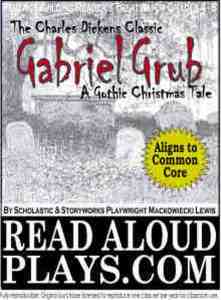
Gabriel Grub holiday playA couple of my fifth grade girls showed up at school today wearing Santa hats. “Santa hats?” I said. “We haven’t even had Thanksgiving yet!” They giggled and told me they didn’t care, to which the Scrooge in me growled , “No Christmas stuff until after Black Friday!” Of course, three hours later they were still wearing them.

It reminded me that Christmas really is just around the corner, and a great way to celebrate it is with a trio of holiday plays. You can pick up a class set of Ebenezer Scrooge for just three bucks at my TeachersPayTeachers store. This play originally appeared in the Nov/Dec 1998 issue of Storyworks and has been republished in several other Scholastic venues. It’s a succinct version developmentally-suited to upper elementary kids. Another holiday classic is O. Henry’s Gift of the Magi. It’s magi cover scope 700x984appeared in Storyworks, Scope, and Scholastic News, and today is available in my book, Read Aloud Plays: Classic Short Stories. You can often snag a PDF for just a few bucks at Teacher Express and download it immediately.

Before devising Scrooge, Charles Dickens was experimenting with the same theme in Gabriel Grub. Grub is a foul-tempered gravedigger who on Christmas Eve gets haunted by a troop of maniacal goblins. The goblins put him on trial and find him guilty of being without the Christmas spirit. It’s wildly funny and eerily spooky at the same time. Suitable for 5th through 8th graders, it’s a great play for that last chaotic day before vacation.

Especially if a few of those goblins are wearing Santa hats.

Happy directing!

Girl. Fighter. Hero.

Sybil Cover_ScopeWomen soldiers? It’s not so unusual in 2015, but back in the 18th century, the very idea would have drawn guffaws from even the most liberal-minded colonist. “A ridiculous notion,” one patriot leader was known to have said. And yet, History provides numerous examples of women performing acts of heroism throughout the American Revolution itself. Lydia Darragh, for example, is considered one of America’s first spies. Then there’s Deborah Sampson. She disguised herself as a man and enlisted in the Continental Army under the name Robert Shurtliff. Twice wounded, she performed surgery on herself to avoid detection. Another heroin was Sybil Ludington, the 16-year-old girl who rode forty miles on horseback through the Hudson Highlands (on a stormy night, no less!) to muster the militia in defense of Danbury. She’s known as “The Female Paul Revere,” and according to Martha Lamb’s 1880 “The History of the City of New York,” George Washington himself personally thanked her for her stalwart effort. Her story is captured in my latest play, “Girl, Fighter, Hero,” which appears in the November/December issue of Scholastic’s Scope magazine. Although it’s available exclusively to Scope subscribers, you can still get it by clicking here.

Whether you use Sybil’s story or not, a kick-in-the-pants way to get kids excited about your American Revolution unit is to build it around a trio of Read Aloud Plays. Start with a FREE download of “Betsy Ross: Fact or Fiction.” It first appeared in Storyworks back in 1999, and then in my book, Symbols of America. It challenges students to examine the facts associated with the first U.S. flag and draw their own conclusions. It’s FREE on my TpT storefront until November 1st. Free. I’m convinced you’ll love it and want to then grab “The Secret Soldier,” a historically-accurate depiction of America’s first female fighter, and “Eagles Over the Battlefield,” a dramatic yet subtly humorous play about how the eagle came to be an American symbol (as opposed to the turkey, the turkey vulture, and the groundhog). Eagles, by the way, is part of a BOGO deal with “A Bell for the Statehouse,” which relives that infamous crack in The Liberty Bell.Cyclops Cover_SW

As with all my plays, these were all carefully-researched, fact-checked by Scholastic editors, and best of all, kid-tested by my own students.

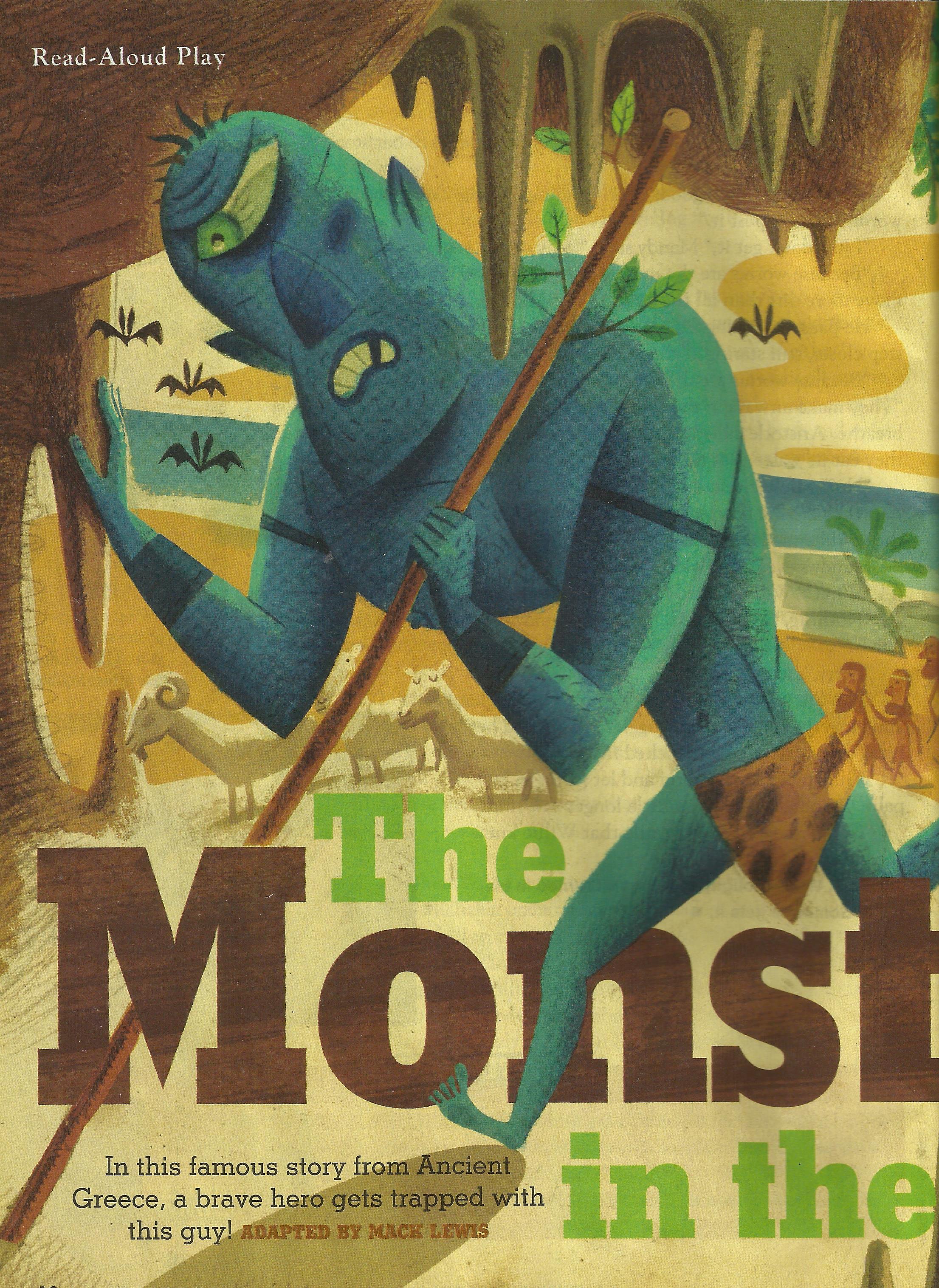
One added note this week is that my play “Cyclops: The Monster in the Cave,” is making an encore appearance, this time in Storyworks. It’s been freshly revised by editor-extraordinaire Lauren Tarshis (author of the I Survived series). Check out the new artwork by Sebastia Serra, too! If you’re not yet a Storyworks subscriber, you should be, but you can also grab the original version of Cyclops off my website.

Happy directing!

You Fancy Me Mad?

Harry_Clarke_The_Tell-Tale_HeartFairies waving candied wands… Goblins drooling chocolate malt… Halloween has such a bizarre place in our classrooms. In my school it’s been informally “banned,” though the kinders still get to parade through the school in their costumes, and the rest of the student body gets to have an afternoon “party” that presumably has nothing to do with ghouls and ghosts. Personally, I like “Monte Carlo Day,” a party in which kids set-up, run, and risk candy tokens at a variety of “probability games” such as Roulette, 21, and the Shell Game. The kids still get their candy fix, but at least there’s a bit of math involved.

An even better approach to Halloween is to replace your parades and parties with a collection of play performances. Kids still get to dress up, you can serve treats at the performance, and it’s not only academically valid, but a fine way to satisfy standards. A trio of plays takes a few weeks to prepare and an afternoon to perform. You can also invite other classes to attend, thereby helping your colleagues with their Halloween alternatives. Though Halloween lands on a Saturday this year, a set of plays will make Friday the 30th a huge hit for all involved!

I have a number of Read Aloud Play titles that are perfect for Halloween. The Birth-mark, which is a classic short-story by Nathaniel Hawthorne, tells the story of a mad scientist who, in his quest to make his already beautiful bride “perfect,” kills her instead. The Monkey’s Paw is W.W. Jacobs’ classic Gothic tale about getting three wishes. The disturbing result will stay with your students long after Halloween has passed. The well-known Legend of Sleepy Hollow is available in my book, Read Aloud Plays: Classic Short Stories (you can purchase and download it instantly at Scholastic Teacher Express). Pair it with YouTubeThe Birthmark scope cover page segments from the original Disney flick. You’ll also find Poe’s The Tell-Tale Heart in the same book, which can be paired with my modernized version, Penelope Ann Poe’s Amazing Cell Phone. (At least one of my reader’s has commented that it’s “too strange,” which I think makes it a lot of fun for Halloween.) Finally, A Piece of String has a ghostly conclusion and Cyclops has a ferocious monster. All of these plays were originally published in Scholastic classroom magazines such as Scope and Storyworks, so you know they’re up to snuff, and they all come with reproduction and performance rights.

Ready to give it a try but unsure how to start? Download my free guide to teaching with plays. It’ll give you tips and ideas on how to use plays to make your language arts block the best section of the day. But get to it right away…those ghouls and goblins are already knocking at your door.

Happy Halloween and happy directing!

Letter Grades: Who Needs em?

The Bellringer (PD-1776)How do you grade a play?

I read an article recently about the merits of “gradelessness” in the classroom. It suggested that the assigning of letter grades to children is neither healthy nor effective. The premise works like this: if “Rafael” works hard on a writing task and shows progress compared to previous work, yet still lacks certain skills, will giving him a C-minus motivate him to improve? Or, is it better if we applaud Rafael for his effort and growth, show him where he did well, and give him specific things to work on? In other words, can a teacher forsake grades while still raising standards and providing effective evaluation?

Yes, and Read Aloud Plays provides an exceptional medium to do exactly that.

Plays provide an avenue to teach your students how to give and receive constructive feedback. Here’s how: Lead your students to define appropriate standards before you begin a play, post those standards, and consistently revisit them as you rehearse.

During practices, ask your students, “What are we doing well?” and “What do we need to work on?” “Maureen spoke with character and personality,” might be a comment you’ll hear. “Paulie lost her spot; she needs to follow along better,” is another.

Early in the year, teach your students to say, “Some of us…” as in “Some of us need to practice more at home so we’re better prepared.” As the year progresses, graduate to more specific statements such as “Charles, you have a really pleasant voice, but you need to speak up more so we can all hear it.” By using this approach, students will be not only be able to provide valuable feedback to their peers, they’ll also synthesize evaluative factors which they will naturally apply to their own performance, all without the negative emotional charge of a grade. As students become proficient at providing constructive criticism, consider applying it to other subject matter as well, such as writing, art, and presentations.

There may be perfectly good reasons to assign grades under some circumstances. You may also be faced with mandates requiring grades, but even in those cases, by teaching students to give and receive feedback, you can de-emphasize the grade and focus instead on developing the given skill through constructive criticism.

Revolution Cover 700x894These days when trolls roam the internet slamming people and businesses with nasty and often unjustified reviews, it’s especially important for students to learn the ethics of giving constructive criticism.

Whatever the case, as you kick-off a new school year, spend some time contemplating your approach to grading and consider using Read Aloud Plays to teach your students to develop their constructive feedback skills. If you’re already using Read Aloud Plays, leave a comment to let us know how you’re assessing play performances.

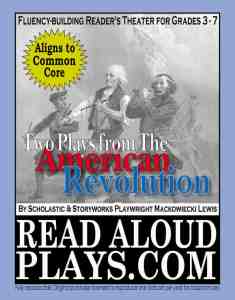
Speaking of plays, I’ve just released two new ones packaged together for the price of one. Revolutionary War Plays comes with two exclusive plays, comprehension activities, and additional supplementary material. Originally published in my book Read Aloud Plays: Symbols of America (Scholastic), “Eagles Over the Battlefield” tells the story of the bald eagle becoming the emblem of the United States, and “A Bell for the Statehouse,” reveals the history of the The Liberty Bell. Both are fun, easy, and ideal for trying out some ungraded constructive feedback.

Happy directing!

Old Favorites

Click on the cover to preview or purchase!Imagine saying the Pledge of Allegiance to a bright yellow flag featuring a coiled rattlesnake! The history of the flag of the United States is a compelling story, but historians are divided as to the facts. Did Betsy Ross really create the first flag? This play, which was originally published in my book, Read Aloud Plays: Symbols of America and later reprinted in the January 2002 issue of Scholastic’s Storyworks magazine, encourages readers to become history sleuths. It includes the play script, a short reading supplement, a bubble quiz, a comprehension activity built around William Canby’s 1870 treatise on the matter, answer keys, and extension activities.

Betsy Ross: Fact or Fiction? is the first of several old but new plays destined for TeachersPayTeachers this season. Having recently re-acquired full publishing rights to the plays in my book, Symbols of America, I’ll be packaging up all these old favorites for easy downloading on TpT.

As with all my plays, the Symbols collection is suitable for reader’s theater or full stage production. You can use the plays to build fluency and to satisfy a variety of Common Core standards in Literature and Informational Text. Best of all, the original purchaser is licensed to print one class set per year for use in his or her own classroom.

To preview or purchase Betsy Ross, click here. Be sure to check back often for “old but new plays” about MLK, Mount Rushmore, the War of 1812, World War Two, and more.

Happy directing!