Best Bets for January & February

MLK Day is January 20th, so it’s a great time to use some exceptional reader’s theater to teach about this icon of American history. My play, Martin’s Big Dream, tells about how an incident in the sandlot during King’s childhood helped inspire his mission. It’s my top play ever. It’s been published in Storyworks, Scope, Scholastic News, Instructor Magazine, in various textbooks, and in the book, Read Aloud Plays: Symbols of America. It’s also been professionally performed by the Palace Youth Theater and other organizations.  You can pair your use with PYT’s performance by visiting here.  

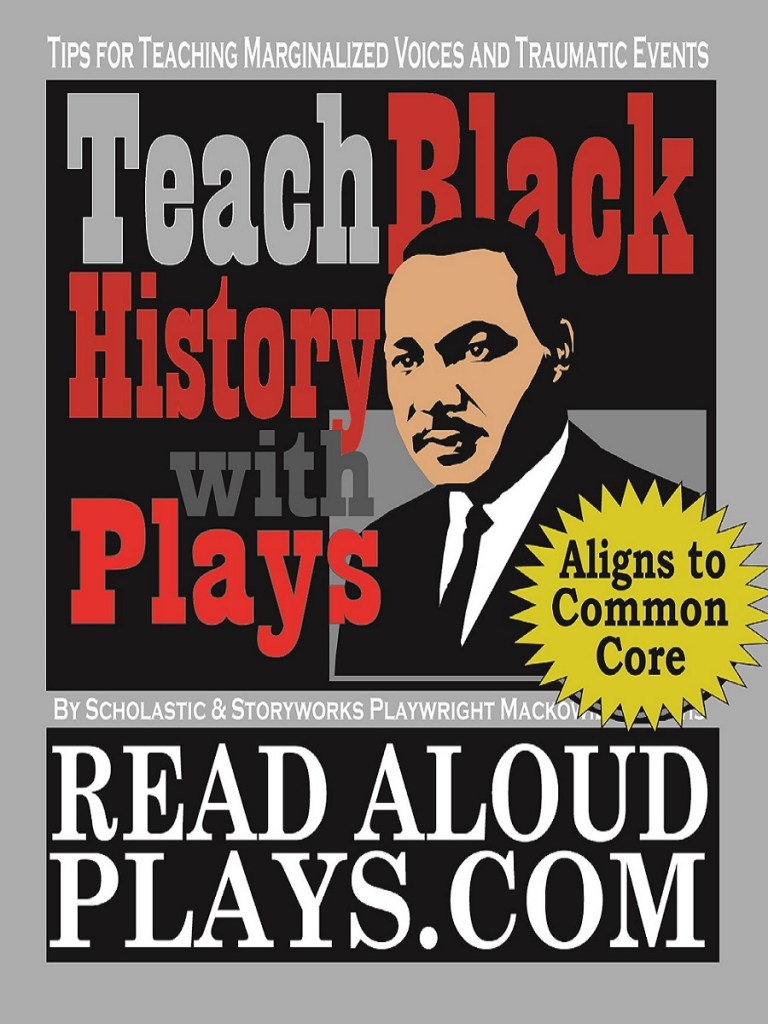
Other MLK plays include Sitting Down for Dr. King, In the Jailhouse with Dr. King, and my personal favorite, MLK’s March on Washington.  But wait! Not sure how to teach such sensitive topics? Download our free “Tips for Teaching Marginalized Voices and Traumatic Events” by clicking here.  

Of course, all of these plays are also great picks for Black History Month in February, and now is the time to get started if you want a first-rate presentation.  Focusing on one or more of the young heroines of the Civil Rights Movement might inspire some of your female students to greatness, so consider our scripts about Ruby Bridges, Sheyanne Webb, and Claudette Colvin.

We also have plays about Box Brown, the man who escaped slavery by mailing himself in a crate, about baseball great Jackie Robinson, and about the author, Richard Wright.

President’s Day is February 17th. Presidents’ Day Dream looks at the Presidency from a different viewpoint. When the play’s lead character day dreams about being president, she’s met in her “dream” by various former presidents. Each speaks frankly about the challenges and hardships of the job while pointing out the qualities it takes to be a good leader. It’s an easy one to perform.

Another one for February is Argument at Mount Rushmore. It imagines the sixty-foot tall faces on Rushmore “discussing” the merits and accomplishments of each of their presidencies. Though built on a humorous platform, it’s a historically-accurate portrayal of the gracious Washington, the witty Lincoln, and the always-enthusiastic Roosevelt. As for the sometimes over-looked and often under-appreciated Jefferson, well, let’s just say he gets a bit bent out of shape—just as you might be if you miss the chance to snag some of these timely play scripts.

Happy directing!

9 Ways to Prep for a Sub

1. Don’t bother! Just ignore that cough. Cancel that meeting. Show up to class with a box of Kleenex and a bottle of DayQuil.

2. Don’t bother. Let the sub fend for him- or herself.

3. Don’t bother. Put a kid in charge instead. Your students can tell the sub where to find all the “worksheets,” the tempera paints, the science chemicals….

4. Stay up late. Use the night before to get all those sub notes written out. Why not? You’re gonna sleep all day tomorrow, right?

5. Go in early. You’ll probably already be up and retching at 4 a.m. anyway.

6. Give ’em more screen time. Plug the kids into to computerized programs that pacify them just like their devices do at home. Or leave a collection of Disney movies and Bill Nye videos on your desk.

7. Copy. Leave the same sub plans your neighboring teacher used last week and hope the sub can adjust.

8. Hope for a snow day.

9. Or, download EZSubPlans. It’s the easiest and most professional way to prepare for a sub. We all know preparing for a sub is tedious and time consuming, but it doesn’t have to be. Just click, print, and relax! Rather than staying up late, showing up sick, or throwing your sub under the bus, give our emergency lesson plans a try. Because they provide your students with quality, standards-based lessons that don’t interfere with your regular instruction or require special materials, EZSubPlans represent good practice. And they’re just a click away. Download your EZSubPlans today so you’re prepared tomorrow!

Whether a classroom teacher, substitute, or administrator, EZSubPlans will provide you with inexpensive, kid-tested plans at the touch of a button. Each EZSubPlans package includes at least seven hours of grade-specific lessons designed to make your next absence easy and worry-free. Classroom teachers wanting to avoid the frustrating and time-consuming process of preparing for an absence and substitute teachers needing back-up material will find everything they need with EZSubPlans. Days are labeled by grade level, but each can be easily adapted to suit one grade level up or down. A fifth grade teacher, for example, could use the lesson plans for grades 4, 5, and 6–that’s six days in all. Each set includes a reading text and comprehension exercise, a spiraling math activity with extensions, a grammar lesson, an art project, a writing task, and even opening and closing activities. Teachers need only to download and print–the sub does everything else.

How much is a stress-free sub day worth? Who can say? How much does a stress-free sub day cost? Just $5 a day with EZSubPlans. Click here for more information about EZSubPlans or click here to preview or purchase at TeachersPayTeachers.

Banned Books, Banned Plays

Censorship always begins with good intentions.

Following the George Floyd protests, heightened concern about cultural sensitivity and traumatic events led TeachersPayTeachers to ban pretty much any reader’s theater or history lesson in which students were challenged to see the event through the eyes of a minority figure. Though well-intended (after all, it’s pretty obvious we shouldn’t be simulating slave auctions in class), TpT’s policy essentially silenced Ruby Bridges, Claudette Colvin, Sheyann Webb, MLK, and other heroes of the Civil Rights Movement. The basis behind the ban was that today’s children shouldn’t be forced to relive the verbal abuse Ruby experienced, or the emotional abuse felt by Sacagawea, or the violence Sheyann witnessed. Never mind that all good literature and historical accounts requires the reader to see it from such a perspective. For example, if Claudette Colvin’s story shouldn’t be shared via my play, “The Girl Who Got Arrested,” it also shouldn’t be shared using Phllip Hoose’s National Book Award-winning biography, Twice Toward Justice.

Yet it must be shared. It’s by seeing Claudette’s story through her eyes that it becomes more than just a blurb and a date in a history book. Claudette’s first-hand account is the primary source that makes the event relevant today.

When TpT deactivated all my plays, I sought help from a friend who serves as the director of the local university’s Center for Cultural Diversity, as well as from Dr. Geneva Craig, someone who actually experienced the tear gas in Selma. These are crazy times, they both lamented, but they helped me re-evaluate my content to make sure I was indeed being sensitive. I made a handful of subtle changes and then re-posted my plays on TpT.

Only to have them deactivated all over again.  

I tried re-posting them as JPEG sheets so that TpT’s content bots couldn’t recognize the text. I removed words like “drama” and “scripts” from my headings and changed “reader’s theater” to RT. To further disguise them, I rebranded them as “Paired Texts.” Nothing worked. TpT deactivated them every time. Ironically, it was during this time that The Palace Youth Theater in New Hampshire, with the help of its local BLM chapter, enacted two of the plays TpT had just banned.  

Fortunately, less-reactionary ideals have prevailed and the new ownership at TpT has since reversed the censorship. I suspect they recognize that educators have school district policies, parent input, and professional training to guide us as to the appropriateness of material. We don’t need TpT to do it for us.

Though I lost hundreds of favorable reviews and thousands of clicks, I’m pleased to say that all my civil rights and American history plays are back on TpT. But given the “crazy times” in which we live, I think it’s important for educators to consider how to appropriately use reader’s theater to teach marginalized voices and traumatic events. Here are a few tips:

Community – Consult with the cultural community associated with the events depicted, bringing in guest speakers where appropriate. If you have students from that particular marginalized culture, seek input from their families before introducing the play.

Sensitivity – Characters in a play should not do anything demeaning toward their culture. While every story—whether in a play format or otherwise—has to have conflict, violent acts should only be referenced by narrators or other characters rather than explicitly acted out. If unsure about how a scene plays out, change it. If you’re still unsure how the content will be received, consider using it only for a discussion-based classroom reading or podcast rather than enacting it “on stage.”

Casting – Don’t let race be the basis for casting parts. Dr. King said he dreamed of a day when we would all be “color blind.” A reader’s theater performance is a good place to practice it.

Policy – It’s important to check your school board’s policy before embarking on any content that might be controversial. Some districts restrict subject matter not explicitly identified within a given grade level’s standards.   

Paired Texts – It’s a good idea to pair reader’s theater content with professionally-published texts. For example, read Ruby Bridge’s book, Through My Eyes while working on the play, A Simple Act of Courage. Not only does the text serve as a vetting agent, it provides material to compare and contrast.

Discussion – No book, play, or video should stand alone. By discussing the content and events depicted, you facilitate understanding. Discussion should happen when introducing a play, while reading specific scenes, and after presenting. Utilizing expert guests enhances those discussions.

Repetition – One of the best reasons to use RT is that if there’s to be a presentation or performance, kids are willing to read plays repetitively. Even a simple reading in front of the class is enough to get kids to read and re-read a script multiple times. The brain science behind repetitive reading suggests students build their fluency at a far greater rate. It holds true with the students’ grasp on the historical events depicted and as well as their ability to empathize with marginalized voices.

Thank you for teaching Black history. Happy directing!