Celebrate Your Slow Readers

Free Black History Play (through Jan 31)I recently read an article about how “slow reading” is gaining acceptance as an academic approach. Though the piece was aimed at high school and college instructors, the gist remains the same at the elementary and middle school levels: let’s slow our kids down and have them read meaningfully. To this I say, “hot dang!” I’ve long been an advocate of focusing on accuracy and beauty rather than speed.

The purveyors of Oral Reading Fluency measures no doubt developed their program with good intentions. They saw a correlation between quality reading and speed. They found that good readers, when tested by the minute, can read fast. Consequently, oral reading fluency has become the king of qualifiers for Special Ed and Title I services. The flaw is that the formula isn’t commutative (if I may borrow a math concept for a moment): good readers may be able to read fast, but it doesn’t work in the opposite direction. Emphasizing ORF scores teaches kids to read fast, but that doesn’t mean they’ll read well. In fact, all this emphasis on speed is probably causing kids to struggle more than ever.

The emphasis in my classroom is on reading with accuracy, personality, and comprehension. Obviously, I believe plays are the perfect vehicle for doing just that, though the process of re-training kids who have been under the ORF thumb for so long isn’t without its tribulations. My students just recorded their first set of radio dramas. When it came time to record, there was a lot of mumbling, stumbling, and stammering from some, while others read their parts like people actually talk. And, get this, there was no correlation between such quality reading and their ORF scores! In fact, some of my lowest “per minute” readers read the most beautifully; some of my highest, rather poorly. You guessed it: the factor of greatest influence was whether or not a given student read independently at home during the two weeks leading up to the recording session.

This month you can encourage great reading by staging a trio of plays for Black History Month in February. Plays such as Freedom for the First Time and Box Brown’s Freedom Crate teach about slavery while giving kids the chance to practice their slow southern drawls. Plays such as Sitting Down for Dr. King and The Girl Who Got Arrested re-enact inspiring moments from the Civil Rights Movement. There are several other Black History titles available (including this one–a free gift to my readers during January!), but whether you use my plays or not, consider jumping on the “slow reading” band wagon and let February be about teaching your students to read beautifully.

Happy directing!

MLK Day Inspiration

Click on the cover to preview at TpT!I’ve been fortunate to have forged a lasting relationship with Scholastic publishers, particularly the wonderful editors at Storyworks and Scope magazines. Through my work with them I’ve developed a reputation for writing compelling reader’s theater about Martin Luther King and African-American history in general. Somehow, I’ve been able to accurately represent the historical events and, more importantly, convey the spirit of Dr. King’s work through such plays as “Sitting Down for Dr. King.” With MLK Day upon us, and given that February is Black History Month, I want to encourage you to give some of my reader’s theater scripts a try.

I’m particularly proud of “Sitting Down.” I remember struggling over it when I was writing it back in 2002.There I was, bouncing one bad idea after another off my laptop screen, regretting having accepted the contract at all, when I realized how very simple my task was in comparison to the mammoth challenge undertaken by Dr. King. Soon thereafter I crafted the fictional story of “David,” a twelve-year-old white kid frustrated that these African-American college students were getting in the way of his birthday shortcake at the Woolworths. “Sitting Down” has since appeared in three different Scholastic venues including Storyworks, a text book series, and a leveled reading set, but I’m proud of it because it has a powerful ending that I believe Dr. King would have respected.

Click on the cover to preview or purchase!I think my play, “Gonna Let it Shine” also conveys the spirit of Dr. King’s work. It’s based upon the true story of Sheyann Webb, who was just eight years old when she braved tear gas and posse men while marching alongside Dr. King. She became known as “Dr. King’s Youngest Freedom Fighter,” and her story is the subject of the Disney movie, “Selma, Lord, Selma.” The play originally appeared in Storyworks under the title “Pigtails & Protests.” In the process of re-writing it for release on TeachersPayTeachers, I had the privilege to talk with Sheyann herself, who is today–some fifty years later–a public speaker and Civil Rights advocate. It was surreal to speak with someone who in my writing was still just a child. It was inspiring to connect with someone who not only knew Dr. King and numerous other heroes of the Movement, but was in fact a Civil Rights hero in her own right.

We Shall Overcome” tells the story of the Birmingham Children’s Crusade. That’s the event where students, some nearly young as Sheyann, were attacked by police dogs and knocked to the ground by blasts from fire hoses. News coverage of their sacrifice swayed worldwide public opinion in favor of desegregation.

The Girl Who Got Arrested,” meanwhile, tells the true story of Claudette Colvin, the first person to be hauled off a city bus and tried in court for defying Montgomery’s segregated busing law. Her story is depicted in the book, “Twice Toward Justice.” I certainly don’t want to diminish the work of Rosa Parks, but in my humble opinion, Claudette’s story is far more compelling.

One of my “under sung” plays is “MLK’s Freedom March.” It’s a work of historical fiction about a girl named Lucy who helps her ailing grandmother get to Washington to hear MLK’s “I Have a Dream” speech. There’s also “In the Jailhouse with Dr. King,” about a troubled teenage who turns it around when he witnesses King’s calm demeanor in the face of violence during the Bus Boycott. These and other plays capture the essence of MLK’s work. Consider celebrating MLK Day and/or Black History Month in your classroom by picking any three, dividing your class into three groups, practicing for a couple weeks, and then presenting them with opportunity for discussion in between. In so doing, you’ll be giving your students a strong foundation in MLK history, and perhaps the inspiration to make history themselves.

Happy Directing!

Thanks!

SCOPE-110113-PlayAs we wrap up 2014, I just want to thank you for making this the best year yet for Read Aloud Plays. In the coming year, watch for a variety of new plays to become available including A Piece of String, which was originally published in the Nov. 2013 issue of Scholastic’s Scope magazine, and I Have a Dream, the story of Martin Luther King’s childhood, which originally appeared in the January 2000 issue of Storyworks. I also plan to revamp the formatting on nearly all my plays, making sure that each comes with a comprehension activity designed to help your students meet the Common Core. No need to wait to purchase them, however. One of the great features on TeachersPayTeachers is that buyers can download updated versions without additional charge. Each time I update a play, I’ll let you know that a new version is available. Here’s to a great 2015 full of fluency-building reader’s theater for the classroom!

Happy directing!

Too Late to Stage The Best Holiday Pageant Ever?

Gabriel Grub holiday playI was recently contacted by a theater company in Maryland which wants to add my adaption of “The Gift of the Magi” to its annual Victorian Christmas Collection. They wanted to know how much I charge for performance rights. Normally, when you perform a play from publishing companies, you’re required to pay a substantial licensing fee. The Samuel French Company, for example, owns the rights to The Best Christmas Pageant Ever. If you want your students to perform it for the annual PTO bazaar, it’ll set you back $100 or 10% of the gate receipts, whichever is greater—and that’s often in addition to buying the scripts themselves (which run $8 or $9 each).

I craft my plays so that teachers can use them to build strong readers, self-confident speakers, and engaged learners. I don’t charge schools to perform my plays. Your three bucks gives you license to photocopy as many scripts as you need for your class AND the rights to perform the play in your school. Three bucks sounds like a pretty good deal compared to traditional publishers.

I’m pleased the Gift of the Magi is getting some love in Maryland, but I’m even happier that my holiday plays are finding their way into classrooms all over the country. It isn’t too late to work in a reading or even a quick performance of one of my Halloween plays into yours. The Birth-mark, which is based on the short story masterpiece by Hawthorne, is a good place to start. Says one purchaser of The Birth-mark:

“My students love Reader’s Theater. They loved reading this. They said that they were able to express the ‘darker side of themselves.’”

Also consider The Monkey’s Paw, the Legend of Sleepy Hollow, and the Tell-Tale Heart. The Monkey’s Paw originally appeared in Scholastic’s Scope magazine, while the latter two are available in my book, Read Aloud Plays: Classic Short Stories (Scholastic). You can purchase it as an e-book and have it ready for your students right away.

If you enjoy Poe, consider pairing the original story of Tell-Tale Heart with my modernized version: Penelope Ann Poe’s Amazing Cell Phone. It retells the story in a unique way. Says one user:

“My 8th grade students LOVED this assignment. I let them use their cell phones and make the ring tone noises while reading. It kept them engaged and we read it three different times during the class so they could read different parts. Highly recommend.”

Finally, I have a handful of engaging Christmas plays, too. Gabriel Grub–from Charles Dickens’ The Pickwick Papers—is my newest script, and it’s as eerie as any Halloween tale. I also have two versions of A Christmas Carol. For a limited time, you can download my traditional version from TpT–or you can re-imagine Scrooge as a woman by using my Classic Short Stories version (which also includes Magi, by the way). No, it isn’t too late to stage the Best Holiday Pageant Ever.

Happy Directing!

Why this Play is Important

Click on the cover to preview or purchaseStudents will quickly connect with eight-year old Sheyann Webb. When African-Americans were being denied the right to vote, she became Martin Luther King’s “Smallest Freedom Fighter” by joining marches on the local courthouse. As the events in 1965 Selma, Alabama, escalated, Sheyann began sneaking out of the house to attend meetings at Brown Chapel. She was there, too, on the Edmund Pettus Bridge when Selma exploded with tear gas and Billy clubs. The event became known as Bloody Sunday, and it directly led to the signing of the Voting Rights Act of 1965. But what makes this story compelling is the perspective. We’re used to hearing about the Civil Rights struggle from the viewpoint of adults, yet here is the true story of a little girl who not only saw it, but was there on the front lines risking the same dangers as her adult counterparts. What better way to engage your students in the Civil Rights Movement!

My new play, “Gonna Let it Shine,” shares Sheyann Webb’s emotional, often frightening childhood experience. Carefully researched, it improves upon an earlier version that appeared in Storyworks in 2012. It’s important to your students because it’s a kid’s story. Your students will relate to Sheyann. They’ll admire her courage. They’ll wander if they’d have been as strong. And they’ll root for her, regardless of their own race. Most of all, they’ll be inspired by her. Sheyann will show your students that one doesn’t have to be a grown-up to have a grown-up influence on the world.

Gonna Let it Shine is available on my storefront at TeachersPayTeachers for preview or purchase. As with all my plays, the original purchaser is licensed to reproduce one class set per year for use in his or her own classroom.

Along with the play, I also created a free vocab and comprehension activity that aligns the play to specific Common Core standards. Be sure to share with your students the Disney movie, Selma, Lord, Selma. It depicts Sheyann’s story with typical Disney flare. There’s also an accurate and intriguing YouTube video detailing Sheyann’s contribution to Civil Rights that can be found here. Consider comparing and contrasting all three.

Finally, the Sheyann Webb of today has remained an advocate for children and civil rights. Find out more about her work by visiting the Sheyann Webb Group.

Happy Directing!

Grow Some Neurons!

Many kids begin school already knowing how to read. They haven’t had formal lessons. Their parents haven’t been trained in the latest methodology. They haven’t used a single worksheet or text book. Yet here they are reading. Why?

What Does Brain Research Show About Fluency?

Consider for a moment how your own children learned to read. If they’re like many kids, they had a few favorites in their book bin. I recall my oldest boy latching on to Amos & Boris and a Sesame Street book entitled Don’t Forget the Oatmeal. As a preschooler, he would ask us to read these books over and over again. Soon, he started reading them to us. “He’s not really reading,” we’d tell ourselves, “He’s heard the book so many times, he’s just memorized the words.”

But based on brain research dating back to the days of psychologist Lev Vygtsky (left), some experts believe the difference between reading and memorization is slight. Kids get an emotional charge out of reading proficiently—whether memorized or not. The positive charge actually produces chemicals that form the neural pathways that make reading (and learning) possible. Because our son had consumed Don’t Forget the Oatmeal so frequently, he’d mastered the text, prompting his brain to construct new pathways.

Can Reading Physically Damage a Child’s Brain?

No, reading won’t damage a child’s brain, but could poor instruction? Consider what we often do in the classroom. We take a book, article, or story and ask kids to read it one time. We expect mastery on the first attempt. We ask kids to pass computerized tests, complete worksheets, and discuss content after just a single reading. We’ve assumed that language is language, that if they can decode they should be able to read anything at their grade level. It’s a fallacy and a tragedy. If Vgotsky was right, instead of experiencing a positive emotion that builds pathways, many kids in this situation suffer a negative emotion that causes them to withdraw and resist reading altogether, possibly even causing those neural pathways to shrink. And don’t assume it’s just your low-performing students either. Watch carefully when you ask students to read aloud in class; many of your brightest kids are just as reluctant as your poor readers. It’s not simply that they’re shy; they don’t want to risk experiencing the negative emotions they feel when they stumble over or mispronounce a word. There are, however, a number of ways teachers can prevent those neurons from shrinking, one being the use of “repetitive reading” techniques.

How is Repetition Beneficial?

Asking a young reader to read aloud a piece of text he or she is looking at for the very first time is akin to asking a musician to perform in public a piece of music he or she has never played before. Only the most talented can do it, and even they rarely do. Just as music is a language that requires repetition for mastery, so too does reading. Your students need opportunities to “sight read,” to practice, and then to “perform” the material you want them to master. Plays are the perfect format.

Because we’ve inadvertently trained kids that a book is something to be read only once, few third graders are willing to give James and the Giant Peach a second round. Few second graders will read Stellaluna more than once or twice. Give children a script and schedule a public performance, however, and they’ll be willing to read and reread it twenty to thirty times. Twenty to thirty times! By the time they’re asked to read it in front of the class, even your struggling readers will be able to read with reasonable fluency. Even your “shy” kids will be willing to read out loud.

Read Aloud Plays give you the opportunity to teach repetitive reading without the resistance you get when asking a child to re-read a traditional text. Students acquire mastery, which chemically changes the brain, making them superior readers who are better able to comprehend. If Mr. Vgotsky were alive today, I think he’d approve.

Are You Ready to Grow Those Pathways?

If you’re not already using read aloud plays in your instruction, this is a great time to start. Not only will all that repetitive reading help grow some neurons, but drama can be used to fulfill a significant number of Common Core State Standards. Kick off the school year with a trio of explorer plays such as Fly Me to the Moon, The Fountain of Youth, and Lewis & Clark and Bird Girl. Or consider a set of American Revolution plays such The Secret Soldier, A Bell for the Statehouse, and Fact or Fiction: The Legend of Betsy Ross. Or browse ReadAloudPlays.com to mix and match.

Happy Directing!

Text Books vs Read Aloud Plays

Common Core logoAdmit it. You’re using one of those big fat textbooks to teach reading, one of those monstrosities brought to you by publishers determined to make sure its refrigerator-box full of materials met every standard ever concocted in Texas, California, Pennsylvania, the U.S. Protectorates, and Saturn’s Ring. Too bad the kids are yawning.

If you’re like most people, the new Common Core Standards might have you a bit flustered. You can rely on those textbooks, which will provide certain coverage of the standards but will drive your students back to their video games, or you can delve into literature, classroom magazines, and reader’s theater, which will require more documentation on your part but will more likely create lifelong readers. The truth is, using what administrators like to call “supplementary material” is more engaging to students, more enjoyable to teach, and not so hard to justify against the CCSs. Consider this: “drama” is mentioned nearly fifty times in the Standards! That being the case, reader’s theater is more relevant than ever.

Here are just a few examples from the Reading Standards for Literature (RL) where drama or an element of drama is explicitly referenced:

RL4.5Explain major differences between poems, dramas, and prose….
RL5.4Explain how a series of chapters, scenes or stanzas fits together….
RL5.6Describe how a narrator’s or speaker’s point of view influences how events are described.
RL6.3Describe how a particular story’s or drama’s plot unfolds in a series of episodes….
RL7.3Analyze how particular elements of a story or drama interact.

cyclops coverAnd don’t assume that using drama is only useful in teaching drama. One user of my play adaption of the classic short story, The Monkey’s Paw, commented how reading the play helped her students comprehend the original text. Because plays have to break stories down to their essence, using adaptions of classic stories is likely to help students meet the RL standards for any number of otherwise challenging texts at the high end of the “complexity band” (RL4-8.10)

But plays also help students meet standards in Reading Fluency. Consider RF 4.4cUse context to confirm or self-correct word recognition and understanding…. Because drama puts the reader in the moment, and because the playwright cannot waste words within a 20 minutes classroom script, students are more able to make immediate contextual connections. In fact, drama is ideal for improving reading fluency in general. Because it mimics the repetition beginning readers use when first learning to read, it actually forms new neural pathways. (Check out the brain research by Vgotsky and others, or for a shortcut, read my article “Why Use Drama.”)

Recently, a former student of mine provided a powerful endorsement of using drama to teach literature. I hadn’t seen this young man for over four years, but he told me he’d just been thinking of me the day before. He’d been sitting in his 8th grade English class yawning over yet another mundane text book assignment when his mind drifted back to my then-third grade classroom. “I was just thinking about hopping around our classroom stage when we did that Aesop’s Fables play,” he said. “I enjoyed that.” That seems pretty telling to me.

Ready to set aside that textbook for a while and give drama a try? You can find a wide variety of read-aloud plays at my TeachersPayTeachers store. Stock up on titles for the next school year. Nearly all my plays have been previously published in Scholastic classroom magazine’s such as Storyworks and Junior Scholastic, so you can rest assured that they meet the highest standards. Not sure how to make it all work? Click here. For samples of kids performing classroom plays click on the “podcasts” tab up top. And for still more validation of using drama to meet the CCSs, check out this article from the New York Times or this podcast from the folks at Literacy Special Interests.

Happy directing!

High Stakes Testing Leads to High Blood Pressure

The Birthmark scope cover pageThis time last year I admitted to a high degree of frustration when it comes to standardized testing. It drives my blood pressure up when fifth grader after fifth grader gets pulled out of class to either test or get remedial instruction. Rarely (if ever) do I have my full group. It makes for some dysfunctional lessons requiring the reteaching of material to kids who were already struggling to grasp material from previous missed sessions. Still, as my Admin is fond of saying, “testing is the reality in which we live.” Embrace it or die (at least that’s how I translate it). And with the Smarter-Balance test hitting the streets next year, it’s evident this testing craze isn’t going away anytime soon (can’t wait to hear from parents when their kids go home and say they flunked the ‘smarter test’).

Well, I’m happy to say my current students have once again done just fine on state standardized tests, especially in reading where nearly all either met standards or growth targets and average fluency scores soared. Why mention it here? Because I long ago abandoned traditional text books and instead built my reading program around read aloud plays. Along with chapter books and content reading (primarily history content from Storyworks magazine), read aloud plays are the mainstay of my instruction. Not only do they build fluency and provide the framework to teach comprehension skills, they also increase the love of reading.

While some of my colleagues look at the new Common Core Standards with trepidation, I’m confident my young thespians will continue to thrive. As always, I’m already mapping out another year of plays. You can see my tentative plans below, and if you’d care to jump on the reader’s theater bandwagon, you’ll find all of the titles (and many more) either on my TpT Storefront, in one of my books^, or coming soon via this website*.

I’ll close with one warning: using read aloud plays to improve test scores means more than just handing out scripts and inviting kids to read. To see the nuts and bolts of how it’s done, download my free article, Why Use Drama?

September–Introductory: Rikki Tikki Tavi^, Peter Rabbit, Argument at Mount Rushmore^

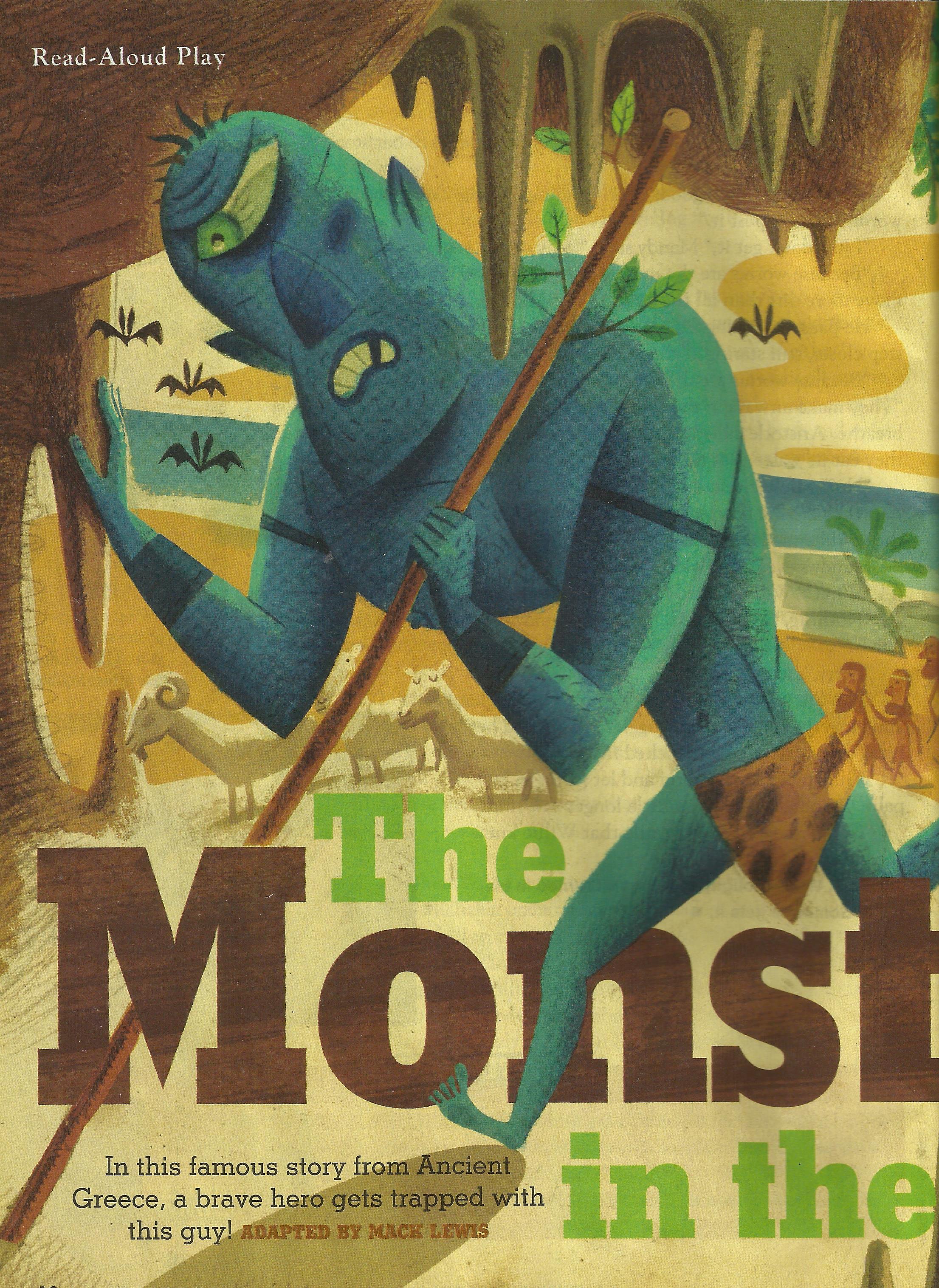
October—Just for Halloween: Penelope Ann Poe’s Amazing Cell Phone, The Tell-Tale Heart^, Cyclops v Odysseus

November/December–Holidays: Ebenezer Scrooge*, Gabriel Grub*, The Necklace^

January–American Revolution: The Secret Soldier*, The Legend of Betsy Ross^, Eagles Over the Battlefield^

February–Slavery & Civil War: Spies & Rebels, Freedom for the First Time, Box Brown’s Freedom Crate

March/April–Civil Rights: How Jackie Saved the World, Selma to Montgomery: Let it Shine*, I Have a Dream: The Childhood of MLK^

May—Just for Fun: A Piece of String*, Ransom for Red Chief*, The Nose^

All right, I’ll close (for real this time) with the fine print: Using Read Aloud Plays won’t stop your classroom instruction from being interrupted by standardized testing. Nor will it prevent your blood pressure from soaring due to the same. But done right, read aloud plays will have a positive impact on your reading test scores.

Happy directing!

Nine Minutes, Two Misconceptions, and One Easy Fix

The good people of America have some misconceptions about teaching. Planning for a lesson, they believe, is as easy as cracking open a text book and assigning the questions at the end of the chapter. Not only would that be low-level instruction, it also isn’t how today’s curricula are designed.

Why Use Drama cover 220x289The fifth grade reading text adopted by my school district, for example, includes a six-volume teacher’s edition, a balanced literacy planning guide, a CD-Rom planning guide, a manipulatives kit, a set of blackline masters, a classroom management kit, an integration kit, a set of theme tests, an extra-support management kit, two student workbooks and the teacher’s manual to go with them, three file boxes of mysterious support material I have yet to open, and fifteen small crates of so-called “mini-readers.” There’s so much of it that it takes a hand-truck to carry it anywhere.

Let’s ignore for a moment the cost of all this stuff (almost $3,000 for the teacher’s materials alone). What I want to accentuate here is that in order to plan one 30 minute reading lesson, I must wade through and be familiar with every last piece of it.

And how much time do I have to do it? According to planning time standards in my district: nine minutes. I have nine minutes to plan it, evaluate each individual student’s performance, record the results, and report the outcomes.

This leads me to another public misconception: teachers are only working when they’re standing in front of the class.

As we all know, delivering lessons to our students can be demanding. One study measuring stress by the number of decisions made per minute concluded that teaching is second only to air traffic control. So standing in front of our students is indeed “work.” But could it be possible that the time teachers spend planning may be the more demanding of the two?

You and I know that quality lessons take time to plan and prepare. But nine minutes? Imagine Jerry Seinfeld or Chris Rock preparing a ten minute bit for the Tonight Show but given only 3 minutes to do it. That’s the same ratio.

Nine minutes to plan, prepare, and assess each thirty minute lesson (not to mention all our other duties such as completing report cards, writing performance goals, communicating with parents, dealing with misbehavior, and attending meetings). Nine minutes.

The chefs on Hell’s Kitchen don’t have it any worse.

It’s no wonder I breathe a sigh of relief whenever I start a new set of classroom plays. In comparison to today’s over-stuffed textbook programs, planning and preparing read aloud plays is “easy-peasy.” To find out how easy, download my free guide on teaching with plays, Why Use Drama? Or tune in to this short podcast from the folks at Literacy Special Interest.

Read Aloud Plays are comparatively easy to plan, fun for the students and teacher, and inexpensive. And with a host of topics available—from Aesop’s Fables to the Apollo Moon Landing—they can be integrated with nearly every subject. What’s more, they’re an excellent way to teach to the Common Core (which refers to “drama” 47 times).

So this month, give your students and yourself a break: set aside that monster textbook and use you nine minutes to plan a month-long trio of Read Aloud Plays.

Happy directing!

Is There an App for That?

Indestructible NokiaI’m told school districts around the country are investing millions of dollars into iPads and other online devices. The idea is that students can use these devices to access their textbooks, dictionaries, and encyclopedias via the Internet. After all, hand-held devices, not printed volumes of the World Britannica, are the future.

Me, I’m salivating over a class set of laptops with which my fifth graders can do their writing, post to their webpages, watch student-created instructional videos, and bombard me with in-lesson feedback via Twitter.

But it’ll never happen. My district just can’t afford to invest $15K for a single classroom set of machines that will be outdated in just a few years. When put to the daily abuse levied by fifth graders, I doubt the machines would survive that long anyway.

But a funny thing keeps happening in my classroom. Whenever we need something that my generation had to find in a book, some student will invariably say, “Can I use my phone?” Need to know the definition for lugubrious? Need a picture of the state flag of Georgia? Need to know the formula for calculating the area of a circle? It’s all there at their fingertips on each student’s individual phone.

Kids can use their phones to record themselves reading, to film your next class play, to create short movies, to document field trips, and more. So why invest tax dollars in electronics the students already possess? Sure, you’ll have to bust a kid from time to time for texting when he’s supposed to be studying. But how’s that any different than busting him for passing notes? Do we ban pencils and paper? True, you may have that kid who uses his phone to cheat on a test. But that’s probably the same kid who’ll have notes scribbled on his arm or have his binder suspiciously open beneath his desk.

What about those kids who don’t have phones? Well, it wasn’t but a few years ago that only a handful of my students had online access at home. Today, that figure is around 95%. It won’t be too long before we see the same circumstances with phones. In fact, I estimate that nearly half of my 5th graders–eleven year olds!–already carry phones, and every one of ’em is vastly superior to my own woefully-outdated but indestructible Nokia. And before you go thinking my school is in some wealthy suburb of Portland, know that it has a 70% Free-and-Reduced population.

Consider this: we require $100 calculators for high school calculus (and I’ll bet you there’s an app for that), and those that can’t afford it have access to loaners. What’s wrong with applying the same logic to hand-held devices?

Cell phone technology creates life-long learners who are always just a click or two away from finding the information they need to accomplish nearly any given task. It’s how adults operate these days. It’s how we should be teaching our kids.

The future is already here, and most of our kids are holding it in their hands. We just have to let them turn the dang things on.

Happy Directing!