February is Black History Month. While I encourage you to acknowledge it with some dedicated activities, I’m also reminded that black history is American history; it need not be limited to a single month! The end of the Civil War, Jackie Robinson’s breaking of baseball’s color barrier, and MLK’s “I Have a Dream” speech certainly rank among some of the most significant moments in American history. With that in mind, here are twelve great reader’s theater scripts with which to recognize those great moments while meeting numerous Language Arts standards. All the plays can be paired with a printed text, such as “The Ruby Bridges Story” with her autobiography, Through My Eyes. Each pairing represents distinctly unique points of view (Literature CCSS #6), making for livelier discussions and quality comparisons (CCSS Lit #7). And because these plays are based on real events, they’ll also satisfy CCSS Informational Text #6. Each play includes a comprehension activity, too, assuring your students will satisfy numerous other standards as well. And because almost all my plays were originally commission by and published in Scholastic’s Storyworks and Scope magazines, they’ve been professionally vetted, making them the best reader’s theater on the market. Visit ReadAloudPlays.com for detailed pairings, or click on the title to preview or purchase on my TeachersPayTeachers storefront. Happy directing!
Now’s the time to start working on classroom activities commemorating Dr. King’s work. This compelling video featuring two inspiring plays from the ReadAloudPlays.com catalogue is a great place to start. The Palace Youth Theater put it together during the pandemic shut down. Share it with your students and then read or act out the plays. The first shows how Ruby Bridges broke the color barrier in New Orleans public schools. The second shows how MLK’s childhood inspired his civil rights leadership. You’ll find both plays, along with many other titles for Black History Month, on our TpT Storefront. Thanks, and happy directing!
Here are nine compelling paired texts with which to recognize black history month. All the plays are based on the given event–not it’s paired text (in most cases the play was published before the given book). That means each pairing represents distinctly unique points of view (Literature CCSS #6), making for livelier discussions and quality comparisons (CCSS Lit #7). And because these plays are based on real events, they’ll also satisfy CCSS Informational Text #6. Each includes a comprehension activity, too, assuring your students will satisfy numerous other standards as well. And because almost all my plays were originally commission by and published in Scholastic’s Storyworks and Scope magazines, they’ve been professionally vetted, making them the best reader’s theater available. Just click on the image to preview or purchase on my TeachersPayTeachers storefront. Also be sure to check out these recorded performances of “Martin’s Big Dream” and “Ruby Bridges: A Simple Act of Courage” by The Palace Youth Theater. Happy directing!
My work for Scholastic writing black history plays is just a tiny blip on the civil rights radar, a minuscule contribution when compared to real civil rights heroes such as John Lewis and Sheyann Webb. But given Storyworks magazine’s truly cosmic readership, I realize that over my twenty-plus year association with Scholastic, my reader’s theater has influenced—at least in some small way—millions of kids. Millions. I think it’s fair to take some pride in that.
I often ponder, however, how a scrawny white kid from rural Oregon, a kid whose family spent their Sundays watching Hee Haw and Gunsmoke, how does that kid end up writing black history plays?
Well, for that I have to thank Stevie Wonder–and maybe a bit of divine intervention. When I was around ten years old I stumbled across a discount record bin at Payless department store. I’d recently set up my brother’s old Zenith “Stereophonic” record player so I could listen to my dad’s Tijuana Brass record, but I was on the lookout for something more, something of my own. Thumbing through the discs, I came across Stevie Wonder’s 1971 album, Where I’m Coming From. I had no idea who this Wonder guy was, but he had a cool name, and the cover seemed the antithesis of a Tijuana Brass album. So, I asked my mom if she could buy it for me.
My mom was never openly racist. She was generous to a fault and spent many hours volunteering to help less-fortunate people. But looking back, I recall that she’d voted for George Wallace in the 1972 presidential primary, so I suspect had she taken a closer look at the album, she would have nixed the purchase right there. None-the-less, I went home and cued up Stevie on the Zenith. I wonder what she thought when she heard “Do Yourself a Favor” blasting from behind my bedroom door. This was no Clark and Owens. Not the music or the message.
And I was hooked. Thus, Stevie Wonder became one of my most profound influences.
Frankly, Stevie doesn’t get enough credit for his contribution to civil rights. Despite Motown’s determination to mold him as a “black Bing Crosby”—a crooner—Stevie broke free and produced music that called attention to societal inequity, to the plight of minorities, to the struggles that come with poverty. While he wasn’t the first African-American artist to produce music with politically-charged, socially-relevant music, he was among the first to crossover into white culture. If a kid like me could get hooked on Stevie Wonder, then surely, around the country millions of other white kids must have been doing the same.
I never set out to be Scholastic’s black history playwright. I kind of stumbled into it. But it was Stevie Wonder’s music that had prepared me for the task. Without that influence, my poignant plays about MLK, Claudette Colvin, Ruby Bridges, and many others wouldn’t exist. And when I see those same plays presented by organizations such as the Palace Theater and most recently, Crete Monee Middle School in Illinois, I’m amazed at the reach Stevie has had.
If you’re using any of my Black History plays this month, please give a well-deserved nod to Stevie Wonder.
MLK Day is January 20th, so it’s a great time to use some exceptional reader’s theater to teach about this icon of American history. My play, Martin’s Big Dream, tells about how an incident in the sandlot during King’s childhood helped inspire his mission. It’s my top play ever. It’s been published in Storyworks, Scope, Scholastic News, Instructor Magazine, in various textbooks, and in the book, Read Aloud Plays: Symbols of America. It’s also been professionally performed by the Palace Youth Theater and other organizations. You can pair your use with PYT’s performance by visiting here.
Of course, all of these plays are also great picks for Black History Month in February, and now is the time to get started if you want a first-rate presentation. Focusing on one or more of the young heroines of the Civil Rights Movement might inspire some of your female students to greatness, so consider our scripts about Ruby Bridges, Sheyanne Webb, and Claudette Colvin.
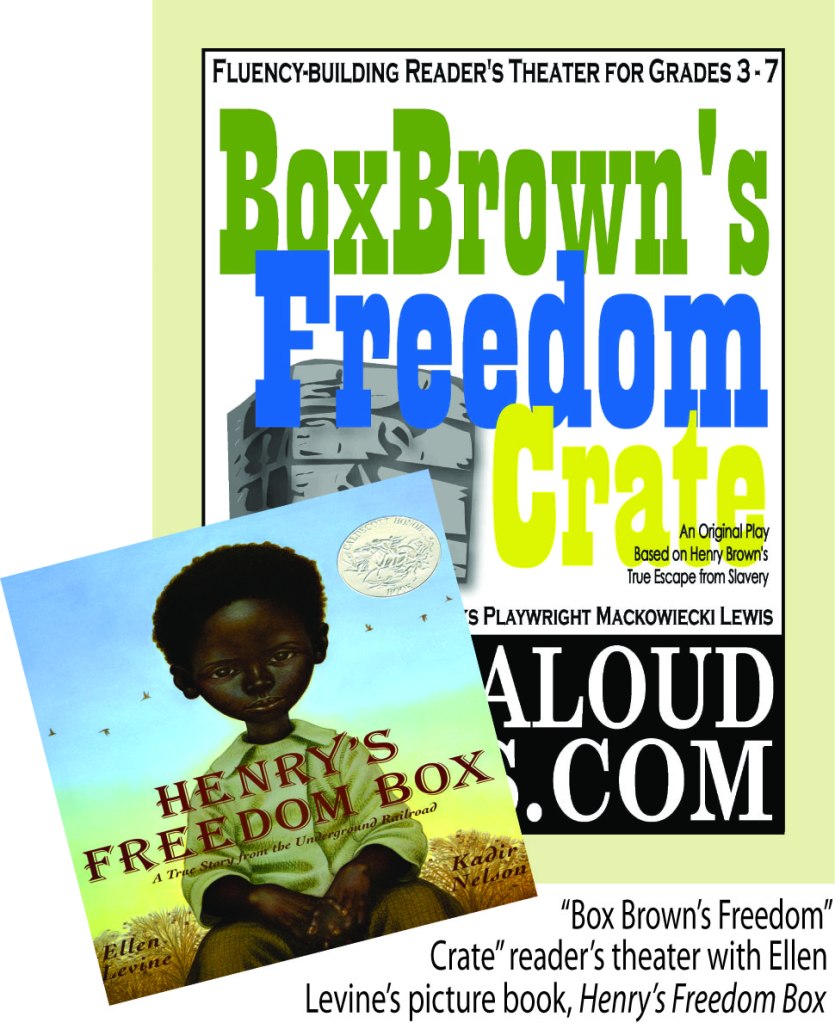
We also have plays about Box Brown, the man who escaped slavery by mailing himself in a crate, about baseball great Jackie Robinson, and about the author, Richard Wright.
President’s Day is February 17th. Presidents’ Day Dream looks at the Presidency from a different viewpoint. When the play’s lead character day dreams about being president, she’s met in her “dream” by various former presidents. Each speaks frankly about the challenges and hardships of the job while pointing out the qualities it takes to be a good leader. It’s an easy one to perform.
Another one for February is Argument at Mount Rushmore. It imagines the sixty-foot tall faces on Rushmore “discussing” the merits and accomplishments of each of their presidencies. Though built on a humorous platform, it’s a historically-accurate portrayal of the gracious Washington, the witty Lincoln, and the always-enthusiastic Roosevelt. As for the sometimes over-looked and often under-appreciated Jefferson, well, let’s just say he gets a bit bent out of shape—just as you might be if you miss the chance to snag some of these timely play scripts.
Following the George Floyd protests, heightened concern about cultural sensitivity and traumatic events led TeachersPayTeachers to ban pretty much any reader’s theater or history lesson in which students were challenged to see the event through the eyes of a minority figure. Though well-intended (after all, it’s pretty obvious we shouldn’t be simulating slave auctions in class), TpT’s policy essentially silenced Ruby Bridges, Claudette Colvin, Sheyann Webb, MLK, and other heroes of the Civil Rights Movement. The basis behind the ban was that today’s children shouldn’t be forced to relive the verbal abuse Ruby experienced, or the emotional abuse felt by Sacagawea, or the violence Sheyann witnessed. Never mind that all good literature and historical accounts requires the reader to see it from such a perspective. For example, if Claudette Colvin’s story shouldn’t be shared via my play, “The Girl Who Got Arrested,” it also shouldn’t be shared using Phllip Hoose’s National Book Award-winning biography, Twice Toward Justice.
Yet it must be shared. It’s by seeing Claudette’s story through her eyes that it becomes more than just a blurb and a date in a history book. Claudette’s first-hand account is the primary source that makes the event relevant today.
When TpT deactivated all my plays, I sought help from a friend who serves as the director of the local university’s Center for Cultural Diversity, as well as from Dr. Geneva Craig, someone who actually experienced the tear gas in Selma. These are crazy times, they both lamented, but they helped me re-evaluate my content to make sure I was indeed being sensitive. I made a handful of subtle changes and then re-posted my plays on TpT.
Only to have them deactivated all over again.
I tried re-posting them as JPEG sheets so that TpT’s content bots couldn’t recognize the text. I removed words like “drama” and “scripts” from my headings and changed “reader’s theater” to RT. To further disguise them, I rebranded them as “Paired Texts.” Nothing worked. TpT deactivated them every time. Ironically, it was during this time that The Palace Youth Theater in New Hampshire, with the help of its local BLM chapter, enacted two of the plays TpT had just banned.
Fortunately, less-reactionary ideals have prevailed and the new ownership at TpT has since reversed the censorship. I suspect they recognize that educators have school district policies, parent input, and professional training to guide us as to the appropriateness of material. We don’t need TpT to do it for us.
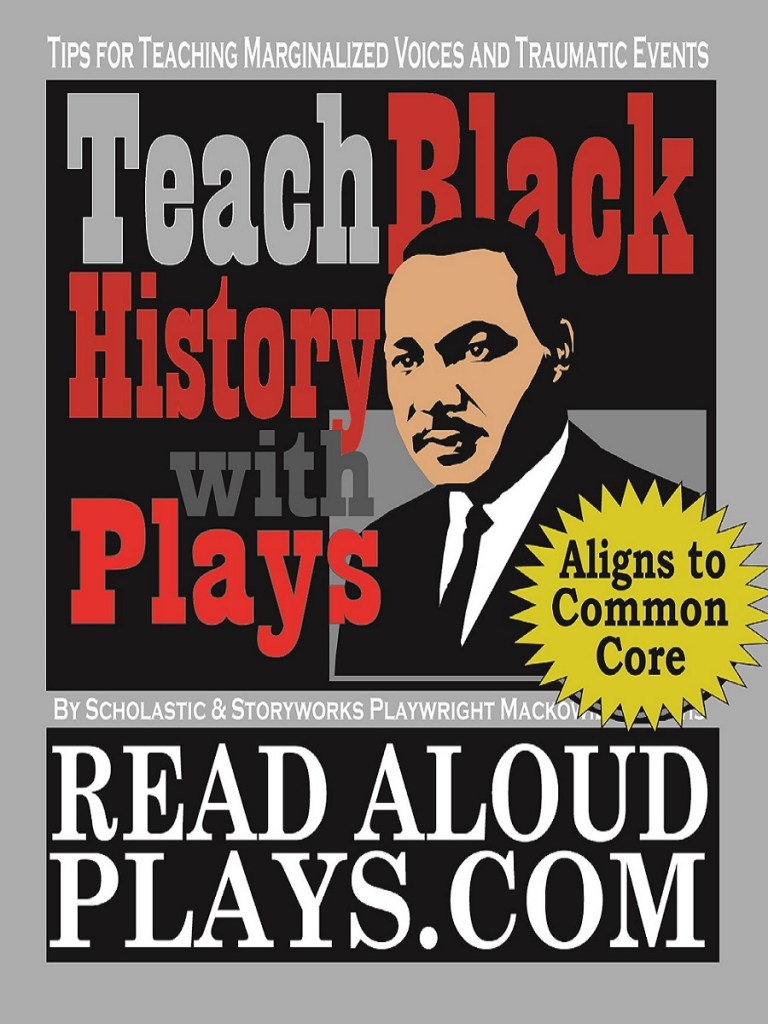
Though I lost hundreds of favorable reviews and thousands of clicks, I’m pleased to say that all my civil rights and American history plays are back on TpT. But given the “crazy times” in which we live, I think it’s important for educators to consider how to appropriately use reader’s theater to teach marginalized voices and traumatic events. Here are a few tips:
Community – Consult with the cultural community associated with the events depicted, bringing in guest speakers where appropriate. If you have students from that particular marginalized culture, seek input from their families before introducing the play.
Sensitivity – Characters in a play should not do anything demeaning toward their culture. While every story—whether in a play format or otherwise—has to have conflict, violent acts should only be referenced by narrators or other characters rather than explicitly acted out. If unsure about how a scene plays out, change it. If you’re still unsure how the content will be received, consider using it only for a discussion-based classroom reading or podcast rather than enacting it “on stage.”
Casting – Don’t let race be the basis for casting parts. Dr. King said he dreamed of a day when we would all be “color blind.” A reader’s theater performance is a good place to practice it.
Policy – It’s important to check your school board’s policy before embarking on any content that might be controversial. Some districts restrict subject matter not explicitly identified within a given grade level’s standards.
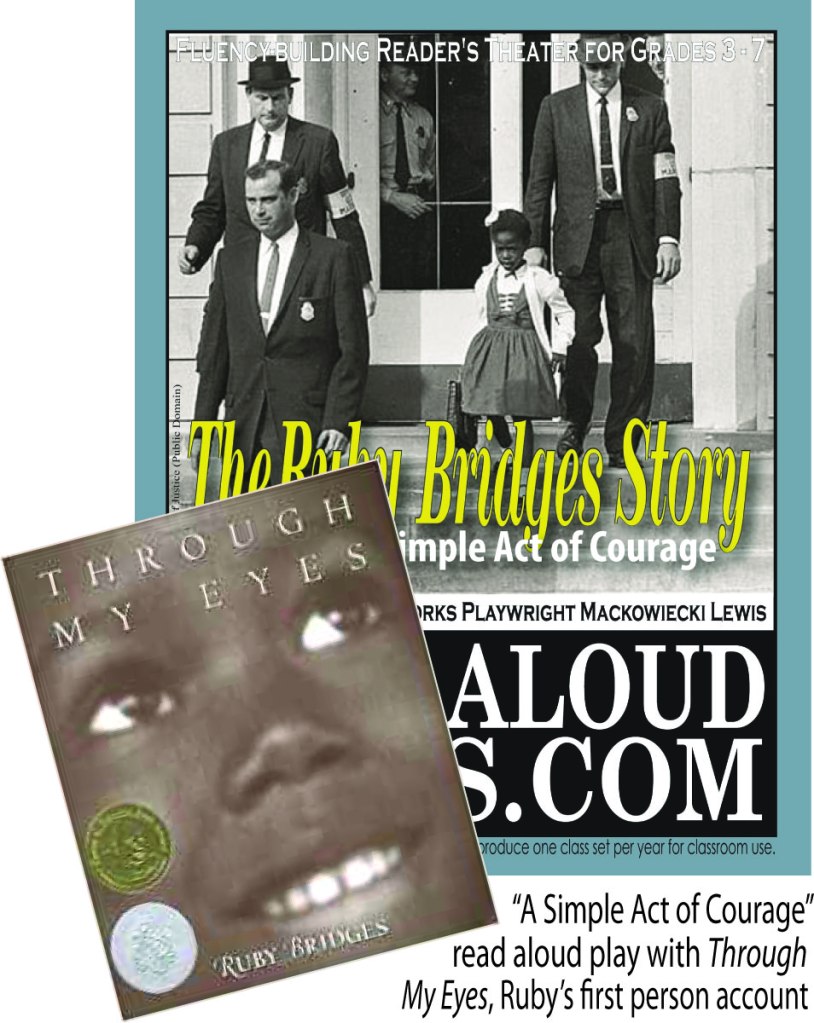
Paired Texts – It’s a good idea to pair reader’s theater content with professionally-published texts. For example, read Ruby Bridge’s book, Through My Eyes while working on the play, A Simple Act of Courage. Not only does the text serve as a vetting agent, it provides material to compare and contrast.
Discussion – No book, play, or video should stand alone. By discussing the content and events depicted, you facilitate understanding. Discussion should happen when introducing a play, while reading specific scenes, and after presenting. Utilizing expert guests enhances those discussions.
Repetition – One of the best reasons to use RT is that if there’s to be a presentation or performance, kids are willing to read plays repetitively. Even a simple reading in front of the class is enough to get kids to read and re-read a script multiple times. The brain science behind repetitive reading suggests students build their fluency at a far greater rate. It holds true with the students’ grasp on the historical events depicted and as well as their ability to empathize with marginalized voices.
Thank you for teaching Black history. Happy directing!
If you’re like me, you put a bow on the holidays and then breathed a sigh of relief as you headed home for the break. But here you are heading back to class and MLK Day is already upon you! You have no time to lose when it comes to planning your MLK Day and Black History Month activities! So, let’s get right to the point of this post: ReadAloudPlays.com specializes in Black History Month and MLK plays.
In 2021, despite all the Covid-related restrictions, the folks at the Palace Theatre in New Hampshire selected a couple of my plays to enact for Black History Month. I’ve posted the video here so that you can take a look. Whether or not these two plays inspire you to download any of my material, I hope you’ll still share the video with your students. Consider having them watch the production and then read the plays. Or, simply have them follow along with the script while viewing.
The two plays shown are Martin’s Big Dream, which reveals how incidents from King’s childhood inspired his work, and A Simple Act of Courage, which shares the role Ruby Bridges played in integrating America’s schools. They’re both available in my TpT and Etsy stores.
You’ll also find numerous other plays told from the perspective of Civil Right icons like Jackie Robinson, Claudette Colvin, and Sheyann Webb. One of the hallmarks of a quality historical play for kids is that the story is told through the eyes of a child witnessing the events firsthand. These plays all meet that standard.
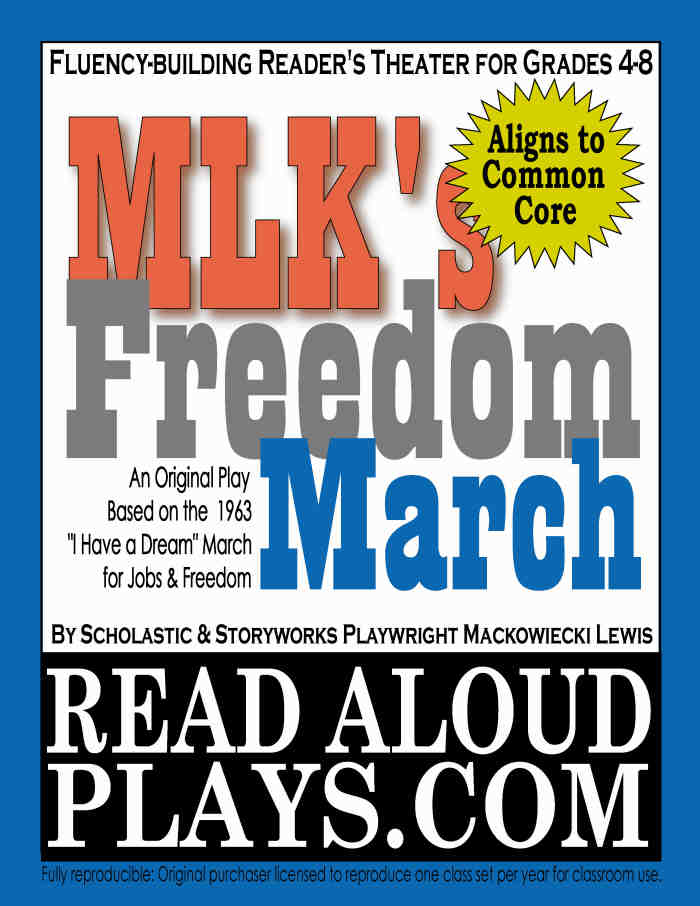
A favorite of mine is MLK’s Freedom March, which is told through the eyes of eleven-year-old Lucy. Her grandmother is dying of cancer, her father is worried about losing his job, and her brother is fired up about The March for Jobs and Freedom, the iconic event where Dr. King delivered his “I Have a Dream” speech. It’s a powerful play with multidimensional characters backed by King’s awe-inspiring speech.
If you don’t know where else to start, download my free products, Tips for Teaching Marginalized Voices and Traumatic Eventsand Reader’s Theater Teaching Tips, which outlines best practice when using plays. Be sure to also download the full previews of my plays deemed sensitive or potentially controversial. When unsure about a text, consider using it for traditional reader’s theater, podcast, or a discussion-based in-class reading rather than a stage production. In such cases, the important content still gets taught without running the risk of someone being offended by a “reenactment” of a traumatic event.
Thank you for continuing Dr. King’s work, and happy directing!
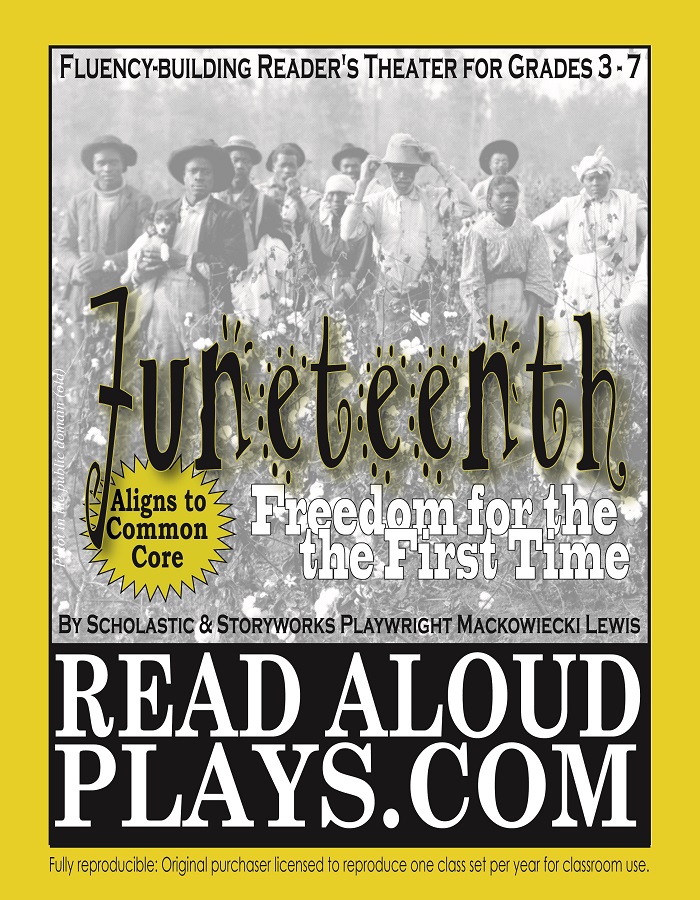
My most poignant play—and it’s perfect for celebrating Juneteenth! Based on actual slave narratives, Freedom for the First Time is historically-accurate, kid-friendly, and comes embedded with comprehension questions and historic photos. It’s the narrative of ten-year old Tyree, a slave during the time of the Civil War. Like many slaves, Tyree believes whatever her masters say. But when Tyree’s brother, Sweet Walter, arrives with a band of Union soldiers to tell her the war is over, she and her family experience their day of Jubilee, the day they know freedom for the first time. Pair it with Days of Jubilee, Patricia and Frederick McKissack’s exceptional non-fiction book about slavery and the Civil War. Click here to see the fantastic things the kids at the Baker Montessori School in Houston did with the script! It’s available on TpT and Etsy, and like all my plays, it includes performance rights. Be sure to also check out Box Brown’s Freedom Crate and Richard Wright & the Library Card. Happy directing!
Here are ten compelling paired texts with which to recognize black history month while meeting numerous Language Arts standards. All the plays are based on the given event–not it’s paired text (in most cases the play was published before the given book). That means each pairing represents distinctly unique points of view (Literature CCSS #6), making for livelier discussions and quality comparisons (CCSS Lit #7). And because these plays are based on real events, they’ll also satisfy CCSS Informational Text #6. Each includes a comprehension activity, too, assuring your students will satisfy numerous other standards as well. And because almost all my plays were originally commission by and published in Scholastic’s Storyworks and Scope magazines, they’ve been professionally vetted, making them the best reader’s theater available. Only six of the ten are shown here–just click on the image to preview or purchase on my Etsy or TeachersPayTeachers storefront. Also be sure to check out these recorded performances of “Martin’s Big Dream” and “Ruby Bridges: A Simple Act of Courage” by The Palace Youth Theater. Happy directing!






 ReadAloudPlays.com