It’s Time for Halloween Plays!

Back a hundred years ago, ghoulishness was captured in short stories rather than comic books. Writers like Poe, Shelley, and Stevenson creeped out their audiences with dark tales of superstition, mystery, and insanity. The Gothic themes they created have been permeating literature, television, and cinema ever since. 

So what if your students are mesmerized by Venom and Doctor Octopus? There are plenty of mangled monsters and the criminally insane in W.W. Jacob’s classic, The Monkey’s Paw, Poe’s The Tell-Tale Heart, and Hawthorne’s The Birthmark. They’ll also find that familiar ol’ headless horseman in Sleepy Hollow, and a hapless ghost in Twain’s A Ghost Story.  No, your kids won’t find my version of Rappaccini’s Daughter Pennywise-creepy or Slenderman-scary, but its chemical concoctions and mad scientists make it very nearly as engaging. Most certainly, it’s a key to unlocking the original’s subtleties and complexities.    

Your students know these themes. They’ve seen them on the Simpsons and Family Guy, in Goosebumps and Marvel Comics. But do they know from whence they come?  Though the archaic language and complex structures of these classic tales present barriers for most middle grade readers, you can make the stories more accessible by pairing them with reader’s theater. And what better a time to do it than Halloween?

All these plays are available on my TeachersPayTeachers and Etsy storefronts. They’re critically-acclaimed. They’re inexpensive. They each come with a comprehension exercise. We’ve also put our three most popular spooky scripts in a splendid Halloween bundle, making them even less expensive! Suitable for reader’s theater, podcast radio drama, or full stage production, they’re perfect for fifth graders and up (plus strong 4th graders)—but get started early to have them well-rehearsed by Halloween.

Happy directing!

Six Awesome Ways to Do RT!

Click on the image to check out one of our mini-guides to using readers theater in the classroom, or download the complete guide by clicking here. Happy directing!

Readers Theater Quick Start Guide

Click on the image to download our free Readers Theater quick-start guide.

What Makes a Readers Theater Script Magical?

It’s time to give the competition some attention. For the last 15 years, ReadAloudPlays.com has been a “secondary market” for all the scripts I’ve published at Scholastic. Writing and staging of these plays has been and will continue to be a passion. The webpage and TpT store, on the other hand, have always been kind of a sideline gig. Now, as I head into retirement from daily classroom instruction, my intent is to push RAP to the forefront of the reader’s theater marketplace. I’m adding new collections (see image), adjusting how performance rights are purchased, and delving more thoroughly into social media and SEO marketing.

Still, wanting to be competitive, I’ve done a bit of scouting, and I’m convinced ReadAloudPlays.com remains the best value in reader’s theater anywhere—not only because we’re less expensive, but also, dare I say, because there’s something magical about our scripts.

I was a mainstay at Storyworks and Scope for 20 years. My editors there frequently told me what made my scripts special:

One, they said my scripts always hit the right reading level and age group. Though a play should push a reader’s vocabulary a bit, a play written for 3rd graders shouldn’t require an eighth grade reading level. Nor should a play for 6th graders sound like something from Daniel Tiger. Amateurs often miss these marks.

Two, because I test nearly all my scripts on students (and will continue to do so in retirement), my scripts appeal to their interests. Working directly with kids all these years has given me a knack for understanding what riles ‘em up. (Visit the DailyPlatypus.org to see for yourself.)

Third, there’s a bit of magic in every play. I’m able to add just the right touches to tug at their emotions or tickle their funny bone. The mayor’s telephone conversations in The Pied Piper, that Goldilocks is a home dec influencer, the strange gibberish spoken by the elves in Shoemaker, or that Otter wears goggles and a snorkel in Toad’s Wild Ride are the Sriracha and glitter that take the plays to the next level.

As for the competition, I encourage you to judge for yourself. ReadingAtoZ.com has a handful of plays, but the site requires an annual fee of $135. You could buy 30 of my plays for that price, each with the license to print a full class set.

ScriptsforSchools.com sells plays for $14.95 and up, teacher packets are $45, and collections run $100.

Readerstheater.com— Has a ton of short plays—some really short. They’re professionally bound, but most are $7 per student, meaning a single play for 7 actors runs $49. No duplication license is included.

Weebly is a great resource for RT—and much of it is free—but there’s trouble afoot. Many of the plays there are copyright violations. For example, unless the author of Miss Nelson is Missing granted copyright (which is unlikely) the play should not exist, nor can it be legally performed for an audience. Another example is when a teacher inadvertently posts a copyright-protected script for their students. When one of our plays shows up on Weebly, our only recourse is to contact the school and file a copyright complaint. It’s awkward for all of us. (We REALLY appreciate teachers who respect copyright.)

PioneerDrama.com is one of the big boys of RT, but they charge big boy prices. Scripts run $10 per student and performance rights are $75 per performance.

And of course there are a variety of other sites with free and paid play scripts, but in our opinion, they usually lack the “magic” of a script from ReadAloudPlays.com.

Finally, there’s AI. That’s right. I know teachers are going to Gemini or ChatGPT and asking them to create a play from a given story. To see what damage AI will cause, I too gave it a try. What I got back was a very short and very bland script with way too much narration (a sure sign of amateurism). No magic there. Asking artificial intelligence to create a script is like asking the microwave to cook all five courses of your Thanksgiving dinner. Yuck. No salt. No pepper. Definitely no Sriracha.

So, as you embark on another school year, take advantage of all the magical, perfectly-seasoned, original, and inexpensive plays from ReadAloudPlays.com. You’ll find all of them on our Tpt storefront. And if you like our plays, please share our link, leave us 5 star reviews, follow us on TpT, and look for us on Instagram, Bluesky, and Facebook.

Thanks, and happy directing!

Best Bets for January & February

MLK Day is January 20th, so it’s a great time to use some exceptional reader’s theater to teach about this icon of American history. My play, Martin’s Big Dream, tells about how an incident in the sandlot during King’s childhood helped inspire his mission. It’s my top play ever. It’s been published in Storyworks, Scope, Scholastic News, Instructor Magazine, in various textbooks, and in the book, Read Aloud Plays: Symbols of America. It’s also been professionally performed by the Palace Youth Theater and other organizations.  You can pair your use with PYT’s performance by visiting here.  

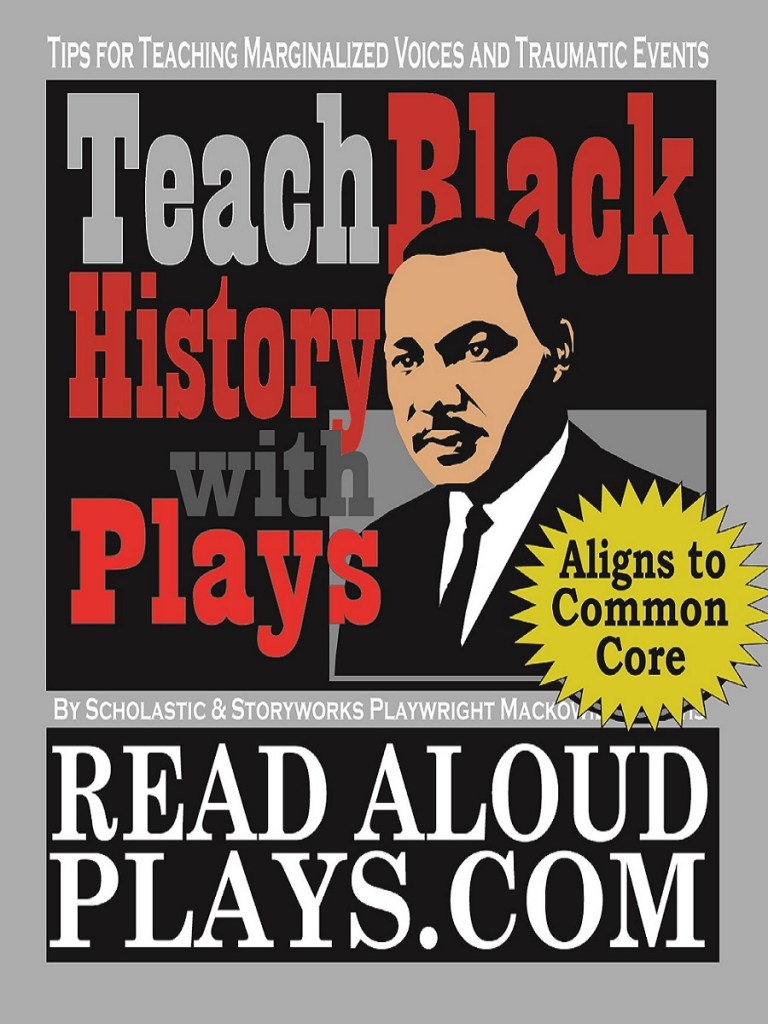
Other MLK plays include Sitting Down for Dr. King, In the Jailhouse with Dr. King, and my personal favorite, MLK’s March on Washington.  But wait! Not sure how to teach such sensitive topics? Download our free “Tips for Teaching Marginalized Voices and Traumatic Events” by clicking here.  

Of course, all of these plays are also great picks for Black History Month in February, and now is the time to get started if you want a first-rate presentation.  Focusing on one or more of the young heroines of the Civil Rights Movement might inspire some of your female students to greatness, so consider our scripts about Ruby Bridges, Sheyanne Webb, and Claudette Colvin.

We also have plays about Box Brown, the man who escaped slavery by mailing himself in a crate, about baseball great Jackie Robinson, and about the author, Richard Wright.

President’s Day is February 17th. Presidents’ Day Dream looks at the Presidency from a different viewpoint. When the play’s lead character day dreams about being president, she’s met in her “dream” by various former presidents. Each speaks frankly about the challenges and hardships of the job while pointing out the qualities it takes to be a good leader. It’s an easy one to perform.

Another one for February is Argument at Mount Rushmore. It imagines the sixty-foot tall faces on Rushmore “discussing” the merits and accomplishments of each of their presidencies. Though built on a humorous platform, it’s a historically-accurate portrayal of the gracious Washington, the witty Lincoln, and the always-enthusiastic Roosevelt. As for the sometimes over-looked and often under-appreciated Jefferson, well, let’s just say he gets a bit bent out of shape—just as you might be if you miss the chance to snag some of these timely play scripts.

Happy directing!

Can’t Miss Holiday Plays

Mouse Drowns in Soup, is Saved by Bird!

New Plays for Back to School

You probably know the Brothers Grimm for stories like Rapunzel and the Frog Prince, but there are scores of others that Disney hasn’t yet sanitized and “princessified.” We’ve adapted two of them as readers theater plays—and we think they’re perfect for Back-to-School.

The first is The Mouse, the Bird, and the Sausage. In typical Brothers Grimm fashion, it’s a cringe-worthy story about contentment, cooperation, and friendship. In the original, the three “roommates” ruin their happy life together when they’re cajoled into altering their routine. The result is Sausage gets eaten, Mouse gets boiled, and Bird drowns. It may be Grimm, but it’s also a bit too gruesome for the classroom!

While our version is no less cringey, we’ve managed to save all their lives while having a blast doing it! All five animal roles demand students willing to sell out on stage: Sausage’s Italian bravado, Mouse’s “death” scene, Bird’s over-baked remorse, Crow’s creepiness, and Dog’s indifference.  We’ve tossed in optional “walk-up” music for each of the characters, too, which will help make this play an even bigger hit with your kids!

The second play has none of the gore the Grimm Brothers are known for. Instead, Hans in Luck is a cautionary tale about financial wisdom and good judgment . . . Hans has neither. After having worked seven years as an indentured servant, he’s given a lump of silver “as big as his head,” which he takes and then travels home. He soon tires of lugging it around, so he trades it for a horse, which he eventually trades for a cow, and then a pig, and so on until he has nothing left. All the while, Hans sees himself as incredibly fortunate, which perhaps he is. From his simplistic perspective, arriving home to find his grandmother still living proves he’s the luckiest man alive! Your students will enjoy uncovering the story’s numerous morals about trust, innocence, luck, foolishness, positivity, and money. We’ve added a few other surprises, too, making it another great character-building play to start your school year.

And, if Grimm tales don’t float your boat, at ReadAloudPlays.com we have many other plays to choose from. All come with a comprehension activity, key, teacher notes, and public school performance rights.

Thank you, Felicia A., Annette H., Sarah D., Lynn S., Shawn L., and Janet T. for your recent positive reviews!

Welcome back to school . . .and happy directing!

Help for Spring Fever in the Classroom

Trees and flowers aren’t the only things blossoming right now. Your students, having spent much of the year under your tutelage, have grown and matured and are nearly ready to advance to the next grade—or at least they believe they are. They’re probably getting a bit stir-crazy, too, ready for something more than the same old routine.  Perhaps, too, they’re having the life sucked out of them by standardized tests. It sounds like a good time to liven things up with some truly fun reader’s theater or class plays.  Here are a few of my favorite antidotes for Spring Fever:

Perfect for Earth Day, Nature Talks Back “follows” the madcap adventures of three conifers names Otto, Bill, and Luther as they deal with bark beetle scares, woodpeckers, and centipedes. The story uses campy humor to convey scientific facts about how trees communicate to fend off danger, about misconceptions around what constitutes a “pest,” and about the danger pesticides are to pollinators.

HONEYBEE: Cough, choke. . . has somebody…cough wheeze . . . been using . . . sputter . . . bug spray?

KID (sheepishly): It was just a couple squirts.

HONEYBEE: Cough, wheeze . . . Good thing I only caught a whiff of it. It sent me into a loop-de-loop!

Nature Talks Back is written in four “acts,” which can be presented by a single cast or as four mini-plays.  When my students presented it on stage, they used cardboard sheets to create two-dimensional evergreen trees with cutouts for their faces. Because the trees themselves don’t move, it was a kick teaching kids how to act with their facial expressions.  But even of you don’t have time for a full presentation, NTB makes for a great podcast presentation or just a simple classroom reading on April 22nd!

How Jackie Saved the World is another great play for Spring. Our Jackie Robinson play depicts the circumstances around Jackie breaking the “color barrier” in the major leagues. As your students portray Jackie, Pee Wee, and others, a radio announcer calls a more modern game between Derek Jeter’s Yankees and Ken Griffey’s Mariners, which gently contrast the two eras. A peanut vendor and the hot dog man lend narration as they walk through the crowd–your audience.

HOT DOG MAN: Despite all that pressure, Jackie led the Dodgers to the World Series and was named Rookie of the Year.  Some said it was the toughest season any ball player has ever endured. Last chance for hot dogs!

PEANUT VENDOR: No doubt the reason today’s game is so exciting is because Jackie had the courage to turn the other cheek. Peanuts! Get your peanuts here!

ANNOUNCER: We’re in the top of the ninth. Two outs and two on and the score tied two to two. The Yankees are taking no chances. With Ken Griffey, Jr. up to bat, they’ve brought in their closer, Mariano Rivera.  Here’s the pitch. . .

Baseball season is underway all over the globe, so many of your male students—who statistically are more likely to be reluctant readers—will jump at the chance to be in a baseball play.

And then there’s Pooh.  Who doesn’t love a Winnie-the-Pooh story? Our RT set includes the best of A.A. Milne’s 1926 collection, all familiar tales such as Winnie-the-Pooh and the Honey Tree:

BEES: Buzz.

CHRISTOPHER ROBIN: Perhaps they think that you’re after their honey.

POOH: It may be that. You never can tell with bees.

BEES: Buzz. Buzz.

POOH: Christopher Robin, have you an umbrella?

CHRISTOPHER ROBIN: I think so.

POOH: I wish you would get it, and walk up and down with it, and look up at me every now and then, and say ‘Tut-tut, it looks like rain.’ I think, if you did that, it would help with the deception we are using on the bees.

Well-suited to reader’s theater or full stage production in third grade and up, these are great for emphasizing delivery and enunciation: nervous Piglet, droll Pooh, gloomy Eeyore, and temperamental Rabbit, for example. The set includes five short plays, each with just a handful of characters. You can split your elementary-aged class into five groups and have each group present one of the plays, or have older students stage a presentation for younger grades.

Of course, we have many other plays with “fun” themes. The Pied Piper, Goldilocks, Barbed Wire, The Nose, Rikki Tikki Tavi, Peter Rabbit, and How the Elephant Got its Trunk are all wonderfully silly yet still build reading fluency while teaching important lessons.  And don’t forget, when you buy one of our plays, you’re not merely buying a set of worksheets; you’re getting an original piece of literature—a professionally written play and the rights to use it year after year. It’s like getting a full class set of your favorite novel along with the other stuff most TpT products provide.  

You’ll find all our plays on our TpT storefront.

Happy directing!

You Say It’s a Merry Christmas? Be Forewarned!

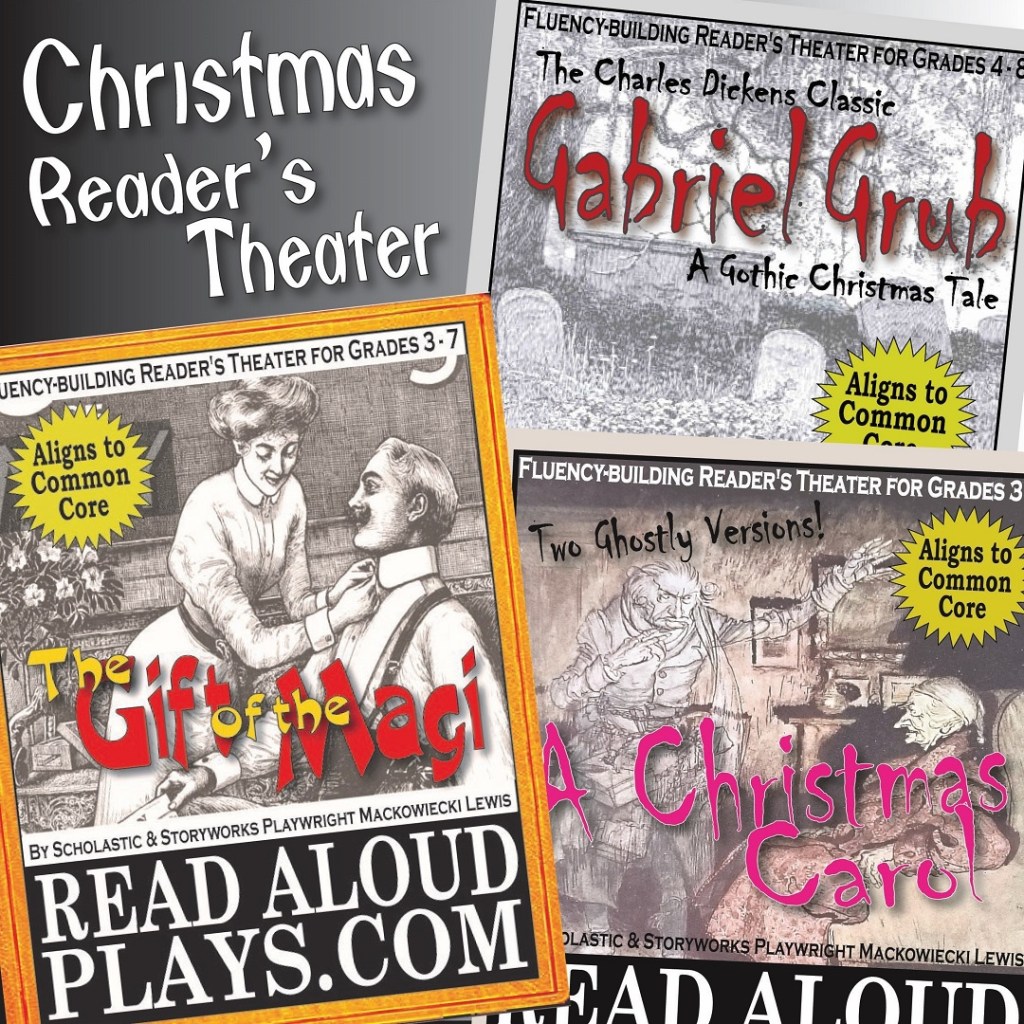
Christmas can be terrifying . . . especially if you don’t believe. That’s the theme-defining line from Gabriel Grub, Charles Dickens’ Gothic Christmas tale. It’s the story of a gravedigger whose disdain for the holidays results in his being put on trial by the Goblin King. It is a splendid story—and a splendid play–one of five holiday themed scripts available from ReadAloudPlays.com. (Click here to listen to what my fifth graders did with Gabriel Grub a few years ago.) Here are the others:

A Christmas Carol, adapted to be an ideal length for middle grade kids, comes with two versions—both the traditional one and a second in which Scrooge is a woman. Years ago, my students turned it into a movie. You can watch it here and use it as a preview for your own class play.

Escape from the Blacking House borrows from Oliver Twist and the Pickwick Papers to artfully tell the story of Dickens’ troubled childhood. It’s probably my most overlooked play, and it pairs perfectly with Christmas Carol. They can be downloaded as a package here.

We also have O’ Henry’s classic, The Gift of the Magi. It’s the story of an impoverished young couple who sell their most precious possessions in order to buy one another needless gifts.

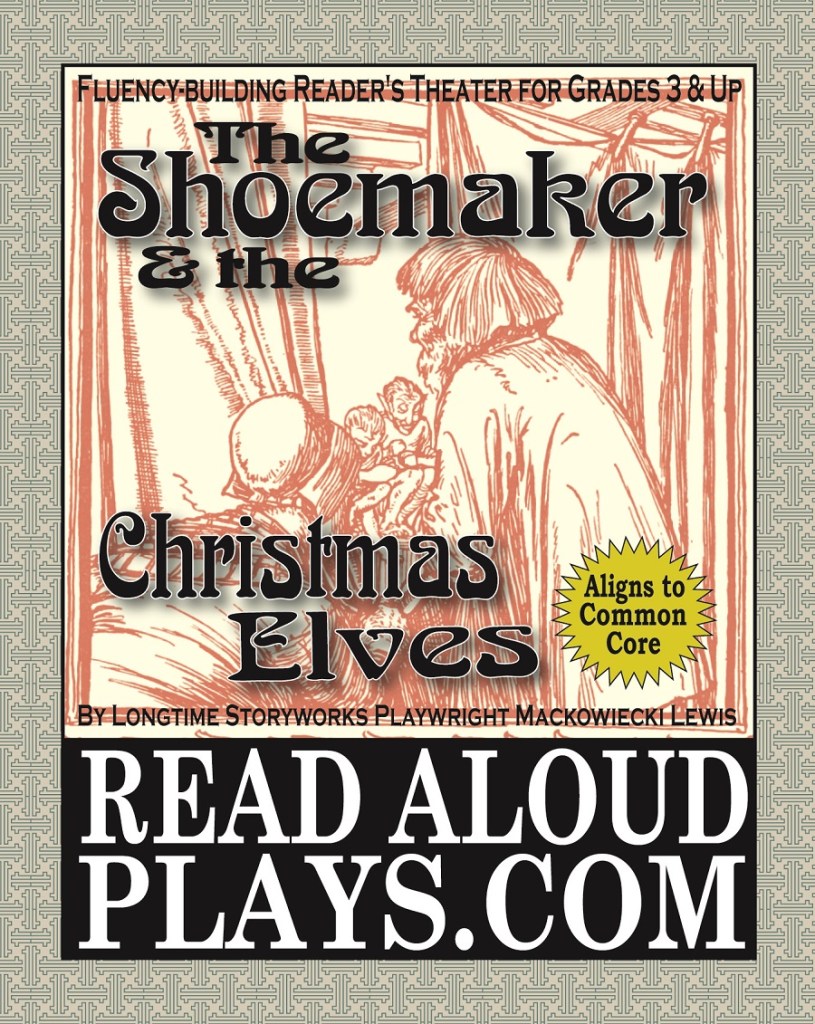
Finally, we’re excited to add The Shoemaker and the Christmas Elves to our catalogue. The Brothers Grimm are known for dark, often violent stories, yet here is a delightful story with a Christmas theme. I think your students will thoroughly enjoy speaking elfin gibberish.   

Whatever the case, don’t let your December become terrifying. Whether you’re planning a full production or just need some scripts to make your in-class reading a bit merrier, now is the time to get started! Preview and download your holiday plays at my TpT storefront.

Happy directing!

MLK Day and Black History Month Activities

If you’re like me, you put a bow on the holidays and then breathed a sigh of relief as you headed home for the two week break. But here you are back in class and MLK Day is already upon you!  You have no time to lose when it comes to planning your MLK Day and Black History Month activities!  So, let’s get right to the point of this post: ReadAloudPlays.com specializes in Black History Month and MLK plays.

In 2021, despite all the Covid-related restrictions, the folks at the Palace Youth Theatre in New Hampshire selected a couple of my plays to enact for Black History Month. I’ve posted the video here so that you can take a look. Just click on the image. Whether or not these two plays inspire you to download any of my material, I hope you’ll still share the video with your students. Consider having them watch the production and then read the plays. Or, simply have them follow along with the script while viewing.

The two plays shown are Martin’s Big Dream, which reveals how incidents from King’s childhood inspired his work, and A Simple Act of Courage, which shares the role Ruby Bridges played in integrating America’s schools. They’re both available in my TpT and Etsy stores.

You’ll also find numerous other plays told from the perspective of Civil Right icons like Jackie Robinson, Claudette Colvin, and Sheyann Webb. One of the hallmarks of a quality historical play for kids is that the story is told through the eyes of a child witnessing the events firsthand. These plays all meet that standard. 

A favorite of mine is MLK’s Freedom March, which is told through the eyes of  eleven-year-old Lucy. Her grandmother is dying of cancer, her father is worried about losing his job, and her brother is fired up about The March for Jobs and Freedom, the iconic event where Dr. King delivered his “I Have a Dream” speech. It’s a powerful play with multidimensional characters backed by King’s awe-inspiring speech.

If you don’t know where else to start, download my free product, Tips for Teaching Marginalized Voices and Traumatic Events.  

Thank you for continuing Dr. King’s work, and happy directing!