
One of My Best MLK Plays, Free!

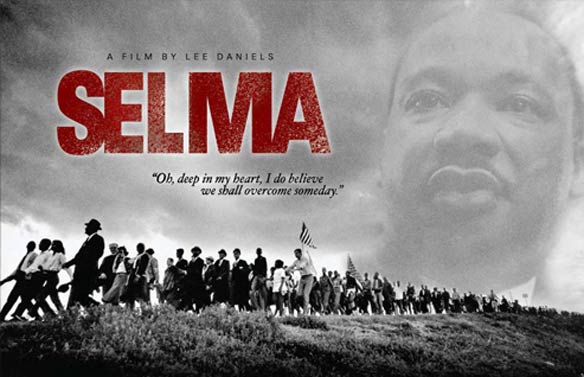
1964-PD Lib of Cong US News World Report CollectionAs part of its Black History Month celebration, Scholastic publishers is offering my most oft-published play for free. I Have a Dream shows how experiences during Martin’s childhood prepared him for the day he’d deliver his famous “I Have a Dream” speech. It’s included in my book, Read Aloud Plays: Symbols of America, but you can download it in PDF simply by clicking here (the download link is near the bottom of the page). Scholastic’s site even includes questioning strategies, and best of all, there are no strings! It’s completely free. If you enjoy “I Have a Dream,” be sure to check out my other Civil Rights plays including Sitting Down for Dr. King, We Shall Overcome, and MLK’s Freedom March.

I Propose a Speed Limit for Young Readers

speed limit for young readersImagine if we tested prospective drivers the way we test our students for reading fluency. Instead of mumbling to the newly-turned sixteen year old to “make a left hand turn at the next intersection,” the DMV test administrator would give a whoop and shout, “Alright Jimmy, if you can get this Taurus doin’ 120, you’ll have your license in no time!”

Driving too fast is dangerous. That’s why we don’t encourage our young drivers to exceed the speed limit. That’s why we have speed limits to begin with. What we want from people is thoughtful driving. Thoughtful driving means being aware of the road signs, pedestrians, and potential hazards. It means being under control. Even NASCAR drivers practice being safe and under control.

Good readers are also thoughtful and under control. They’re aware of hazards, such as awkward sentences, irony, and homographs, which may require them to slow down or re-read. They’re familiar with road signs, such as periods, commas, indentations, and quotation marks, each requiring a change in cadence, a certain inflection, or merely a tap on the brakes. And good readers are aware of those pesky pedestrians—their audience.

Rare is the young reader who can read fast and under-control. Just as there are no ten-year-olds driving at Daytona, we shouldn’t be pushing our fifth graders to read 200 words per minute. In fact, I think the emphasis on speed as the primary measure of reading fluency is probably damaging our young readers. I think we’re actually handicapping our kids.

I was listening to one of my struggling readers the other day. She’s of normal intellect, works hard, and has normal phonic skills (I’ve checked ‘em). But over the past five years, she’s been taught that what’s important is that she attains that magic number—that ever-increasing oral fluency reading rate. It was no surprise listening to her read that she was trying to go so fast that she was stumbling over every third word and having to re-read every other phrase—and this was in a casual reading environment, not the ORF test.

This problem is not limited to struggling readers. How many of your “benchmark-meeting” readers blow through endmarks, substitute minor words, and run-over complex words? How many of your speed readers are thoughtless readers?

Instead of measuring fluency based on words per minute read, we should be emphasizing modest speeds and safe driving habits. Unfortunately, quantifying thoughtful reading is far more complex than generating the data a weekly one minute reading test provides. With no push to get the data miners out of our schools, the question becomes, how do we teach thoughtful reading despite the education industry’s ill-placed emphasis on speed?

One great way is with Read Aloud Plays.

Plays require students to read the way they speak, to use inflection and recognize punctuation. Plays require personality and accuracy. Frequent play reading, particularly if it includes performance, requires thoughtful reading.

To prove my point, try having your students read a play using their best 171 word per minute pace. Make sure the kids have never seen the play before (after all, dry reading is another element of the ORF test). One of my fifteen minute plays will take all of four minutes. The kids may be rolling on the floor with laughter—until you ask them to summarize what they read (many of my plays, such as those from Symbols of America, include comprehension tests).

I encourage you to then spend several sessions reading the same play thoughtfully, culminating with a simple performance in front of the class. Emphasize reading the way the given character would talk. Such plays will be enjoyed and understood by audience and performers alike.

Black History Month is a great time of year to incorporate Read Aloud Plays into your instruction. From slavery and civil war, to Jackie Robinson, to the civil rights struggle, I have numerous scripts ready for your students to hone their thoughtful reading skills. If you’re new to using plays, be sure to download my free guide, Why Use Drama? which provides a host of tips. And if you’re worried about the Common Core, don’t be. Drama is mentioned 47 times in the CCSs.

Turn your wanna-be NASCAR readers into thoughtful readers with Read Aloud Plays.

Happy directing!

Black Students Denied Service

Rodney_Powell_Nashville_sit-ins_1960 PD NonrenewedImagine seeing the words “Whites Only” at your favorite restaurant! We can be thankful that it’s unthinkable today. But when so much time has passed, how do we help today’s kids truly make sense of such attitudes and events?

On February 1st, 1960, four African-American college students walked into a Woolworth’s Store, sat down at the lunch counter, ordered and were refused coffee. They vowed to stay until the store desegregated its lunch counter. Five months later, Woolworth’s finally relented and began serving blacks and whites alike. It was an important moment in the history of American. The event is portrayed in my original Storyworks play, “Sitting Down for Doctor King.”

What better way to honor his legacy, meet the Common Core, and give your students an authentic Civil Rights experience than by re-enacting events such as Greensboro? Read aloud plays put your students in the action, allowing them to understand the motivations and feelings of the participants firsthand. Read Aloud Plays also help satisfy many of the Literature and Information Text standards in grades 3 through 7. But students can also utilize Read Aloud Plays to “adapt speech to a variety of contexts”, “evaluate a speaker’s point of view”, and “integrate and evaluate information presented in diverse media…,” which are all Speaking and Listening standards.

And there’s no limit as to how you use them. Pair plays with discussion, history videos (there are a ton of them on the Web), chapters from your History text book, works of literature, picture books, and more. Read a play once, or divvy up parts and practice for three or four weeks. Read Aloud Plays can be fit into almost any schedule and almost any curriculum.

For starters, check out my original Read Aloud Plays about the Greensboro Sit-ins, the Birmingham Children’s Crusade, the Montgomery Bus Boycott, and The March on Washington, where Dr. King presented his I Have a Dream speech. Or explore some of my other Black History plays. Nearly all my plays were commissioned by and originally published by Scholastic, so you know they’re of the highest quality, and all of them come with reproduction and performance rights. If you’re new to using drama, also be sure to download my free guide.

Satisfy the CCSs and bring MLK Day to life for your students. Download some Read Aloud Plays today. Happy Directing!