Thanks!

SCOPE-110113-PlayAs we wrap up 2014, I just want to thank you for making this the best year yet for Read Aloud Plays. In the coming year, watch for a variety of new plays to become available including A Piece of String, which was originally published in the Nov. 2013 issue of Scholastic’s Scope magazine, and I Have a Dream, the story of Martin Luther King’s childhood, which originally appeared in the January 2000 issue of Storyworks. I also plan to revamp the formatting on nearly all my plays, making sure that each comes with a comprehension activity designed to help your students meet the Common Core. No need to wait to purchase them, however. One of the great features on TeachersPayTeachers is that buyers can download updated versions without additional charge. Each time I update a play, I’ll let you know that a new version is available. Here’s to a great 2015 full of fluency-building reader’s theater for the classroom!

Happy directing!

Could This Guy Pass the Smarter Test?

Would Will hunting pass the Smarter Balanced test?Am I wrong, or is the title of the nation’s new standardized test grammatically incorrect? Did the benevolent creators of this new system mean to say the test represents a “smarter balance” when compared to previous tests? If so, shouldn’t they have said balance—a noun—rather than balanced, a verb? Or maybe they meant smartly balanced, which makes me wonder why they used an adjective rather than an adverb.

Or perhaps they mean this fancy new test is both smarter and balanced? No doubt someone in the marketing department didn’t like the way the punctuation looked in the logo. Apparently, neither hyphens nor commas compel us to buy. Personally, I suspect they probably want the test to represent a Smart Balance, but when they discovered that such a moniker connotes a “smooth buttery consistency,” well, that’s when the trouble surely began.Smart-Balance or Smarter-Balanced?

Whether smartly balanced, a smarter balance, or smarter-balanced, one thing’s for sure: the new test is giving teachers and admins the heebie jeebies pretty much everywhere. I recently attended a Smarter Balanced workshop put on by the Oregon Department of Education covering details of the assessment. Here are a few take-aways:

*It’s finally time to give up teaching cursive. The tests, regardless of subject, will evaluate keyboarding skills as much or more than anything else. (I suspect even Matt Damon’s character in Good Will Hunting would have a hard time passing the Smarter math test. Those complex math proofs he delineates on the chalkboard? He’d have to type them on a computer screen using numbers and words, not those alien symbols only true math geeks understand.) What you can do now: have your students word process everything–and in all subjects. Be sure, too, to practice highlighting individual sentences. Pity the school that has fallen behind technologically.

* Say “so long” to Romeo & Juliet. There will be greater emphasis placed on non-fiction texts. According the the Dept. of Ed: the higher the grade level, the more students should be reading non-fiction. What to do now: have your students read (and write) more non-fiction.

* Dust off the MLA Handbook. The uptick in plagiarism during the digital age has the experts all worked up about citing sources. On the test, students will be expected to recall direct quotations from a given text and use phrases such as “According to” when referring back to them. What to do now: lots of persuasive reading and writing. Storyworks magazine has a nice “debate” activity in every issue in which students must read a non-fiction text and then debate (in writing) each side of a given argument. That’s good practice for the test.

* Teach them to be sleuths. Having the right answer won’t be enough anymore. Students have to be able to identify the evidence. Where in the text did they find the information necessary to answer the question? What to do now: teach students to highlight evidence when completing comprehension activities or discussing what they’ve read.

* Do you validate? What you’re teaching now is still worthwhile. The writing process: still valid. Higher level taxonomy: still valid (though they’ve abandoned Bloom’s for what appears to be a decent system called “Depth of Knowledge” or DOK). And here comes my shameless plug: if you use my daily writing program, Super Sentences and Perfect Paragraphs, you’re already teaching to certain elements of the test. Not only does SSPP teach standard writing skills, it also asks kids to highlight and color code specific kinds of sentences. At my school, students word-process their paragraphs and then highlight and color code each sentence. Super Sentences also teaches sentence structures using the “According to” and “In my opinion” phrasing, as well as how to use direct and indirect quotations.

Whether smartly balanced or just a smooth, buttery consistency, I’m confident the Smarter Balanced test won’t be around forever. It’s the fourth standardized testing system implemented during my twenty-plus year career. If history has anything to say about it, we’ll be talking about something different in six or seven years. Consider this, when the sons and daughters of politicians go home and say, “I flunked the smarter test,” something’s gonna give. In the meantime, the skills the test evaluates are indeed important, so we all may as well just jump right in.

Too Late to Stage The Best Holiday Pageant Ever?

Gabriel Grub holiday playI was recently contacted by a theater company in Maryland which wants to add my adaption of “The Gift of the Magi” to its annual Victorian Christmas Collection. They wanted to know how much I charge for performance rights. Normally, when you perform a play from publishing companies, you’re required to pay a substantial licensing fee. The Samuel French Company, for example, owns the rights to The Best Christmas Pageant Ever. If you want your students to perform it for the annual PTO bazaar, it’ll set you back $100 or 10% of the gate receipts, whichever is greater—and that’s often in addition to buying the scripts themselves (which run $8 or $9 each).

I craft my plays so that teachers can use them to build strong readers, self-confident speakers, and engaged learners. I don’t charge schools to perform my plays. Your three bucks gives you license to photocopy as many scripts as you need for your class AND the rights to perform the play in your school. Three bucks sounds like a pretty good deal compared to traditional publishers.

I’m pleased the Gift of the Magi is getting some love in Maryland, but I’m even happier that my holiday plays are finding their way into classrooms all over the country. It isn’t too late to work in a reading or even a quick performance of one of my Halloween plays into yours. The Birth-mark, which is based on the short story masterpiece by Hawthorne, is a good place to start. Says one purchaser of The Birth-mark:

“My students love Reader’s Theater. They loved reading this. They said that they were able to express the ‘darker side of themselves.’”

Also consider The Monkey’s Paw, the Legend of Sleepy Hollow, and the Tell-Tale Heart. The Monkey’s Paw originally appeared in Scholastic’s Scope magazine, while the latter two are available in my book, Read Aloud Plays: Classic Short Stories (Scholastic). You can purchase it as an e-book and have it ready for your students right away.

If you enjoy Poe, consider pairing the original story of Tell-Tale Heart with my modernized version: Penelope Ann Poe’s Amazing Cell Phone. It retells the story in a unique way. Says one user:

“My 8th grade students LOVED this assignment. I let them use their cell phones and make the ring tone noises while reading. It kept them engaged and we read it three different times during the class so they could read different parts. Highly recommend.”

Finally, I have a handful of engaging Christmas plays, too. Gabriel Grub–from Charles Dickens’ The Pickwick Papers—is my newest script, and it’s as eerie as any Halloween tale. I also have two versions of A Christmas Carol. For a limited time, you can download my traditional version from TpT–or you can re-imagine Scrooge as a woman by using my Classic Short Stories version (which also includes Magi, by the way). No, it isn’t too late to stage the Best Holiday Pageant Ever.

Happy Directing!

Six Tips on Writing Your Own Classroom Plays

Every so often I get a request from a reader to draft a play based on a specific book: The Hobbit, or To Kill a Mockingbird, or Roald Dahl’s The Twits, for example. I’m certain they’d all make wonderful plays and they’d be fun to write, but due to copyright restrictions, I’d be unable to legally publish any of them. That doesn’t mean you—or even your students—couldn’t attempt to turn your favorite book into a play on your own. If you’re ready to give it a try and bring “The Twits” to a stage near you, here are a few pointers:

SCOPE-110113-PlayKeep it short. Most of my plays, particularly those that have appeared in Storyworks, are limited to about 1500 words. If too much longer, the students tend to lose interest. Such brevity requires cutting every extraneous scene, line, and word. It can be quite painful (which is why I sometimes cheat and leave the hard cuts up to my editors).

Avoid narration. “Too much exposition,” as the saying goes on Broadway, will kill your play. While you’ll need narration to quickly advance the story, keep the narrator’s lines to a minimum. Never let a narrator speak more than three sentences in a row, and whenever possible, find unique ways to narrate. In my play about Jackie Robinson, for example, it’s the peanut vendor and hot dog man telling the story from the grandstands of Yankee Stadium.

Use a child’s perspective. Kids relate to kids. That’s why many of my civil rights plays are told through the eyes of a child. “MLK’s Freedom March”–my play about the day Dr. King delivered his “I Have a Dream Speech”—might be rather dry were it not seen through the eyes of a child with a story of her own to tell.

Imagine your play acted out on stage, even if you intend it just for reader’s theater. Avoid changing settings within a given scene, and always try to include some action. Plays where the characters merely stand around and talk are easy to write and stage but boring to watch and perform.

Emphasize the literary elements you do when teaching literature such as setting, conflict, rising action, and climax. A powerful ending like the one in “Freedom for the First Time” when Mama strides into the Big House to reclaim her youngest daughter, will make the play memorable for your students. In less-serious plays, create endings that let your students ham it up, such as in my “Cyclops” play.

Incorporate dialect. There’s nothing better than having a kid growl like a pirate, drawl like a redneck, or pontificate like an English gent. I’ve had kids bring down the house with their countrified version of Mr. McGregor in my “Peter Rabbit” play. You can do the same simply by having your narrator refer to the way a character speaks.

So, rather than waiting until 2060 for me to publish a play adaption of James and the Giant Peach, consider trying it yourself. Not so inclined? Too busy? Then check out my long list of professionally published titles such as Charles’ Dickens’ Christmas goblin story, “Gabriel Grub,” coming next month, and Maupassant’s “A Piece of String,” available on TeachersPayTeachers in January. Like all my plays, just a few dollars buys you the license to print and use a class set every year. In the meantime, keep sending your ideas for story adaptions and re-enactments of historical events to lewis@jeffnet.org.

Happy Directing!

Grow Some Neurons!

Many kids begin school already knowing how to read. They haven’t had formal lessons. Their parents haven’t been trained in the latest methodology. They haven’t used a single worksheet or text book. Yet here they are reading. Why?

What Does Brain Research Show About Fluency?

Consider for a moment how your own children learned to read. If they’re like many kids, they had a few favorites in their book bin. I recall my oldest boy latching on to Amos & Boris and a Sesame Street book entitled Don’t Forget the Oatmeal. As a preschooler, he would ask us to read these books over and over again. Soon, he started reading them to us. “He’s not really reading,” we’d tell ourselves, “He’s heard the book so many times, he’s just memorized the words.”

But based on brain research dating back to the days of psychologist Lev Vygtsky (left), some experts believe the difference between reading and memorization is slight. Kids get an emotional charge out of reading proficiently—whether memorized or not. The positive charge actually produces chemicals that form the neural pathways that make reading (and learning) possible. Because our son had consumed Don’t Forget the Oatmeal so frequently, he’d mastered the text, prompting his brain to construct new pathways.

Can Reading Physically Damage a Child’s Brain?

No, reading won’t damage a child’s brain, but could poor instruction? Consider what we often do in the classroom. We take a book, article, or story and ask kids to read it one time. We expect mastery on the first attempt. We ask kids to pass computerized tests, complete worksheets, and discuss content after just a single reading. We’ve assumed that language is language, that if they can decode they should be able to read anything at their grade level. It’s a fallacy and a tragedy. If Vgotsky was right, instead of experiencing a positive emotion that builds pathways, many kids in this situation suffer a negative emotion that causes them to withdraw and resist reading altogether, possibly even causing those neural pathways to shrink. And don’t assume it’s just your low-performing students either. Watch carefully when you ask students to read aloud in class; many of your brightest kids are just as reluctant as your poor readers. It’s not simply that they’re shy; they don’t want to risk experiencing the negative emotions they feel when they stumble over or mispronounce a word. There are, however, a number of ways teachers can prevent those neurons from shrinking, one being the use of “repetitive reading” techniques.

How is Repetition Beneficial?

Asking a young reader to read aloud a piece of text he or she is looking at for the very first time is akin to asking a musician to perform in public a piece of music he or she has never played before. Only the most talented can do it, and even they rarely do. Just as music is a language that requires repetition for mastery, so too does reading. Your students need opportunities to “sight read,” to practice, and then to “perform” the material you want them to master. Plays are the perfect format.

Because we’ve inadvertently trained kids that a book is something to be read only once, few third graders are willing to give James and the Giant Peach a second round. Few second graders will read Stellaluna more than once or twice. Give children a script and schedule a public performance, however, and they’ll be willing to read and reread it twenty to thirty times. Twenty to thirty times! By the time they’re asked to read it in front of the class, even your struggling readers will be able to read with reasonable fluency. Even your “shy” kids will be willing to read out loud.

Read Aloud Plays give you the opportunity to teach repetitive reading without the resistance you get when asking a child to re-read a traditional text. Students acquire mastery, which chemically changes the brain, making them superior readers who are better able to comprehend. If Mr. Vgotsky were alive today, I think he’d approve.

Are You Ready to Grow Those Pathways?

If you’re not already using read aloud plays in your instruction, this is a great time to start. Not only will all that repetitive reading help grow some neurons, but drama can be used to fulfill a significant number of Common Core State Standards. Kick off the school year with a trio of explorer plays such as Fly Me to the Moon, The Fountain of Youth, and Lewis & Clark and Bird Girl. Or consider a set of American Revolution plays such The Secret Soldier, A Bell for the Statehouse, and Fact or Fiction: The Legend of Betsy Ross. Or browse ReadAloudPlays.com to mix and match.

Happy Directing!

Text Books vs Read Aloud Plays

Common Core logoAdmit it. You’re using one of those big fat textbooks to teach reading, one of those monstrosities brought to you by publishers determined to make sure its refrigerator-box full of materials met every standard ever concocted in Texas, California, Pennsylvania, the U.S. Protectorates, and Saturn’s Ring. Too bad the kids are yawning.

If you’re like most people, the new Common Core Standards might have you a bit flustered. You can rely on those textbooks, which will provide certain coverage of the standards but will drive your students back to their video games, or you can delve into literature, classroom magazines, and reader’s theater, which will require more documentation on your part but will more likely create lifelong readers. The truth is, using what administrators like to call “supplementary material” is more engaging to students, more enjoyable to teach, and not so hard to justify against the CCSs. Consider this: “drama” is mentioned nearly fifty times in the Standards! That being the case, reader’s theater is more relevant than ever.

Here are just a few examples from the Reading Standards for Literature (RL) where drama or an element of drama is explicitly referenced:

RL4.5Explain major differences between poems, dramas, and prose….
RL5.4Explain how a series of chapters, scenes or stanzas fits together….
RL5.6Describe how a narrator’s or speaker’s point of view influences how events are described.
RL6.3Describe how a particular story’s or drama’s plot unfolds in a series of episodes….
RL7.3Analyze how particular elements of a story or drama interact.

cyclops coverAnd don’t assume that using drama is only useful in teaching drama. One user of my play adaption of the classic short story, The Monkey’s Paw, commented how reading the play helped her students comprehend the original text. Because plays have to break stories down to their essence, using adaptions of classic stories is likely to help students meet the RL standards for any number of otherwise challenging texts at the high end of the “complexity band” (RL4-8.10)

But plays also help students meet standards in Reading Fluency. Consider RF 4.4cUse context to confirm or self-correct word recognition and understanding…. Because drama puts the reader in the moment, and because the playwright cannot waste words within a 20 minutes classroom script, students are more able to make immediate contextual connections. In fact, drama is ideal for improving reading fluency in general. Because it mimics the repetition beginning readers use when first learning to read, it actually forms new neural pathways. (Check out the brain research by Vgotsky and others, or for a shortcut, read my article “Why Use Drama.”)

Recently, a former student of mine provided a powerful endorsement of using drama to teach literature. I hadn’t seen this young man for over four years, but he told me he’d just been thinking of me the day before. He’d been sitting in his 8th grade English class yawning over yet another mundane text book assignment when his mind drifted back to my then-third grade classroom. “I was just thinking about hopping around our classroom stage when we did that Aesop’s Fables play,” he said. “I enjoyed that.” That seems pretty telling to me.

Ready to set aside that textbook for a while and give drama a try? You can find a wide variety of read-aloud plays at my TeachersPayTeachers store. Stock up on titles for the next school year. Nearly all my plays have been previously published in Scholastic classroom magazine’s such as Storyworks and Junior Scholastic, so you can rest assured that they meet the highest standards. Not sure how to make it all work? Click here. For samples of kids performing classroom plays click on the “podcasts” tab up top. And for still more validation of using drama to meet the CCSs, check out this article from the New York Times or this podcast from the folks at Literacy Special Interests.

Happy directing!

Why You Should End the Year with Algebra

The Little RascalsI think much of what I know about teaching, about kids, about life itself, I learned from Spanky and Our Gang.

Like many of us here near the end of the school year, exhaustion has just about got the best of me. The wide-variety of year-end responsibilities and activities coupled with the cumulative day-to-day stress of the job itself has become a bit overwhelming. It has me looking for some fun but easy lessons to wrap up the last few weeks of school. It got me thinking that I’d like to share with my students some Little Rascals episodes, so I went looking for them on YouTube. If you’re not familiar with the Little Rascals, it’s the depression-era film shorts featuring the antics of impoverished kids such as Spanky, Alfalfa, Darla, and Stymie (and a mule named Algebra). I grew up watching “Spanky and Our Gang” on Channel 42 out of San Francisco—beamed to my home in Oregon via the relatively new innovation called cable-tv.

Sure enough, YouTube has a wide variety of clips and as I watched a few, my wife suggested that my love for kids and my destiny to become a teacher may have roots in the Little Rascals. The more I think about this, the more I believe it. There’s no doubt I admired the ingenuity and resiliency displayed by these kids. There were rarely any adults on the show. The kids had to solve complex problems and overcome difficulties without the assistance, guidance, or even supervision of grown-ups. I think this “can-do” attitude has helped me forge my way through life. And there’s no doubt I enjoyed the innocence and sweetness of all these kids. Yes, I think “Our Gang” had a profound impact on my career choices, as well as my penchant for using plays in class.

I have particularly strong recollections of the Our Gang “Follies,” in which the kids built a make-shift theater in a barn and staged a vaudeville show. Although these were not among my favorite episodes, I’m certain they influenced my teaching. In 1998, when I built a stage inside my classroom, I sewed together a heap of scrap fabric to make curtains that, not surprisingly, looked a lot like those that parted for Alfalfa’s performance of “I’m in the Mood for Love” or Darla’s tap and baton-twirling routine. I’m still using those curtains today, and I think about the Little Rascals every time I put them up for a play.

I intend on ending the year with an algebra lesson (that is, a segment of Little Rascals featuring Algebra the Mule), but another good activity with which to fill these last days of schools is reader’s theater. I believe read aloud plays are most beneficial when they’re read repetitively, when kids read and re-read the same text over and over again as they practice for an eventual performance. However, this time of year, there’s nothing wrong with giving kids a set of scripts and letting them wing it. Give them a session or two to utilize their “Spanky-esque Can Do Attitude” and then watch the follies unfold. To help you along, here’s a free PDF of my play based on O.Henry’s depression-era story, A Retrieved Reformation, but you should also try Peter Rabbit, Penelope Ann Poe’s Amazing Cell Phone, A Tell-Tale Heart, and Fly Me to the Moon, all of which are available on my TeachersPayTeachers page, as well as The Nose, Rikki Tikki Tavi, and The Open Window, from my book: Read Aloud Plays: Classic Short Stories. Finally, Read Aloud Plays: Symbols of America contains Argument at Mount Rushmore, As American as Apple Pie, and Eagles Over the Battlefield, each of which make for fun, impromptu entertainment that beats a real algebra lesson any day.

Happy directing!

High Stakes Testing Leads to High Blood Pressure

The Birthmark scope cover pageThis time last year I admitted to a high degree of frustration when it comes to standardized testing. It drives my blood pressure up when fifth grader after fifth grader gets pulled out of class to either test or get remedial instruction. Rarely (if ever) do I have my full group. It makes for some dysfunctional lessons requiring the reteaching of material to kids who were already struggling to grasp material from previous missed sessions. Still, as my Admin is fond of saying, “testing is the reality in which we live.” Embrace it or die (at least that’s how I translate it). And with the Smarter-Balance test hitting the streets next year, it’s evident this testing craze isn’t going away anytime soon (can’t wait to hear from parents when their kids go home and say they flunked the ‘smarter test’).

Well, I’m happy to say my current students have once again done just fine on state standardized tests, especially in reading where nearly all either met standards or growth targets and average fluency scores soared. Why mention it here? Because I long ago abandoned traditional text books and instead built my reading program around read aloud plays. Along with chapter books and content reading (primarily history content from Storyworks magazine), read aloud plays are the mainstay of my instruction. Not only do they build fluency and provide the framework to teach comprehension skills, they also increase the love of reading.

While some of my colleagues look at the new Common Core Standards with trepidation, I’m confident my young thespians will continue to thrive. As always, I’m already mapping out another year of plays. You can see my tentative plans below, and if you’d care to jump on the reader’s theater bandwagon, you’ll find all of the titles (and many more) either on my TpT Storefront, in one of my books^, or coming soon via this website*.

I’ll close with one warning: using read aloud plays to improve test scores means more than just handing out scripts and inviting kids to read. To see the nuts and bolts of how it’s done, download my free article, Why Use Drama?

September–Introductory: Rikki Tikki Tavi^, Peter Rabbit, Argument at Mount Rushmore^

October—Just for Halloween: Penelope Ann Poe’s Amazing Cell Phone, The Tell-Tale Heart^, Cyclops v Odysseus

November/December–Holidays: Ebenezer Scrooge*, Gabriel Grub*, The Necklace^

January–American Revolution: The Secret Soldier*, The Legend of Betsy Ross^, Eagles Over the Battlefield^

February–Slavery & Civil War: Spies & Rebels, Freedom for the First Time, Box Brown’s Freedom Crate

March/April–Civil Rights: How Jackie Saved the World, Selma to Montgomery: Let it Shine*, I Have a Dream: The Childhood of MLK^

May—Just for Fun: A Piece of String*, Ransom for Red Chief*, The Nose^

All right, I’ll close (for real this time) with the fine print: Using Read Aloud Plays won’t stop your classroom instruction from being interrupted by standardized testing. Nor will it prevent your blood pressure from soaring due to the same. But done right, read aloud plays will have a positive impact on your reading test scores.

Happy directing!

Save Five Bucks!

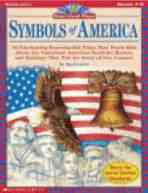
Save $5 on any of my Scholastic titles at teacherexpress.com. Symbols of America and Classic Short Stories gives you a ton of great readers theater that meets the Common Core. Super Sentences & Perfect Paragraphs is a complete daily writing program in a simple, no-bull package. Just click on a cover and then enter TEAPOL5 at checkout.

Click on the cover to preview or purchase!

Click on the cover to preview or purchase.

Click on the cover to preview or purchase.

Nine Minutes, Two Misconceptions, and One Easy Fix

The good people of America have some misconceptions about teaching. Planning for a lesson, they believe, is as easy as cracking open a text book and assigning the questions at the end of the chapter. Not only would that be low-level instruction, it also isn’t how today’s curricula are designed.

Why Use Drama cover 220x289The fifth grade reading text adopted by my school district, for example, includes a six-volume teacher’s edition, a balanced literacy planning guide, a CD-Rom planning guide, a manipulatives kit, a set of blackline masters, a classroom management kit, an integration kit, a set of theme tests, an extra-support management kit, two student workbooks and the teacher’s manual to go with them, three file boxes of mysterious support material I have yet to open, and fifteen small crates of so-called “mini-readers.” There’s so much of it that it takes a hand-truck to carry it anywhere.

Let’s ignore for a moment the cost of all this stuff (almost $3,000 for the teacher’s materials alone). What I want to accentuate here is that in order to plan one 30 minute reading lesson, I must wade through and be familiar with every last piece of it.

And how much time do I have to do it? According to planning time standards in my district: nine minutes. I have nine minutes to plan it, evaluate each individual student’s performance, record the results, and report the outcomes.

This leads me to another public misconception: teachers are only working when they’re standing in front of the class.

As we all know, delivering lessons to our students can be demanding. One study measuring stress by the number of decisions made per minute concluded that teaching is second only to air traffic control. So standing in front of our students is indeed “work.” But could it be possible that the time teachers spend planning may be the more demanding of the two?

You and I know that quality lessons take time to plan and prepare. But nine minutes? Imagine Jerry Seinfeld or Chris Rock preparing a ten minute bit for the Tonight Show but given only 3 minutes to do it. That’s the same ratio.

Nine minutes to plan, prepare, and assess each thirty minute lesson (not to mention all our other duties such as completing report cards, writing performance goals, communicating with parents, dealing with misbehavior, and attending meetings). Nine minutes.

The chefs on Hell’s Kitchen don’t have it any worse.

It’s no wonder I breathe a sigh of relief whenever I start a new set of classroom plays. In comparison to today’s over-stuffed textbook programs, planning and preparing read aloud plays is “easy-peasy.” To find out how easy, download my free guide on teaching with plays, Why Use Drama? Or tune in to this short podcast from the folks at Literacy Special Interest.

Read Aloud Plays are comparatively easy to plan, fun for the students and teacher, and inexpensive. And with a host of topics available—from Aesop’s Fables to the Apollo Moon Landing—they can be integrated with nearly every subject. What’s more, they’re an excellent way to teach to the Common Core (which refers to “drama” 47 times).

So this month, give your students and yourself a break: set aside that monster textbook and use you nine minutes to plan a month-long trio of Read Aloud Plays.

Happy directing!