Time to Unleash Your Ghouls & Goblins

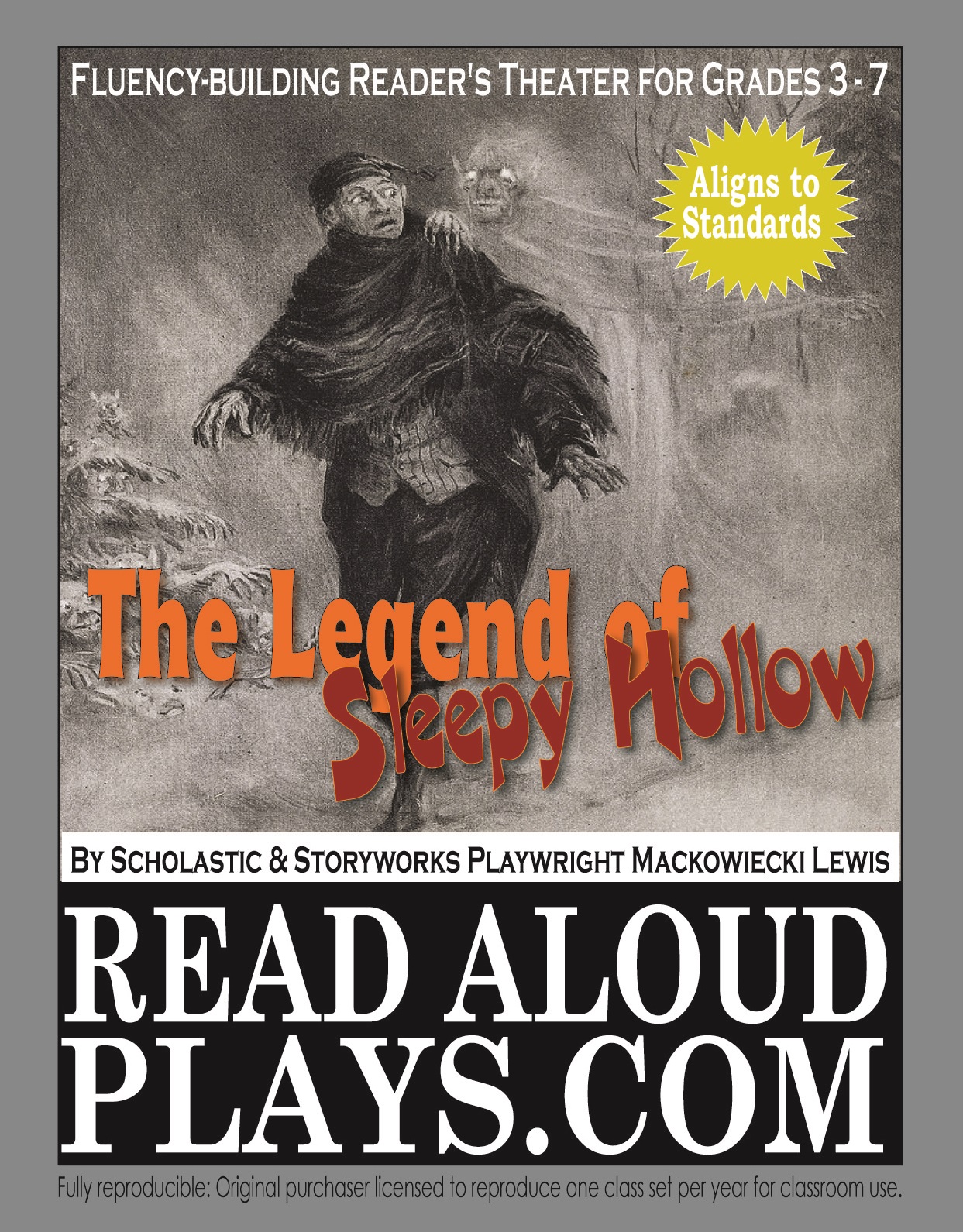
Back a hundred years ago, the idea of ghoulishness was captured in short stories rather than comic books. Writers like Poe, Shelley, and Stevenson creeped out their audiences with dark tales of superstition, mystery, and insanity—and the Gothic themes they created have been permeating literature, television, and cinema ever since. Case in point, for the last couple of years I’ve been not-quite-binge watching episodes of Dark Shadows, the Gothic TV show about Barnabas Collins—arguably the world’s second-most famous vampire. (Step aside, Edward.) The show’s witches, werewolves, and headless dudes had me mesmerized when it originally aired back in the 1960’s. Now, viewing the rather campy soap through adult eyes, I’m recognizing that all its creepiness came from classic short stories like The Cask of Amontillado, Frankenstein, and the Headless Horseman. They’re all in there! Go figure!

Your students know these themes, too. They’ve seen them on the Simpsons and Family Guy, in Goosebumps and Marvel Comics. But do they know from whence they come?  Though the archaic language and complex structures of these classic tales present barriers for middle grade readers, you can make them more accessible by pairing them with reader’s theater. And what better time to do it than Halloween?

So what if your students are mesmerized by Venom and Doctor Octopus! There are plenty of mangled monsters and the criminally insane in W.W. Jacob’s classic, The Monkey’s Paw, Poe’s The Tell-Tale Heart, and Hawthorne’s The Birthmark. They’ll also find that familiar ol’ headless horseman in Sleepy Hollow, and a hapless ghost in Twain’s A Ghost Story. No, your kids won’t find them Pennywise-creepy or Slenderman-scary, but chemical concoctions, mad scientists, and sinister psychopaths make them very nearly as engaging.    

All these plays are available on my TeachersPayTeachers storefront. They’re critically-acclaimed. They’re cheap. And they each come with a comprehension exercise. Suitable for reader’s theater, podcast radio drama, or full stage production, they’re perfect for fifth graders and up— but get started early to have them well-rehearsed by Halloween.

Thank you “Back at Work,” Rebecca Schwartz., Les Cain, Misha Carlstedt, Carolyn Finch,  Jocelyne Matos, Bobbie Kukal, Antonio Costa, Lori Ivy, and Lynn Silvey for your lovely recent reviews of my products.

Happy directing!

Your Year Just Got Easier

I strive to publish materials that are kid-centric, easy-to-use, and sustainable. That being the case, the following products will make your school year better than ever.

Your new math facts program: Fact Car Rally Race. Mastery of the math facts is the foundation of all things math, so a program that keeps kids focused on truly memorizing their tables is essential. In Fact Car Rally, students create their race cars during the first week of school and progress around the race route as they pass fact quizzes—addition and subtraction for youngers, multiplication and division for olders. “Way better than Rocket Math,” say kids and teachers alike! And way more effective than gaming apps.

Your new writing program: Super Sentences & Perfect Paragraphs. Don’t be fooled by the expensive textbooks, software licenses, and complicated teacher editions published by the big boys! Everything you need for an entire year’s writing program is right here in one, easy-to-use and engaging package.

Your emergency lesson plans: EZSubPlans. Be prepared for that emergency absence by prepping your plans now, before you’re desperate. It’s easy with EZSubPlans—just click, print, and relax! There are sets for 3rd, 4th, 5th, and 6th grades, but they’re largely interchangeable. In fact, I use all four sets at fifth grade, meaning I’m already covered for up to eight emergency absences. Eight!

Your new reading fluency program: Why Use Drama? My free reader’s theater primer outlines ways to make Read Aloud Plays work for you. Take a look, and then download a couple fun plays to hook your students during the first weeks of school. My Tigger play is currently free, and if you’re serious about Halloween, check out titles such as Birthmark, the Money’s Paw, and the Headless Horseman.

Mouse Drowns in Soup, is Saved by Bird!

New Plays for Back to School

You probably know the Brothers Grimm for stories like Rapunzel and the Frog Prince, but there are scores of others that Disney hasn’t yet sanitized and “princessified.” We’ve adapted two of them as readers theater plays—and we think they’re perfect for Back-to-School.

The first is The Mouse, the Bird, and the Sausage. In typical Brothers Grimm fashion, it’s a cringe-worthy story about contentment, cooperation, and friendship. In the original, the three “roommates” ruin their happy life together when they’re cajoled into altering their routine. The result is Sausage gets eaten, Mouse gets boiled, and Bird drowns. It may be Grimm, but it’s also a bit too gruesome for the classroom!

While our version is no less cringey, we’ve managed to save all their lives while having a blast doing it! All five animal roles demand students willing to sell out on stage: Sausage’s Italian bravado, Mouse’s “death” scene, Bird’s over-baked remorse, Crow’s creepiness, and Dog’s indifference.  We’ve tossed in optional “walk-up” music for each of the characters, too, which will help make this play an even bigger hit with your kids!

The second play has none of the gore the Grimm Brothers are known for. Instead, Hans in Luck is a cautionary tale about financial wisdom and good judgment . . . Hans has neither. After having worked seven years as an indentured servant, he’s given a lump of silver “as big as his head,” which he takes and then travels home. He soon tires of lugging it around, so he trades it for a horse, which he eventually trades for a cow, and then a pig, and so on until he has nothing left. All the while, Hans sees himself as incredibly fortunate, which perhaps he is. From his simplistic perspective, arriving home to find his grandmother still living proves he’s the luckiest man alive! Your students will enjoy uncovering the story’s numerous morals about trust, innocence, luck, foolishness, positivity, and money. We’ve added a few other surprises, too, making it another great character-building play to start your school year.

And, if Grimm tales don’t float your boat, at ReadAloudPlays.com we have many other plays to choose from. All come with a comprehension activity, key, teacher notes, and public school performance rights.

Thank you, Felicia A., Annette H., Sarah D., Lynn S., Shawn L., and Janet T. for your recent positive reviews!

Welcome back to school . . .and happy directing!

Help for Spring Fever in the Classroom

Trees and flowers aren’t the only things blossoming right now. Your students, having spent much of the year under your tutelage, have grown and matured and are nearly ready to advance to the next grade—or at least they believe they are. They’re probably getting a bit stir-crazy, too, ready for something more than the same old routine.  Perhaps, too, they’re having the life sucked out of them by standardized tests. It sounds like a good time to liven things up with some truly fun reader’s theater or class plays.  Here are a few of my favorite antidotes for Spring Fever:

Perfect for Earth Day, Nature Talks Back “follows” the madcap adventures of three conifers names Otto, Bill, and Luther as they deal with bark beetle scares, woodpeckers, and centipedes. The story uses campy humor to convey scientific facts about how trees communicate to fend off danger, about misconceptions around what constitutes a “pest,” and about the danger pesticides are to pollinators.

HONEYBEE: Cough, choke. . . has somebody…cough wheeze . . . been using . . . sputter . . . bug spray?

KID (sheepishly): It was just a couple squirts.

HONEYBEE: Cough, wheeze . . . Good thing I only caught a whiff of it. It sent me into a loop-de-loop!

Nature Talks Back is written in four “acts,” which can be presented by a single cast or as four mini-plays.  When my students presented it on stage, they used cardboard sheets to create two-dimensional evergreen trees with cutouts for their faces. Because the trees themselves don’t move, it was a kick teaching kids how to act with their facial expressions.  But even of you don’t have time for a full presentation, NTB makes for a great podcast presentation or just a simple classroom reading on April 22nd!

How Jackie Saved the World is another great play for Spring. Our Jackie Robinson play depicts the circumstances around Jackie breaking the “color barrier” in the major leagues. As your students portray Jackie, Pee Wee, and others, a radio announcer calls a more modern game between Derek Jeter’s Yankees and Ken Griffey’s Mariners, which gently contrast the two eras. A peanut vendor and the hot dog man lend narration as they walk through the crowd–your audience.

HOT DOG MAN: Despite all that pressure, Jackie led the Dodgers to the World Series and was named Rookie of the Year.  Some said it was the toughest season any ball player has ever endured. Last chance for hot dogs!

PEANUT VENDOR: No doubt the reason today’s game is so exciting is because Jackie had the courage to turn the other cheek. Peanuts! Get your peanuts here!

ANNOUNCER: We’re in the top of the ninth. Two outs and two on and the score tied two to two. The Yankees are taking no chances. With Ken Griffey, Jr. up to bat, they’ve brought in their closer, Mariano Rivera.  Here’s the pitch. . .

Baseball season is underway all over the globe, so many of your male students—who statistically are more likely to be reluctant readers—will jump at the chance to be in a baseball play.

And then there’s Pooh.  Who doesn’t love a Winnie-the-Pooh story? Our RT set includes the best of A.A. Milne’s 1926 collection, all familiar tales such as Winnie-the-Pooh and the Honey Tree:

BEES: Buzz.

CHRISTOPHER ROBIN: Perhaps they think that you’re after their honey.

POOH: It may be that. You never can tell with bees.

BEES: Buzz. Buzz.

POOH: Christopher Robin, have you an umbrella?

CHRISTOPHER ROBIN: I think so.

POOH: I wish you would get it, and walk up and down with it, and look up at me every now and then, and say ‘Tut-tut, it looks like rain.’ I think, if you did that, it would help with the deception we are using on the bees.

Well-suited to reader’s theater or full stage production in third grade and up, these are great for emphasizing delivery and enunciation: nervous Piglet, droll Pooh, gloomy Eeyore, and temperamental Rabbit, for example. The set includes five short plays, each with just a handful of characters. You can split your elementary-aged class into five groups and have each group present one of the plays, or have older students stage a presentation for younger grades.

Of course, we have many other plays with “fun” themes. The Pied Piper, Goldilocks, Barbed Wire, The Nose, Rikki Tikki Tavi, Peter Rabbit, and How the Elephant Got its Trunk are all wonderfully silly yet still build reading fluency while teaching important lessons.  And don’t forget, when you buy one of our plays, you’re not merely buying a set of worksheets; you’re getting an original piece of literature—a professionally written play and the rights to use it year after year. It’s like getting a full class set of your favorite novel along with the other stuff most TpT products provide.  

You’ll find all our plays on our TpT storefront.

Happy directing!

You Say It’s a Merry Christmas? Be Forewarned!

Christmas can be terrifying . . . especially if you don’t believe. That’s the theme-defining line from Gabriel Grub, Charles Dickens’ Gothic Christmas tale. It’s the story of a gravedigger whose disdain for the holidays results in his being put on trial by the Goblin King. It is a splendid story—and a splendid play–one of five holiday themed scripts available from ReadAloudPlays.com. (Click here to listen to what my fifth graders did with Gabriel Grub a few years ago.) Here are the others:

A Christmas Carol, adapted to be an ideal length for middle grade kids, comes with two versions—both the traditional one and a second in which Scrooge is a woman. Years ago, my students turned it into a movie. You can watch it here and use it as a preview for your own class play.

Escape from the Blacking House borrows from Oliver Twist and the Pickwick Papers to artfully tell the story of Dickens’ troubled childhood. It’s probably my most overlooked play, and it pairs perfectly with Christmas Carol. They can be downloaded as a package here.

We also have O’ Henry’s classic, The Gift of the Magi. It’s the story of an impoverished young couple who sell their most precious possessions in order to buy one another needless gifts.

Finally, we’re excited to add The Shoemaker and the Christmas Elves to our catalogue. The Brothers Grimm are known for dark, often violent stories, yet here is a delightful story with a Christmas theme. I think your students will thoroughly enjoy speaking elfin gibberish.   

Whatever the case, don’t let your December become terrifying. Whether you’re planning a full production or just need some scripts to make your in-class reading a bit merrier, now is the time to get started! Preview and download your holiday plays at my TpT storefront.

Happy directing!

Laugh Out Loud Plays

During my twenty years crafting plays for Scholastic, my assignments have nearly always been of a more serious nature.  The plays, usually about American history, civil rights, or classic short story plays, have typically been well-received, and having used all of them with my own students, I know kids thoroughly enjoy enacting them. Secretly, though, I’ve been yearning to write plays that elicit giggles, guffaws, and belly laughs. I know this because most of the recent titles I’ve crafted—these exclusively for my ReadAloudPlays.com brand— are what I would call “Laugh Out Loud Plays.”

Today I’m releasing two new ones, both crafted with student enjoyment foremost on my mind. The Goldilocks story has no doubt been done nearly to death, but I think my version is unique. Imagine Goldi as a television home renovation expert. With the help of her three little pig contractors, she dares to turn the bears’ dreary, worn out space into their “forever home.” If only the bears were in on it!

The second play, Barbed Wire, is a revision of Guy de Maupassant’s classic cautionary tale, A Piece of String. My editors at Storyworks once termed my String play the best thing I’d ever written (to that point in my career, I hope). String is still available on my TpT store, but there’s little doubt it’s more appropriate for middle school and up. It’s a great play, but again— kind of serious. By changing the setting to the Wild West, making the characters animals, and giving those characters a western dialect, I’ve aged it down while “funning it up.”  

My serious plays remain important. Plays are an exceptional format for introducing students to Claudette Colvin, the Birmingham Children’s Crusade, and Juneteenth. Stories from American history, such as that of the Secret Soldier and the burning of the White House, are a lot more memorable when taught through reader’s theater. And though archaic language is often a barrier to understanding classic short stories like The Monkey’s Paw and Tell-Tale Heart, acting them out gives students “a window of comprehension” and a willingness to engage.   

For certain, there are also important lessons embedded in my newer plays, but none more so than that reading, acting, and performing should be a ton of fun.  You and your kids will love enacting The Pied Piper, Nature Talks Back, The Nose, and now Barbed Wire, and Goldilocks. They’re all ideal for kicking off the school year. Take a gander on my TpT storefront. You can also see videos or hear podcasts of many of the plays—as performed by elementary kids—by clicking on the Performances tab.

Happy directing!

Why Your Students Can’t Pay Attention

When LeBron James drains a three-pointer, he gets more than a big chunk of change. He also gets a hit of endorphins. It’s this hit of hormones that makes him want to score again and again. I’m not a neurologist (nor even much of a brainiac), but I’ve read enough about neurotransmitters such as dopamine and serotonin to understand a bit of the brain science behind motivation. What happens in Lebron’s brain is the same thing we all experience when something gives us pleasure or excitement. It’s especially profound in the developing brains of our students. It’s what motivates a kid to learn to read, to pass tests, to win at wall ball, to make friends, and . . . to level up in Fortnite.

Video games, it seems, are designed to stimulate endorphin production. (So too are the algorithms in social media.) It is what makes video games addictive. In a typical video game, the early levels are easy. A player experiences immediate success and therefore an immediate dopamine hit. As the player advances to higher levels, success is harder to come by, but the player sticks with it because their brain is seeking those endorphins. The problem is that getting endorphins in an artificial environment such as a video game is fun and easy, which means it highjacks a person’s motivation to pursue endorphins in the real world. It’s why your video game addict often lacks the work ethic to become a voracious reader, to earn straight A’s, or to drain three-pointers. Small Spaces may be a great book, but it just can’t compete with Roblox.  

Johann Hari spells all this out in his book, Stolen Focus. He’s compiled vast amounts of research to show how addiction to devices is undermining not just education, but society as a whole. It’s a great read—and it’s especially applicable to educators.

Hari contends that today’s kids are being raised by devices from the time they’re born. When our toddlers need attention, instead of actually parenting we merely hand them a tablet. Neither parent nor child learn to deal with whatever the actual problem is because the device serves as a pacifier.

Hari also contends that ADHD is over-diagnosed. Chronic sleep deprivation due to Internet Gaming Addiction (IGA) is the root cause of classroom hyperactivity and focus issues.  Gamers over-stimulate their brain in the evening hours and consequently can’t fall asleep. Rarely do they reach REM sleep. The chronic fatigue manifests itself just like ADHD, but the solution isn’t daily doses of Ritalin; it’s as simple (and as hard) as turning off devices two hours before bedtime.

We’ve all heard the ed gurus telling us for a while now that kids with laptops, tablets, or cell phones will accomplish whole new levels of academic success. The pandemic, though, exposed the many flaws of such digital thinking, yet today, despite plunging test scores, alarmingly low literacy rates, decreasing motivation, and increasing hyperactivity, we’re still subjecting our kids to online platforms–many of which look a lot like video games.

Maybe it’s time we put away all the devices and got back to some fundamentals such as cursive handwriting (it does all kinds of great stuff in the brain), holding actual books in our hands, counting back change, using measuring tape, microscopes, and beakers.

And performing plays.

You can check out Stolen Focus at most any bookseller or public library. (I’m not including a hot link because I want you to know I’m recommending the book solely on its merits, but here’s as honest a review as you’ll ever find.) You can also check out my plays—most of which were originally published by Scholastic—in my TpT store. Consider welcoming kids back to school with my Winnie-the-Pooh reader’s theater. I’ve taken five of Milne’s best stories and crafted them as one-act plays, each with just 4 or 5 actors. Try splitting your class into small groups and have each learn and perform an act during the first week of school! They’ll love it!

Or, I suppose you could instead just assign them some more time on an online reading app.

(Don’t do it! Use a play!)

Happy directing!

Your Juneteenth Playlist

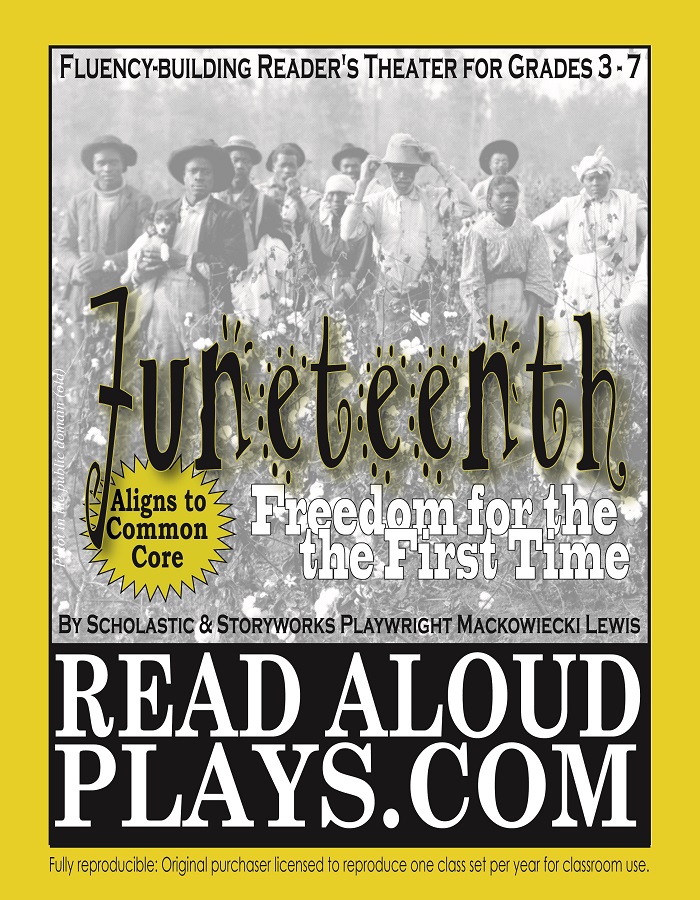
My most poignant play—and it’s perfect for celebrating Juneteenth! Based on actual slave narratives, Freedom for the First Time is historically-accurate, kid-friendly, and comes embedded with comprehension questions and historic photos. It’s the narrative of ten-year old Tyree, a slave during the time of the Civil War. Like many slaves, Tyree believes whatever her masters say. But when Tyree’s brother, Sweet Walter, arrives with a band of Union soldiers to tell her the war is over, she and her family experience their day of Jubilee, the day they know freedom for the first time. Pair it with Days of Jubilee, Patricia and Frederick McKissack’s exceptional non-fiction book about slavery and the Civil War. Click here to see the fantastic things the kids at the Baker Montessori School in Houston did with the script! It’s available on TpT and Etsy, and like all my plays, it includes performance rights. Be sure to also check out Box Brown’s Freedom Crate and Richard Wright & the Library Card. Happy directing!

A Special Pooh Event!

Back in the days of the big three networks, a television special like Charlie Brown, Winnie-the-Pooh, or the Little Drummer Boy was a once-a-year event. I remember being mesmerized by those now-old Pooh specials of the 1960’s and 70’s. They introduced us to memorable stories such as Pooh and the Honey Tree and memorable characters such as Eeyore and Tigger. Though releasing my set of Pooh adaptations may not be the kind of event that’ll gather the family in front of the Zenith on a Sunday evening, I none-the-less think it’s still kind of special.

My adaptations include the five best stories from Milne’s 1926 work. I’ve packaged them as five individual “mini-plays.” Each play has just five or six cast members, which means they’re great for small groups. My fifth graders are having a blast with them, and I’m enjoying hearing their interpretations of Milne’s clearly-defined characters. In our case, each small group is staging two plays with the intent of gathering first and second grade kids “in front of the Zenith” some afternoon after winter break. I think your kids will love them too.

A.A. Milne published the original set of Pooh adventures way back in 1926, but even though they’re now in the Public Domain, recreating them as reader’s theater isn’t as straight-forward as it might seem. Disney, for example, still owns the copyright to everything post-1926. That includes Tigger, Pooh’s red shirt, and even the un-hyphenated version of Pooh’s name. Still, these five plays represent the best of Milne’s original work. They’re suitable for third grade and up (a strong group of second graders can probably handle them too), but they promote fluency in upper grades too. They come with comprehension activities, and they’re printed in my kid-friendly, easy-to-read format. Look for Pooh on my TeachersPayTeachers storefront.

Thank you for using Read Aloud Plays! Happy directing!

Have a Dickens of a Christmas!

We all know that last week before Christmas vacation can be a real bugger in the classroom. The kids get so worked up about yule logs and gingerbread houses (or, more truly, about the L.O.L. Doll Box or Nintendo Switch under the tree), they’re no longer able to see straight, let alone sit still for a geometry test. You can have one Dickens of a Christmas, though, by adding a couple holiday plays to your Santa letters and holiday art projects.

Charles Dickens, of course, is the undisputed master of Christmas-oriented literature, so allow me to share with you some nifty class plays based on his life and work.

Whether you plan to fully enact it or just play around with it during language arts class, my traditional, kid-friendly version of a Christmas Carol is a great place to start. Challenging for 3rd, but great for 4th-6th graders. If you want to take things a bit further, consider creating a movie version, or merely having your students adapt the play to their liking. A few years ago my fifth graders added extra dialogue, a few additional scenes, and a contemporary setting to my script to make this lovely sixteen minute film. Use it as an introduction to your work on the play (it’ll really motivate your students) or as a follow-up compare and contrast activity.

Consider pairing Scrooge with ol’ Gabriel Grub. This script is a spooky, Christmas tale about a grumpy grave digger who is dragged away on Christmas Eve by a group of wretched goblins. It’ll scare the dickens out of the younger kids, but your fourth through eighth graders will find it a fun and fascinating comparison to Scrooge. You can check out a radio pod cast my students created by clicking here.

Another Dickens classic comes from his novel, Great Expectations. My original play depicts the opening chapters. Though not explicitly about Christmas, it takes place on Christmas Eve when the orphaned Pip encounters an escaped convict on the marshes. It’s full of angst and adventure, but best suited for 6th through 9th graders (though a talented or motivated group of 5th graders could probably handle it, too.

Along with any of these, you simply must try my wonderful play about Charles Dickens’ childhood, Escape from the Blacking House. I think a great triple play Christmas show would use Blacking House as an introduction to Grub and Scrooge. But even if you merely want your kids to have more engaging access to some holiday stories, these plays are great just for in-class reading. (Build fluency be reading them twice.) All these plays, along with The Gift of a Magi and others, are available on my TpT storefront.

So if you want to have a great week before the vacation, put away that geometry test. Show your Christmas spirit with some holiday plays.

Happy directing!