Grow Some Neurons!

Many kids begin school already knowing how to read. They haven’t had formal lessons. Their parents haven’t been trained in the latest methodology. They haven’t used a single worksheet or text book. Yet here they are reading. Why?

What Does Brain Research Show About Fluency?

Consider for a moment how your own children learned to read. If they’re like many kids, they had a few favorites in their book bin. I recall my oldest boy latching on to Amos & Boris and a Sesame Street book entitled Don’t Forget the Oatmeal. As a preschooler, he would ask us to read these books over and over again. Soon, he started reading them to us. “He’s not really reading,” we’d tell ourselves, “He’s heard the book so many times, he’s just memorized the words.”

But based on brain research dating back to the days of psychologist Lev Vygtsky (left), some experts believe the difference between reading and memorization is slight. Kids get an emotional charge out of reading proficiently—whether memorized or not. The positive charge actually produces chemicals that form the neural pathways that make reading (and learning) possible. Because our son had consumed Don’t Forget the Oatmeal so frequently, he’d mastered the text, prompting his brain to construct new pathways.

Can Reading Physically Damage a Child’s Brain?

No, reading won’t damage a child’s brain, but could poor instruction? Consider what we often do in the classroom. We take a book, article, or story and ask kids to read it one time. We expect mastery on the first attempt. We ask kids to pass computerized tests, complete worksheets, and discuss content after just a single reading. We’ve assumed that language is language, that if they can decode they should be able to read anything at their grade level. It’s a fallacy and a tragedy. If Vgotsky was right, instead of experiencing a positive emotion that builds pathways, many kids in this situation suffer a negative emotion that causes them to withdraw and resist reading altogether, possibly even causing those neural pathways to shrink. And don’t assume it’s just your low-performing students either. Watch carefully when you ask students to read aloud in class; many of your brightest kids are just as reluctant as your poor readers. It’s not simply that they’re shy; they don’t want to risk experiencing the negative emotions they feel when they stumble over or mispronounce a word. There are, however, a number of ways teachers can prevent those neurons from shrinking, one being the use of “repetitive reading” techniques.

How is Repetition Beneficial?

Asking a young reader to read aloud a piece of text he or she is looking at for the very first time is akin to asking a musician to perform in public a piece of music he or she has never played before. Only the most talented can do it, and even they rarely do. Just as music is a language that requires repetition for mastery, so too does reading. Your students need opportunities to “sight read,” to practice, and then to “perform” the material you want them to master. Plays are the perfect format.

Because we’ve inadvertently trained kids that a book is something to be read only once, few third graders are willing to give James and the Giant Peach a second round. Few second graders will read Stellaluna more than once or twice. Give children a script and schedule a public performance, however, and they’ll be willing to read and reread it twenty to thirty times. Twenty to thirty times! By the time they’re asked to read it in front of the class, even your struggling readers will be able to read with reasonable fluency. Even your “shy” kids will be willing to read out loud.

Read Aloud Plays give you the opportunity to teach repetitive reading without the resistance you get when asking a child to re-read a traditional text. Students acquire mastery, which chemically changes the brain, making them superior readers who are better able to comprehend. If Mr. Vgotsky were alive today, I think he’d approve.

Are You Ready to Grow Those Pathways?

If you’re not already using read aloud plays in your instruction, this is a great time to start. Not only will all that repetitive reading help grow some neurons, but drama can be used to fulfill a significant number of Common Core State Standards. Kick off the school year with a trio of explorer plays such as Fly Me to the Moon, The Fountain of Youth, and Lewis & Clark and Bird Girl. Or consider a set of American Revolution plays such The Secret Soldier, A Bell for the Statehouse, and Fact or Fiction: The Legend of Betsy Ross. Or browse ReadAloudPlays.com to mix and match.

Happy Directing!

Text Books vs Read Aloud Plays

Common Core logoAdmit it. You’re using one of those big fat textbooks to teach reading, one of those monstrosities brought to you by publishers determined to make sure its refrigerator-box full of materials met every standard ever concocted in Texas, California, Pennsylvania, the U.S. Protectorates, and Saturn’s Ring. Too bad the kids are yawning.

If you’re like most people, the new Common Core Standards might have you a bit flustered. You can rely on those textbooks, which will provide certain coverage of the standards but will drive your students back to their video games, or you can delve into literature, classroom magazines, and reader’s theater, which will require more documentation on your part but will more likely create lifelong readers. The truth is, using what administrators like to call “supplementary material” is more engaging to students, more enjoyable to teach, and not so hard to justify against the CCSs. Consider this: “drama” is mentioned nearly fifty times in the Standards! That being the case, reader’s theater is more relevant than ever.

Here are just a few examples from the Reading Standards for Literature (RL) where drama or an element of drama is explicitly referenced:

RL4.5Explain major differences between poems, dramas, and prose….
RL5.4Explain how a series of chapters, scenes or stanzas fits together….
RL5.6Describe how a narrator’s or speaker’s point of view influences how events are described.
RL6.3Describe how a particular story’s or drama’s plot unfolds in a series of episodes….
RL7.3Analyze how particular elements of a story or drama interact.

cyclops coverAnd don’t assume that using drama is only useful in teaching drama. One user of my play adaption of the classic short story, The Monkey’s Paw, commented how reading the play helped her students comprehend the original text. Because plays have to break stories down to their essence, using adaptions of classic stories is likely to help students meet the RL standards for any number of otherwise challenging texts at the high end of the “complexity band” (RL4-8.10)

But plays also help students meet standards in Reading Fluency. Consider RF 4.4cUse context to confirm or self-correct word recognition and understanding…. Because drama puts the reader in the moment, and because the playwright cannot waste words within a 20 minutes classroom script, students are more able to make immediate contextual connections. In fact, drama is ideal for improving reading fluency in general. Because it mimics the repetition beginning readers use when first learning to read, it actually forms new neural pathways. (Check out the brain research by Vgotsky and others, or for a shortcut, read my article “Why Use Drama.”)

Recently, a former student of mine provided a powerful endorsement of using drama to teach literature. I hadn’t seen this young man for over four years, but he told me he’d just been thinking of me the day before. He’d been sitting in his 8th grade English class yawning over yet another mundane text book assignment when his mind drifted back to my then-third grade classroom. “I was just thinking about hopping around our classroom stage when we did that Aesop’s Fables play,” he said. “I enjoyed that.” That seems pretty telling to me.

Ready to set aside that textbook for a while and give drama a try? You can find a wide variety of read-aloud plays at my TeachersPayTeachers store. Stock up on titles for the next school year. Nearly all my plays have been previously published in Scholastic classroom magazine’s such as Storyworks and Junior Scholastic, so you can rest assured that they meet the highest standards. Not sure how to make it all work? Click here. For samples of kids performing classroom plays click on the “podcasts” tab up top. And for still more validation of using drama to meet the CCSs, check out this article from the New York Times or this podcast from the folks at Literacy Special Interests.

Happy directing!

High Stakes Testing Leads to High Blood Pressure

The Birthmark scope cover pageThis time last year I admitted to a high degree of frustration when it comes to standardized testing. It drives my blood pressure up when fifth grader after fifth grader gets pulled out of class to either test or get remedial instruction. Rarely (if ever) do I have my full group. It makes for some dysfunctional lessons requiring the reteaching of material to kids who were already struggling to grasp material from previous missed sessions. Still, as my Admin is fond of saying, “testing is the reality in which we live.” Embrace it or die (at least that’s how I translate it). And with the Smarter-Balance test hitting the streets next year, it’s evident this testing craze isn’t going away anytime soon (can’t wait to hear from parents when their kids go home and say they flunked the ‘smarter test’).

Well, I’m happy to say my current students have once again done just fine on state standardized tests, especially in reading where nearly all either met standards or growth targets and average fluency scores soared. Why mention it here? Because I long ago abandoned traditional text books and instead built my reading program around read aloud plays. Along with chapter books and content reading (primarily history content from Storyworks magazine), read aloud plays are the mainstay of my instruction. Not only do they build fluency and provide the framework to teach comprehension skills, they also increase the love of reading.

While some of my colleagues look at the new Common Core Standards with trepidation, I’m confident my young thespians will continue to thrive. As always, I’m already mapping out another year of plays. You can see my tentative plans below, and if you’d care to jump on the reader’s theater bandwagon, you’ll find all of the titles (and many more) either on my TpT Storefront, in one of my books^, or coming soon via this website*.

I’ll close with one warning: using read aloud plays to improve test scores means more than just handing out scripts and inviting kids to read. To see the nuts and bolts of how it’s done, download my free article, Why Use Drama?

September–Introductory: Rikki Tikki Tavi^, Peter Rabbit, Argument at Mount Rushmore^

October—Just for Halloween: Penelope Ann Poe’s Amazing Cell Phone, The Tell-Tale Heart^, Cyclops v Odysseus

November/December–Holidays: Ebenezer Scrooge*, Gabriel Grub*, The Necklace^

January–American Revolution: The Secret Soldier*, The Legend of Betsy Ross^, Eagles Over the Battlefield^

February–Slavery & Civil War: Spies & Rebels, Freedom for the First Time, Box Brown’s Freedom Crate

March/April–Civil Rights: How Jackie Saved the World, Selma to Montgomery: Let it Shine*, I Have a Dream: The Childhood of MLK^

May—Just for Fun: A Piece of String*, Ransom for Red Chief*, The Nose^

All right, I’ll close (for real this time) with the fine print: Using Read Aloud Plays won’t stop your classroom instruction from being interrupted by standardized testing. Nor will it prevent your blood pressure from soaring due to the same. But done right, read aloud plays will have a positive impact on your reading test scores.

Happy directing!

Save Five Bucks!

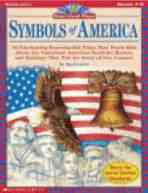
Save $5 on any of my Scholastic titles at teacherexpress.com. Symbols of America and Classic Short Stories gives you a ton of great readers theater that meets the Common Core. Super Sentences & Perfect Paragraphs is a complete daily writing program in a simple, no-bull package. Just click on a cover and then enter TEAPOL5 at checkout.

Click on the cover to preview or purchase!

Click on the cover to preview or purchase.

Click on the cover to preview or purchase.

Nine Minutes, Two Misconceptions, and One Easy Fix

The good people of America have some misconceptions about teaching. Planning for a lesson, they believe, is as easy as cracking open a text book and assigning the questions at the end of the chapter. Not only would that be low-level instruction, it also isn’t how today’s curricula are designed.

Why Use Drama cover 220x289The fifth grade reading text adopted by my school district, for example, includes a six-volume teacher’s edition, a balanced literacy planning guide, a CD-Rom planning guide, a manipulatives kit, a set of blackline masters, a classroom management kit, an integration kit, a set of theme tests, an extra-support management kit, two student workbooks and the teacher’s manual to go with them, three file boxes of mysterious support material I have yet to open, and fifteen small crates of so-called “mini-readers.” There’s so much of it that it takes a hand-truck to carry it anywhere.

Let’s ignore for a moment the cost of all this stuff (almost $3,000 for the teacher’s materials alone). What I want to accentuate here is that in order to plan one 30 minute reading lesson, I must wade through and be familiar with every last piece of it.

And how much time do I have to do it? According to planning time standards in my district: nine minutes. I have nine minutes to plan it, evaluate each individual student’s performance, record the results, and report the outcomes.

This leads me to another public misconception: teachers are only working when they’re standing in front of the class.

As we all know, delivering lessons to our students can be demanding. One study measuring stress by the number of decisions made per minute concluded that teaching is second only to air traffic control. So standing in front of our students is indeed “work.” But could it be possible that the time teachers spend planning may be the more demanding of the two?

You and I know that quality lessons take time to plan and prepare. But nine minutes? Imagine Jerry Seinfeld or Chris Rock preparing a ten minute bit for the Tonight Show but given only 3 minutes to do it. That’s the same ratio.

Nine minutes to plan, prepare, and assess each thirty minute lesson (not to mention all our other duties such as completing report cards, writing performance goals, communicating with parents, dealing with misbehavior, and attending meetings). Nine minutes.

The chefs on Hell’s Kitchen don’t have it any worse.

It’s no wonder I breathe a sigh of relief whenever I start a new set of classroom plays. In comparison to today’s over-stuffed textbook programs, planning and preparing read aloud plays is “easy-peasy.” To find out how easy, download my free guide on teaching with plays, Why Use Drama? Or tune in to this short podcast from the folks at Literacy Special Interest.

Read Aloud Plays are comparatively easy to plan, fun for the students and teacher, and inexpensive. And with a host of topics available—from Aesop’s Fables to the Apollo Moon Landing—they can be integrated with nearly every subject. What’s more, they’re an excellent way to teach to the Common Core (which refers to “drama” 47 times).

So this month, give your students and yourself a break: set aside that monster textbook and use you nine minutes to plan a month-long trio of Read Aloud Plays.

Happy directing!

Why You Should Teach Black History on April 15th

Click here to preview or purchase at TpTThe Major League Baseball season is underway, which seems a trivial point in the broad scheme of academics. Yet were it not for Jackie Robinson’s breaking of the color-barrier, education in America might look alarmingly different.

When I was growing up, I was a sports fanatic. By then, professional sports had already been integrated, so it was easy for me–as Dr. King would say--to judge a man by his character rather than the color of his skin. The grit and tenacity of Matty Alou on the baseball diamond and Terry Metcalf on the gridiron made them my heroes and helped teach me to be “color-blind.” But the fact that Alou and Metcalf were out there at all was the direct result of Jackie Robinson’s own grit and determination.

There was never any doubt that Robinson had the talent to play in the Major Leagues. The issue was whether or not he’d have the character necessary to withstand the racist slurs and physical violence that followed him everywhere he went, both on and off the ballfield. Imagine what would have happened had Jackie responded in kind, perhaps taking a swing at a white player who’d deliberately spiked him, or kicking dirt at an umpire who refused to call a fair game. He would have been quickly drummed out of baseball. Integration of all our institutions, including education, would have been delayed for decades.

No doubt you have a crop of kids in your classroom who idolize professional athletes. Whether black, white, or striped (as Pee Wee Reese is quoted as saying), learning about Jackie Robinson will help them judge their fellow man by his character just as they judge their sports heroes by their grit.

April 15th is Jackie Robinson Day, the day every Major League player wears number 42 in Jackie’s honor. The league doesn’t celebrate it because Jackie was a great player, but because of the importance and difficulty of Jackie’s accomplishment. It’s a great time to enact How Jackie Saved the World. Kids consistently tell me it’s one of their absolute favorites to perform. I’m confident your students—especially your young sports fans—will enjoy it as well. You can preview and/or purchase it from TeachersPayTeachers by clicking here. You can also listen to some of my students performing it by following this link.

Happy directing!

What’s Your Fatal Flaw?

Click on the cover to preview or purchase!In Nathaniel Hawthorne’s classic short story, The Birth-mark, the main character becomes obsessed with his beautiful wife’s one and only imperfection and ends up killing her in his attempt to remove it.

It’s a story about love, science, and perfection. It includes a mad scientist, a beautiful maiden, a bloody heart, an Igor-like lab assistant, secret potions, and fatal flaws. Kids love to enact it, and because it includes numerous literary devices that make for engaging discussions or fluid written responses, it’s a great way to teach to the Common Core.

Aylmer (the mad scientist), appears to be the main character, but is he really the protagonist or the antagonist? Both Aylmer and his beautiful wife (the victim) are dynamic characters. They both change significantly. How? What does Aylmer’s nightmare, in which he removes Georgiana’s heart, foreshadow? The play includes a character, James, who doesn’t appear in the original story. Why is he included and how does it impact point of view? Toss in the elements of setting, mood, imagery, and irony, and you have a made-to-order Common-Core-meeting reading activity.

I’ve been told by some that they just don’t have time to work “skits” or “drama” into their classroom; adherence to core reading, writing, and math leaves no room for fun stuff like Read Aloud Plays. But I protest! Drama is core reading. Read Aloud Plays, including such classics as The Birth-mark, The Monkey’s Paw, A Retrieved Reformation, and many others on my site, are a perfect way to teach to the CCSs. And now it’s even easier. Click here to download a FREE activity sheet. It addresses Literature: Key Ideas and Details, and can be used with any of my Read Aloud Plays from the classic short stories series.

Happy Directing!

I Propose a Speed Limit for Young Readers

speed limit for young readersImagine if we tested prospective drivers the way we test our students for reading fluency. Instead of mumbling to the newly-turned sixteen year old to “make a left hand turn at the next intersection,” the DMV test administrator would give a whoop and shout, “Alright Jimmy, if you can get this Taurus doin’ 120, you’ll have your license in no time!”

Driving too fast is dangerous. That’s why we don’t encourage our young drivers to exceed the speed limit. That’s why we have speed limits to begin with. What we want from people is thoughtful driving. Thoughtful driving means being aware of the road signs, pedestrians, and potential hazards. It means being under control. Even NASCAR drivers practice being safe and under control.

Good readers are also thoughtful and under control. They’re aware of hazards, such as awkward sentences, irony, and homographs, which may require them to slow down or re-read. They’re familiar with road signs, such as periods, commas, indentations, and quotation marks, each requiring a change in cadence, a certain inflection, or merely a tap on the brakes. And good readers are aware of those pesky pedestrians—their audience.

Rare is the young reader who can read fast and under-control. Just as there are no ten-year-olds driving at Daytona, we shouldn’t be pushing our fifth graders to read 200 words per minute. In fact, I think the emphasis on speed as the primary measure of reading fluency is probably damaging our young readers. I think we’re actually handicapping our kids.

I was listening to one of my struggling readers the other day. She’s of normal intellect, works hard, and has normal phonic skills (I’ve checked ‘em). But over the past five years, she’s been taught that what’s important is that she attains that magic number—that ever-increasing oral fluency reading rate. It was no surprise listening to her read that she was trying to go so fast that she was stumbling over every third word and having to re-read every other phrase—and this was in a casual reading environment, not the ORF test.

This problem is not limited to struggling readers. How many of your “benchmark-meeting” readers blow through endmarks, substitute minor words, and run-over complex words? How many of your speed readers are thoughtless readers?

Instead of measuring fluency based on words per minute read, we should be emphasizing modest speeds and safe driving habits. Unfortunately, quantifying thoughtful reading is far more complex than generating the data a weekly one minute reading test provides. With no push to get the data miners out of our schools, the question becomes, how do we teach thoughtful reading despite the education industry’s ill-placed emphasis on speed?

One great way is with Read Aloud Plays.

Plays require students to read the way they speak, to use inflection and recognize punctuation. Plays require personality and accuracy. Frequent play reading, particularly if it includes performance, requires thoughtful reading.

To prove my point, try having your students read a play using their best 171 word per minute pace. Make sure the kids have never seen the play before (after all, dry reading is another element of the ORF test). One of my fifteen minute plays will take all of four minutes. The kids may be rolling on the floor with laughter—until you ask them to summarize what they read (many of my plays, such as those from Symbols of America, include comprehension tests).

I encourage you to then spend several sessions reading the same play thoughtfully, culminating with a simple performance in front of the class. Emphasize reading the way the given character would talk. Such plays will be enjoyed and understood by audience and performers alike.

Black History Month is a great time of year to incorporate Read Aloud Plays into your instruction. From slavery and civil war, to Jackie Robinson, to the civil rights struggle, I have numerous scripts ready for your students to hone their thoughtful reading skills. If you’re new to using plays, be sure to download my free guide, Why Use Drama? which provides a host of tips. And if you’re worried about the Common Core, don’t be. Drama is mentioned 47 times in the CCSs.

Turn your wanna-be NASCAR readers into thoughtful readers with Read Aloud Plays.

Happy directing!

Black Students Denied Service

Rodney_Powell_Nashville_sit-ins_1960 PD NonrenewedImagine seeing the words “Whites Only” at your favorite restaurant! We can be thankful that it’s unthinkable today. But when so much time has passed, how do we help today’s kids truly make sense of such attitudes and events?

On February 1st, 1960, four African-American college students walked into a Woolworth’s Store, sat down at the lunch counter, ordered and were refused coffee. They vowed to stay until the store desegregated its lunch counter. Five months later, Woolworth’s finally relented and began serving blacks and whites alike. It was an important moment in the history of American. The event is portrayed in my original Storyworks play, “Sitting Down for Doctor King.”

What better way to honor his legacy, meet the Common Core, and give your students an authentic Civil Rights experience than by re-enacting events such as Greensboro? Read aloud plays put your students in the action, allowing them to understand the motivations and feelings of the participants firsthand. Read Aloud Plays also help satisfy many of the Literature and Information Text standards in grades 3 through 7. But students can also utilize Read Aloud Plays to “adapt speech to a variety of contexts”, “evaluate a speaker’s point of view”, and “integrate and evaluate information presented in diverse media…,” which are all Speaking and Listening standards.

And there’s no limit as to how you use them. Pair plays with discussion, history videos (there are a ton of them on the Web), chapters from your History text book, works of literature, picture books, and more. Read a play once, or divvy up parts and practice for three or four weeks. Read Aloud Plays can be fit into almost any schedule and almost any curriculum.

For starters, check out my original Read Aloud Plays about the Greensboro Sit-ins, the Birmingham Children’s Crusade, the Montgomery Bus Boycott, and The March on Washington, where Dr. King presented his I Have a Dream speech. Or explore some of my other Black History plays. Nearly all my plays were commissioned by and originally published by Scholastic, so you know they’re of the highest quality, and all of them come with reproduction and performance rights. If you’re new to using drama, also be sure to download my free guide.

Satisfy the CCSs and bring MLK Day to life for your students. Download some Read Aloud Plays today. Happy Directing!

Expert: Common Core May Be Too Complex for Your Students

SSPP CoverI recently attended a presentation by a University of Oregon professor discussing the challenges of revamping the curriculum to satisfy the Common Core. One thing I came away with was that consistently using Super Sentences & Perfect Paragraphs will most certainly help, so rather than blog about reader’s theater, this week I’d like to chat about your writing instruction.

The good professor displayed a question from a fifth grade standardized test and asked, “What makes the following difficult?”

The Earth is a bit like a perfectly boiled egg—with a semi-liquid yolk or “core,” surrounded by a thick, soft layer called the mantle, and covered by a thin hard shell called the crust. The core in the very center is metal but the crust and mantle are made entirely from rock.

Fifth graders, she suggested, are not typically exposed to sentences with multiple clauses or with such a breadth of punctuation. When they do encounter such complexity—such as when reading independently—they’re typically left to decipher it themselves. Users of Super Sentences & Perfect Paragraphs, however, know that my writing program teaches these deciphering skills explicitly. By asking kids to construct and discuss sentences containing commas in a series, dialogue, dashes, or even ellipses, they’re more prepared to understand them when they encounter them in their reading.

Everyone publishing anything having to do with curriculum is claiming it meets Common Core. No doubt you’re discovering that many don’t actually do so. However, the Super Sentences program very clearly aligns to Conventions of Standard English in grades 3 through 6 (L.3.2, L.4.2, L.5.2, L.6.2). For example, L.4.2.c requires that students “Use a comma before a coordinating conjunction in a compound sentence,” which is taught in Super Sentences activity #5 and reinforced throughout all later sentence-writing tasks. Super Sentences, in fact, teaches all the Language standards (L), while Perfect Paragraphs covers all the Writing standards (W). Additionally, Super Sentences & Perfect Paragraphs indirectly supports meeting the standards for Craft and Structure in both Literature (RL.#.4, RL.#.6) and Informational Text (RI.#.4, RI.#.6).

Now you can watch a “how-to video” on using Super Sentences in the classroom. The fourteen minute tutorial consolidates four days of instruction. In each 20 minute session, each student wrote one sentence fitting a specific construction (in this case, using semi-colons), and the class analyzed and discussed four  or five of these student-generated sentences each day. On the fourth day, students crafted the sentence on which they received a grade (using a simple rubric). The teacher’s role is to facilitate student discussion. Of course, complete details on how to implement the program appear in the book.

You can purchase Super Sentences & Perfect Paragraphs at Scholastic.com, at Amazon.com, or for immediate download in PDF, at Scholastic Teacher Express. It’s a complete year-long daily writing program in a small package, and it’s a surefire way to help prepare your students in grades 3 through 8 for the complex new world of the Common Core.