
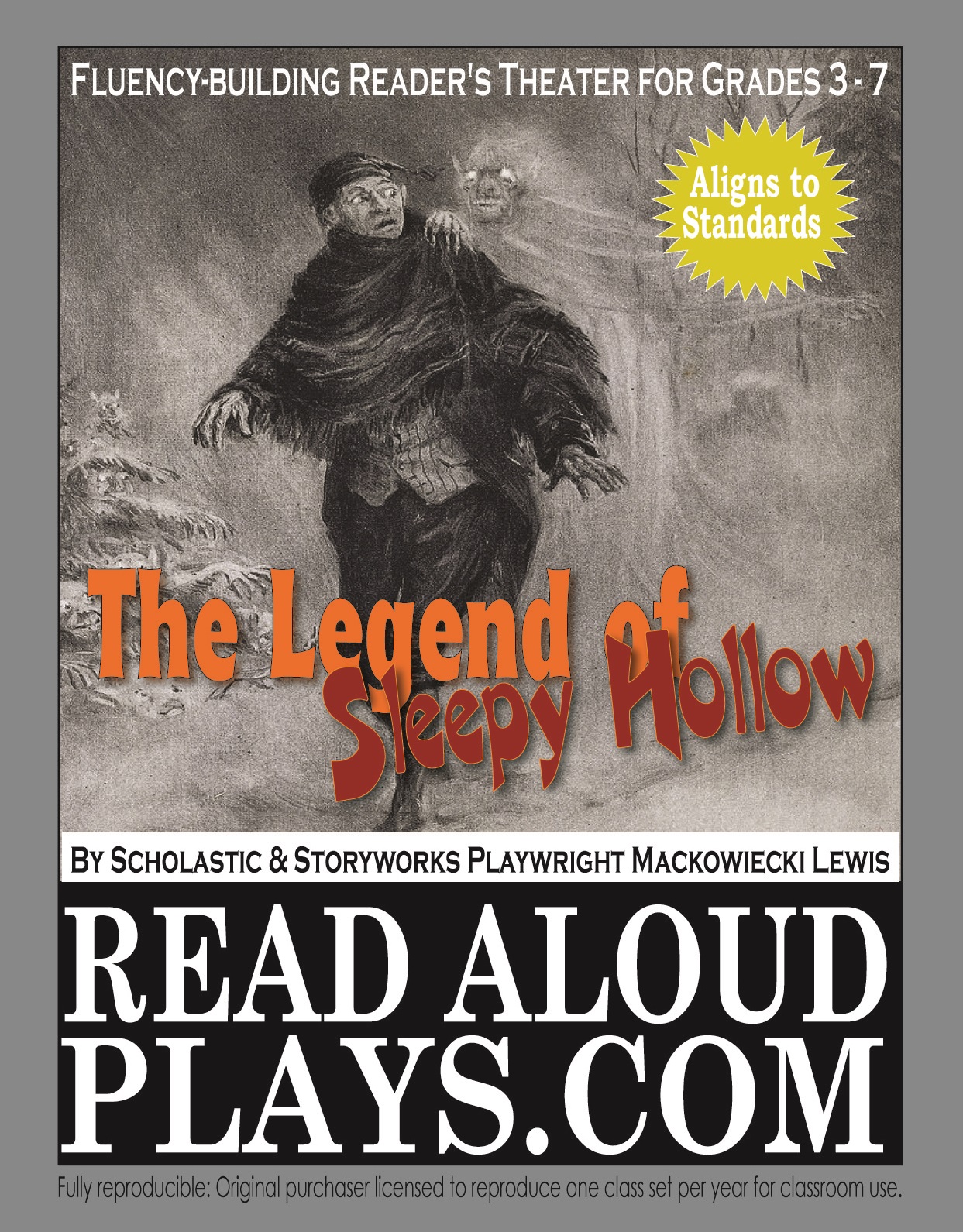
Time to Unleash Your Ghouls & Goblins

Back a hundred years ago, the idea of ghoulishness was captured in short stories rather than comic books. Writers like Poe, Shelley, and Stevenson creeped out their audiences with dark tales of superstition, mystery, and insanity—and the Gothic themes they created have been permeating literature, television, and cinema ever since. Case in point, for the last couple of years I’ve been not-quite-binge watching episodes of Dark Shadows, the Gothic TV show about Barnabas Collins—arguably the world’s second-most famous vampire. (Step aside, Edward.) The show’s witches, werewolves, and headless dudes had me mesmerized when it originally aired back in the 1960’s. Now, viewing the rather campy soap through adult eyes, I’m recognizing that all its creepiness came from classic short stories like The Cask of Amontillado, Frankenstein, and the Headless Horseman. They’re all in there! Go figure!

Your students know these themes, too. They’ve seen them on the Simpsons and Family Guy, in Goosebumps and Marvel Comics. But do they know from whence they come?  Though the archaic language and complex structures of these classic tales present barriers for middle grade readers, you can make them more accessible by pairing them with reader’s theater. And what better time to do it than Halloween?

So what if your students are mesmerized by Venom and Doctor Octopus! There are plenty of mangled monsters and the criminally insane in W.W. Jacob’s classic, The Monkey’s Paw, Poe’s The Tell-Tale Heart, and Hawthorne’s The Birthmark. They’ll also find that familiar ol’ headless horseman in Sleepy Hollow, and a hapless ghost in Twain’s A Ghost Story. No, your kids won’t find them Pennywise-creepy or Slenderman-scary, but chemical concoctions, mad scientists, and sinister psychopaths make them very nearly as engaging.    

All these plays are available on my TeachersPayTeachers storefront. They’re critically-acclaimed. They’re cheap. And they each come with a comprehension exercise. Suitable for reader’s theater, podcast radio drama, or full stage production, they’re perfect for fifth graders and up— but get started early to have them well-rehearsed by Halloween.

Thank you “Back at Work,” Rebecca Schwartz., Les Cain, Misha Carlstedt, Carolyn Finch,  Jocelyne Matos, Bobbie Kukal, Antonio Costa, Lori Ivy, and Lynn Silvey for your lovely recent reviews of my products.

Happy directing!

There’s Still Time for Some Halloween Monstrosities!

Cyclops Scope cover Scope Monkey's Paw cover The Birthmark scope cover page

It’s not too late to stage a Halloween drama fest. Here are half-a-dozen plays that will allow your students to dress in costume while still doing something academically valid. And if Thursday’s festivities are too packed or to near, there’s nothing wrong with staging these monstrosities on that awkward, sleepy, problematic day-after.

Click here for Halloween Madness!

Penelope coverString coverNathaniel Hawthorne’s short stoy classic, The Birth-mark, tells the story of a mad scientist who, in his quest to make his already beautiful bride “perfect,” kills her instead. The Monkey’s Paw is W.W. Jacobs’ classic Gothic tale about getting three wishes. The disturbing result will stay with your students long after Halloween has passed. The well-known Legend of Sleepy Hollow is available in my book, Read Aloud Plays: Classic Short Stories (you can purchase and download it instantly at Scholastic Teacher Express). Pair it with YouTube segments from the original Disney flick. My newly re-released version of Poe’s The Tell-Tale Heart can be paired with my modernized version, Penelope Ann Poe’s Amazing Cell Phone. (At least one of my reader’s has commented that it’s “too strange,” which I think makes for great Halloween fun.) Finally, A Piece of String has a ghostly conclusion and Cyclops has a ferocious monster. All of these plays were originally published in Scholastic classroom magazines such as Scope and Storyworks from which some of the above coveres originate), so you know they’re up to snuff, and they all come with reproduction and performance rights.

Ready to give it a try but unsure how to start? Download my free guide to teaching with plays. It’ll give you tips and ideas on how to use plays to make your language arts block the best section of the day. But get to it right away…those ghouls and goblins are already knocking at your door.

Happy Halloween and happy directing!

Free Reader’s Theater Teaching Tips

My class of fifth graders recently staged a nifty trio of plays. Eric paced about the dais as the insanely villainous narrator in The Tell-Tale Heart, Jacqueline put on her best 1930’s gangster dialect, performing the roll of safe-cracking Jimmy Valentine in A Retrieved Reformation, and Emilee engaged us with a delightful French accent in The Necklace. Though staging these plays can be hard work for the teacher, the rewards are gargantuan. A few carefully-selected props—a cardboard safe for the gangster play, for example—help turn the plays into memorable performances, but over the twenty-plus years of doing this stuff, I’ve come to the conclusion that for young actors, there are five areas of greatest importance.

Projection: I’m not a believer in microphones. Instead, I want students to “fling” their voice into the audience, to “almost yell” their lines—and by way of example, I admit to myself doing a lot of shouting to help get them there.

Attention: Students often get lost in the performance, becoming spectators instead of performers. My best performers pay attention to the script so they come in on cue. We repeat whole scenes over and over again until performers recognize their cues without thinking.

Characterization: Memorable performances come from actors who use dialect, accents, and inflection to put personality into their parts. Jacky’s gangster dialect, Emiliee’s French accent—they brought their plays to life!

Enunciation: I’m painfully aware of my own tendency to mumble—especially when in a rush—and I bet you’ll agree your many of your students have the same issue. Instead, we want our kids to slow down and speak crisply. This flies in the face of so-called “fluency standards” in which success is measured by words per minute, so you might have to do some “unteaching” to get your kids to enunciate properly on stage.

Direction: My kiddos think it’s funny when I say, “No one wants to see your rear end!” But said often enough, it does the trick, getting kids facing the audience, a critical element when acting.

To help teachers turn kids into good actors and even better readers, I’ve put together a little poster called “5 Stage Acting Hacks for Kids.” It’s available for free on my TeachersPayTeachers site. If you like mnemonic devices, it uses the “PACED” acronym to help students remember the five elements “of a well-paced play.” You can print it as an 8 ½ by 11 handout in color or a low-ink versions, or you can enlarge version #3 by 154% to create an 11×17 mini-poster.

Happy directing!

Eerie Reader’s Theater for Halloween

Harry_Clarke_The_Tell-Tale_HeartFairies waving candied wands… Goblins drooling chocolate malt… Halloween has such a bizarre place in our classrooms. In my school it’s been informally “banned,” though the kinders still get to parade through the school in their costumes, and the rest of the student body gets to have an afternoon “party” that presumably has nothing to do with ghouls and ghosts. Personally, I like “Monte Carlo Day,” a party in which kids set-up, run, and risk candy tokens at a variety of “probability games” such as Roulette, 21, and the Shell Game. The kids still get their candy fix, but at least there’s a bit of math involved.

An even better approach to Halloween is to replace your parades and parties with a collection of play performances. Kids still get to dress up, you can serve treats at the performance, and it’s not only academically valid, but a fine way to satisfy standards. A trio of plays takes a few weeks to prepare and an afternoon to perform. You can also invite other classes to attend, thereby helping your colleagues with their Halloween alternatives.

I have a number of Read Aloud Play titles that are perfect for Halloween. The Birth-mark, which is a classic short-story by Nathaniel Hawthorne, tells the story of a mad scientist who, in his quest to make his already beautiful bride “perfect,” kills her instead. The Monkey’s Paw is W.W. Jacobs’ classic Gothic tale about getting three wishes. The disturbing result will stay with your students long after Halloween has passed. The well-known Legend of Sleepy Hollow is available in my book, Read Aloud Plays: Classic Short Stories (you can purchase and download it instantly at Scholastic Teacher Express). Pair it with YouTubeThe Birthmark scope cover page segments from the original Disney flick. You’ll also find Poe’s The Tell-Tale Heart in the same book, which can be paired with my modernized version, Penelope Ann Poe’s Amazing Cell Phone. (At least one of my reader’s has commented that it’s “too strange,” which I think makes it a lot of fun for Halloween.) Finally, A Piece of String has a ghostly conclusion and Cyclops has a ferocious monster. All of these plays were originally published in Scholastic classroom magazines such as Scope and Storyworks, so you know they’re up to snuff, and they all come with reproduction and performance rights.

Ready to give it a try but unsure how to start? Download my free guide to teaching with plays. It’ll give you tips and ideas on how to use plays to make your language arts block the best section of the day. But get to it right away…those ghouls and goblins are already knocking at your door.

Happy Halloween and happy directing!

You Fancy Me Mad?

Harry_Clarke_The_Tell-Tale_HeartFairies waving candied wands… Goblins drooling chocolate malt… Halloween has such a bizarre place in our classrooms. In my school it’s been informally “banned,” though the kinders still get to parade through the school in their costumes, and the rest of the student body gets to have an afternoon “party” that presumably has nothing to do with ghouls and ghosts. Personally, I like “Monte Carlo Day,” a party in which kids set-up, run, and risk candy tokens at a variety of “probability games” such as Roulette, 21, and the Shell Game. The kids still get their candy fix, but at least there’s a bit of math involved.

An even better approach to Halloween is to replace your parades and parties with a collection of play performances. Kids still get to dress up, you can serve treats at the performance, and it’s not only academically valid, but a fine way to satisfy standards. A trio of plays takes a few weeks to prepare and an afternoon to perform. You can also invite other classes to attend, thereby helping your colleagues with their Halloween alternatives. Though Halloween lands on a Saturday this year, a set of plays will make Friday the 30th a huge hit for all involved!

I have a number of Read Aloud Play titles that are perfect for Halloween. The Birth-mark, which is a classic short-story by Nathaniel Hawthorne, tells the story of a mad scientist who, in his quest to make his already beautiful bride “perfect,” kills her instead. The Monkey’s Paw is W.W. Jacobs’ classic Gothic tale about getting three wishes. The disturbing result will stay with your students long after Halloween has passed. The well-known Legend of Sleepy Hollow is available in my book, Read Aloud Plays: Classic Short Stories (you can purchase and download it instantly at Scholastic Teacher Express). Pair it with YouTubeThe Birthmark scope cover page segments from the original Disney flick. You’ll also find Poe’s The Tell-Tale Heart in the same book, which can be paired with my modernized version, Penelope Ann Poe’s Amazing Cell Phone. (At least one of my reader’s has commented that it’s “too strange,” which I think makes it a lot of fun for Halloween.) Finally, A Piece of String has a ghostly conclusion and Cyclops has a ferocious monster. All of these plays were originally published in Scholastic classroom magazines such as Scope and Storyworks, so you know they’re up to snuff, and they all come with reproduction and performance rights.

Ready to give it a try but unsure how to start? Download my free guide to teaching with plays. It’ll give you tips and ideas on how to use plays to make your language arts block the best section of the day. But get to it right away…those ghouls and goblins are already knocking at your door.

Happy Halloween and happy directing!