
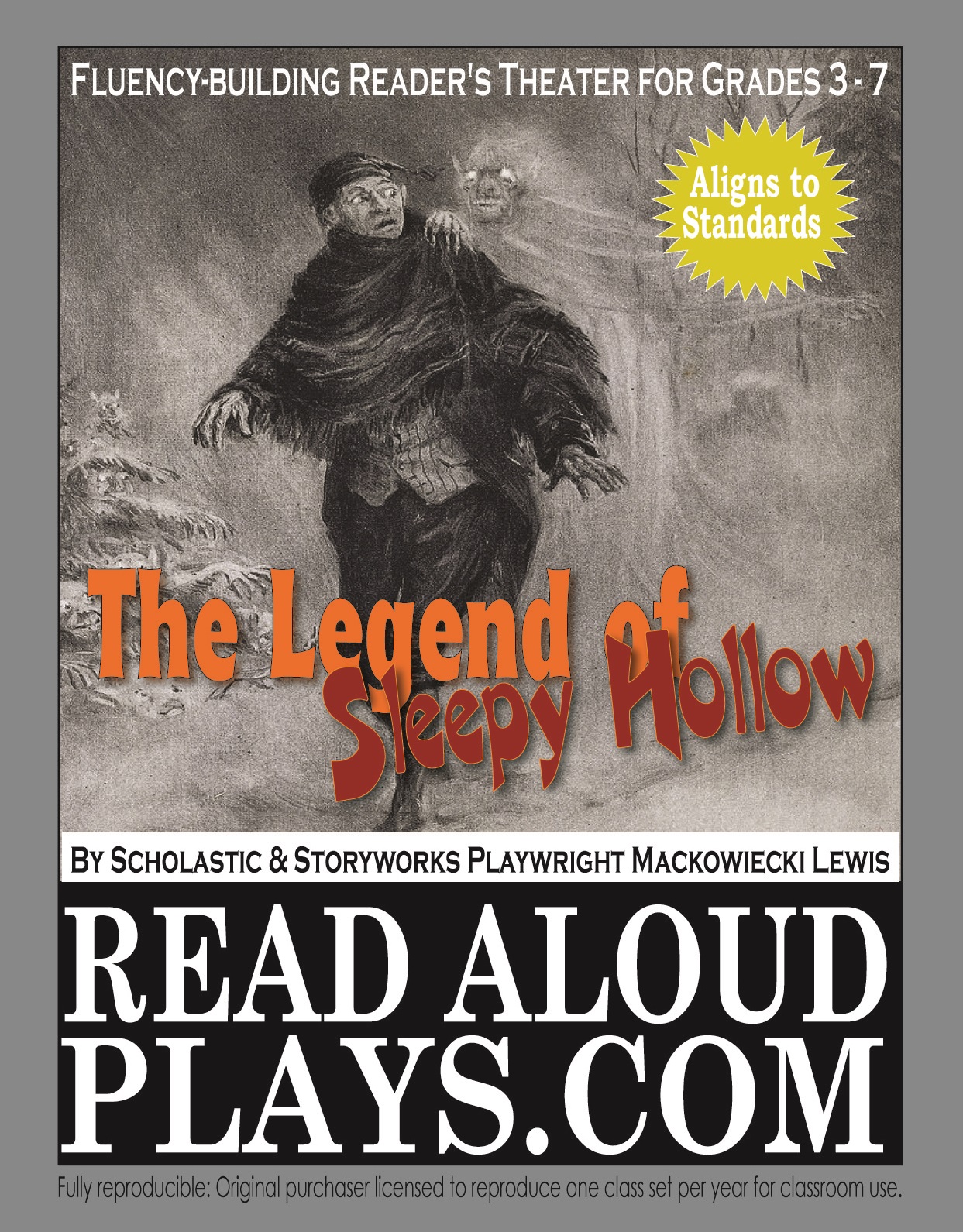
Time to Unleash Your Ghouls & Goblins

Back a hundred years ago, the idea of ghoulishness was captured in short stories rather than comic books. Writers like Poe, Shelley, and Stevenson creeped out their audiences with dark tales of superstition, mystery, and insanity—and the Gothic themes they created have been permeating literature, television, and cinema ever since. Case in point, for the last couple of years I’ve been not-quite-binge watching episodes of Dark Shadows, the Gothic TV show about Barnabas Collins—arguably the world’s second-most famous vampire. (Step aside, Edward.) The show’s witches, werewolves, and headless dudes had me mesmerized when it originally aired back in the 1960’s. Now, viewing the rather campy soap through adult eyes, I’m recognizing that all its creepiness came from classic short stories like The Cask of Amontillado, Frankenstein, and the Headless Horseman. They’re all in there! Go figure!

Your students know these themes, too. They’ve seen them on the Simpsons and Family Guy, in Goosebumps and Marvel Comics. But do they know from whence they come?  Though the archaic language and complex structures of these classic tales present barriers for middle grade readers, you can make them more accessible by pairing them with reader’s theater. And what better time to do it than Halloween?

So what if your students are mesmerized by Venom and Doctor Octopus! There are plenty of mangled monsters and the criminally insane in W.W. Jacob’s classic, The Monkey’s Paw, Poe’s The Tell-Tale Heart, and Hawthorne’s The Birthmark. They’ll also find that familiar ol’ headless horseman in Sleepy Hollow, and a hapless ghost in Twain’s A Ghost Story. No, your kids won’t find them Pennywise-creepy or Slenderman-scary, but chemical concoctions, mad scientists, and sinister psychopaths make them very nearly as engaging.    

All these plays are available on my TeachersPayTeachers storefront. They’re critically-acclaimed. They’re cheap. And they each come with a comprehension exercise. Suitable for reader’s theater, podcast radio drama, or full stage production, they’re perfect for fifth graders and up— but get started early to have them well-rehearsed by Halloween.

Thank you “Back at Work,” Rebecca Schwartz., Les Cain, Misha Carlstedt, Carolyn Finch,  Jocelyne Matos, Bobbie Kukal, Antonio Costa, Lori Ivy, and Lynn Silvey for your lovely recent reviews of my products.

Happy directing!
Plays: A Series of Good Times

My colleague popped in my room the other day to share his experience using my Sleepy Hollow play. His hope is to stage a simple production for Halloween, but after the first reading, he very nearly punted. His class of Covid-delayed readers, he said, could barely get through the script. Still, rather than thinking the script is too difficult, he stuck with it. A second reading was better—especially after he’d reviewed a few key vocabulary words.  Then, after sharing segments from the 1949 Sleepy Hollow Disney cartoon, Ichabod and Mr. Toad, the class bought-in and were soon fighting over who’d get to be Knickerbocker, Brom Bones, and Gunpowder. Now they’re practicing independently, their enthusiasm lending itself to improved fluency.

I share this because this is the way read aloud plays work. The magic comes when scripts are read multiple times. Yes, they’ll slog through the first reading, but when they read it repetitively, their fluency improves (dare I say) dramatically. I’d go so far as to say we ought to be having our kids read everything twice: every play, every article, every chapter of every book.  As Narnia author C.S. Lewis once said, “If you haven’t read a book at least twice, you haven’t read it.” The thing about a play is that kids are willing to read it over and over again.

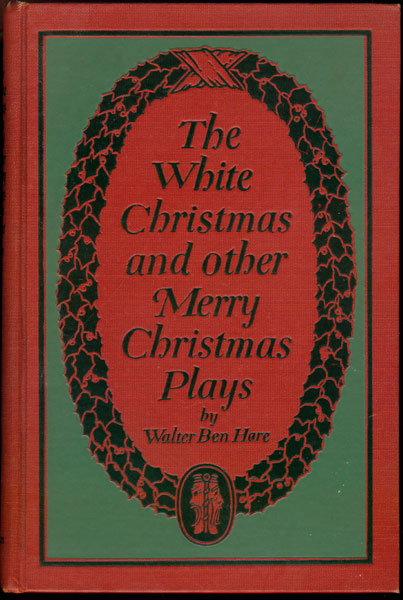
In researching prospective new plays to share this Christmas, I came across the work of Walter Ben Hare. Back in 1917 he wrote a book called The White Christmas and Other Merry Christmas Plays. His work is too dated to re-use, but the notes he included in the prologue are charming and spot-on.

“The director’s aim should be to establish a happy co-operation with the players that will make the whole production, rehearsals, dress rehearsals and final performance, a series of good times crowned by a happy, if not perfect, production,” says Hare. “The director should always strive to be cheerful and happy, ever ready to give advice and ever ready to ask for advice, even from the youngest players. Take them into your confidence. Discuss color schemes, costuming, property making, lighting and scenic effects with your actors.”

I like that! Producing a play should be fun. It’s not a time to be handing out letter grades, nor a time to channel your inner Kubrick. In fact, it doesn’t really matter if the play turns out to be a “perfect production,” as Ben Hare would have you aim. A “happy” performance is the greater goal!  

That doesn’t mean it’ll be easy. Your students will stumble. They’ll stutter. They’ll leave their scripts at home. But some tenacity and determination like that of my colleague will be worth it in the end. As Hare concludes, “The pleasure of the work and the pride in a production well done, will amply repay an ungrudging lavishment of time and labor.”

For a pleasurable production this Halloween, Veterans’ Day, or Christmas, start with a visit to my storefront at TpT or Etsy.. Most were originally published in Scholastic’s Storyworks magazine, so you know they’re of the highest quality.

Happy directing!