Grow Some Neurons!

Many kids begin school already knowing how to read. They haven’t had formal lessons. Their parents haven’t been trained in the latest methodology. They haven’t used a single worksheet or text book. Yet here they are reading. Why?

What Does Brain Research Show About Fluency?

Consider for a moment how your own children learned to read. If they’re like many kids, they had a few favorites in their book bin. I recall my oldest boy latching on to Amos & Boris and a Sesame Street book entitled Don’t Forget the Oatmeal. As a preschooler, he would ask us to read these books over and over again. Soon, he started reading them to us. “He’s not really reading,” we’d tell ourselves, “He’s heard the book so many times, he’s just memorized the words.”

But based on brain research dating back to the days of psychologist Lev Vygtsky (left), some experts believe the difference between reading and memorization is slight. Kids get an emotional charge out of reading proficiently—whether memorized or not. The positive charge actually produces chemicals that form the neural pathways that make reading (and learning) possible. Because our son had consumed Don’t Forget the Oatmeal so frequently, he’d mastered the text, prompting his brain to construct new pathways.

Can Reading Physically Damage a Child’s Brain?

No, reading won’t damage a child’s brain, but could poor instruction? Consider what we often do in the classroom. We take a book, article, or story and ask kids to read it one time. We expect mastery on the first attempt. We ask kids to pass computerized tests, complete worksheets, and discuss content after just a single reading. We’ve assumed that language is language, that if they can decode they should be able to read anything at their grade level. It’s a fallacy and a tragedy. If Vgotsky was right, instead of experiencing a positive emotion that builds pathways, many kids in this situation suffer a negative emotion that causes them to withdraw and resist reading altogether, possibly even causing those neural pathways to shrink. And don’t assume it’s just your low-performing students either. Watch carefully when you ask students to read aloud in class; many of your brightest kids are just as reluctant as your poor readers. It’s not simply that they’re shy; they don’t want to risk experiencing the negative emotions they feel when they stumble over or mispronounce a word. There are, however, a number of ways teachers can prevent those neurons from shrinking, one being the use of “repetitive reading” techniques.

How is Repetition Beneficial?

Asking a young reader to read aloud a piece of text he or she is looking at for the very first time is akin to asking a musician to perform in public a piece of music he or she has never played before. Only the most talented can do it, and even they rarely do. Just as music is a language that requires repetition for mastery, so too does reading. Your students need opportunities to “sight read,” to practice, and then to “perform” the material you want them to master. Plays are the perfect format.

Because we’ve inadvertently trained kids that a book is something to be read only once, few third graders are willing to give James and the Giant Peach a second round. Few second graders will read Stellaluna more than once or twice. Give children a script and schedule a public performance, however, and they’ll be willing to read and reread it twenty to thirty times. Twenty to thirty times! By the time they’re asked to read it in front of the class, even your struggling readers will be able to read with reasonable fluency. Even your “shy” kids will be willing to read out loud.

Read Aloud Plays give you the opportunity to teach repetitive reading without the resistance you get when asking a child to re-read a traditional text. Students acquire mastery, which chemically changes the brain, making them superior readers who are better able to comprehend. If Mr. Vgotsky were alive today, I think he’d approve.

Are You Ready to Grow Those Pathways?

If you’re not already using read aloud plays in your instruction, this is a great time to start. Not only will all that repetitive reading help grow some neurons, but drama can be used to fulfill a significant number of Common Core State Standards. Kick off the school year with a trio of explorer plays such as Fly Me to the Moon, The Fountain of Youth, and Lewis & Clark and Bird Girl. Or consider a set of American Revolution plays such The Secret Soldier, A Bell for the Statehouse, and Fact or Fiction: The Legend of Betsy Ross. Or browse ReadAloudPlays.com to mix and match.

Happy Directing!

Save Five Bucks!

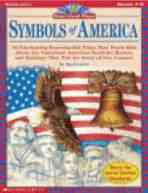
Save $5 on any of my Scholastic titles at teacherexpress.com. Symbols of America and Classic Short Stories gives you a ton of great readers theater that meets the Common Core. Super Sentences & Perfect Paragraphs is a complete daily writing program in a simple, no-bull package. Just click on a cover and then enter TEAPOL5 at checkout.

Click on the cover to preview or purchase!

Click on the cover to preview or purchase.

Click on the cover to preview or purchase.

I Propose a Speed Limit for Young Readers

speed limit for young readersImagine if we tested prospective drivers the way we test our students for reading fluency. Instead of mumbling to the newly-turned sixteen year old to “make a left hand turn at the next intersection,” the DMV test administrator would give a whoop and shout, “Alright Jimmy, if you can get this Taurus doin’ 120, you’ll have your license in no time!”

Driving too fast is dangerous. That’s why we don’t encourage our young drivers to exceed the speed limit. That’s why we have speed limits to begin with. What we want from people is thoughtful driving. Thoughtful driving means being aware of the road signs, pedestrians, and potential hazards. It means being under control. Even NASCAR drivers practice being safe and under control.

Good readers are also thoughtful and under control. They’re aware of hazards, such as awkward sentences, irony, and homographs, which may require them to slow down or re-read. They’re familiar with road signs, such as periods, commas, indentations, and quotation marks, each requiring a change in cadence, a certain inflection, or merely a tap on the brakes. And good readers are aware of those pesky pedestrians—their audience.

Rare is the young reader who can read fast and under-control. Just as there are no ten-year-olds driving at Daytona, we shouldn’t be pushing our fifth graders to read 200 words per minute. In fact, I think the emphasis on speed as the primary measure of reading fluency is probably damaging our young readers. I think we’re actually handicapping our kids.

I was listening to one of my struggling readers the other day. She’s of normal intellect, works hard, and has normal phonic skills (I’ve checked ‘em). But over the past five years, she’s been taught that what’s important is that she attains that magic number—that ever-increasing oral fluency reading rate. It was no surprise listening to her read that she was trying to go so fast that she was stumbling over every third word and having to re-read every other phrase—and this was in a casual reading environment, not the ORF test.

This problem is not limited to struggling readers. How many of your “benchmark-meeting” readers blow through endmarks, substitute minor words, and run-over complex words? How many of your speed readers are thoughtless readers?

Instead of measuring fluency based on words per minute read, we should be emphasizing modest speeds and safe driving habits. Unfortunately, quantifying thoughtful reading is far more complex than generating the data a weekly one minute reading test provides. With no push to get the data miners out of our schools, the question becomes, how do we teach thoughtful reading despite the education industry’s ill-placed emphasis on speed?

One great way is with Read Aloud Plays.

Plays require students to read the way they speak, to use inflection and recognize punctuation. Plays require personality and accuracy. Frequent play reading, particularly if it includes performance, requires thoughtful reading.

To prove my point, try having your students read a play using their best 171 word per minute pace. Make sure the kids have never seen the play before (after all, dry reading is another element of the ORF test). One of my fifteen minute plays will take all of four minutes. The kids may be rolling on the floor with laughter—until you ask them to summarize what they read (many of my plays, such as those from Symbols of America, include comprehension tests).

I encourage you to then spend several sessions reading the same play thoughtfully, culminating with a simple performance in front of the class. Emphasize reading the way the given character would talk. Such plays will be enjoyed and understood by audience and performers alike.

Black History Month is a great time of year to incorporate Read Aloud Plays into your instruction. From slavery and civil war, to Jackie Robinson, to the civil rights struggle, I have numerous scripts ready for your students to hone their thoughtful reading skills. If you’re new to using plays, be sure to download my free guide, Why Use Drama? which provides a host of tips. And if you’re worried about the Common Core, don’t be. Drama is mentioned 47 times in the CCSs.

Turn your wanna-be NASCAR readers into thoughtful readers with Read Aloud Plays.

Happy directing!

Are Your Students Paying Enough Taxes?

cover incredible silverRight after Spring Break is when many teachers implement The Checkbook Project in their classrooms, so this week I’m foregoing my usual spiel about reader’s theater to instead offer some checkbook tips.

If you’re not familiar with The Checkbook Project, it’s a classroom incentive program, a behavioral management system, and a math-heavy financial literacy unit all rolled together. It’s completely free, kids love it, and it’s relatively easy to manage. In my classroom we kick-started our economy three weeks ago by giving each student a $50 “Spring Stimulus.” Already I have kids aspiring to be slumlords. “Mr. Lewis, can I buy that desk at the back of the classroom and charge kids a bunch of money to sit there?” asked one student. Another wanted to know when she can take out a mortgage, and a third was already asking about a business license. Still others are already borrowing money from their friends just to make rent.

You can download The Checkbook Project by following this link. Once you do, the following tips will get you off to a good start.

1. Provide help with tax reports. Though not as complicated as the Form 1040 you and I file each April, completing the Friday Tax Report (a key element to the program) is initially challenging for the students. Be sure to file taxes at the end of the very first first week, allow extra time (45-60 minutes), have extra adults on hand if you can, and use a simple 10% tax rate. Once kids get used to filing, you be able to file every other week, you’ll only have to assist your neediest kids, and you’ll be able to raise the tax rate to more complex figures like 17.86%. Their moans and groans will spark a great discussion about how taxes in the real world pay for things like schools, police protection, and sewers.

2. Don’t be too generous. Keep your rewards low and your penalties high. I hand out a $5 bonus for a quiet class, but a $10 fine for a noisy one. I start the project paying fifty cents per percentage points on tests, gradually raising the rate of pay as the trimester continues. For example, if a student gets a 70% (the minimum) on a vocabulary exam, I pay out $35. I raise the rate when I need to increase motivation, but I also decrease it when students are accumulating too great a stash in their checkbook.

3. Charge for everything. You want to strike a balance between student income and expenses. If the balance in their checkbook is growing too rapidly, you’re paying out too much or not charging for things you should. I charge for pencils, snacks, special seating privileges, having to reprint homework, leaving chairs untucked, messy desks, and more. I have a yoga ball in my room students can rent for a day at a time. When it’s in high demand, I charge thirty bucks or more—and all I have to do is say the words, “Deduct $30 from your checkbook.”

4. Phase-in other elements. In Week One we learn how to keep track of our income and expenses and complete our first tax report. At the end of Week Two the kids begin renting their desks. During Week Three I let them begin selling their own items at auction. I wait until weeks Four and Five to let them mortgage their desks, open businesses, and apply for classroom jobs.

5. Don’t be in a hurry to raise desk rent. “Should I buy or rent?” You’ll want kids to wrestle with this question when you begin offering mortgages, but if rents are already excessive, your entire class will become “desk owners” too quickly. One of the richest “teachable moments” is when half the class—the desk owners—have burned their mortgages, while the other half are subject to ever increasing rents.

6. Collect checkbooks every Friday. Doing so makes the student feel more accountable about keeping accurate entries. The only record keeping I do is to write down each student’s ending balance on Friday’s. In so doing I’m able to spot oddities. I can also quickly skim through questionable accounts. When I find one, I usually make an example of him or her with a full audit (and some hefty tax penalties).

For more on The Checkbook Project, visit MackLewis.com and click on The Checkbook Project tab. You’ll find more tips and all the forms you need to make the project a hit with your parents, students, and admins. And in case you came here today looking for information on great Read Aloud Plays, please take a few minutes to explore my site, ReadAloudPlays.com and my storefront at TeachersPayTeachers. Happy directing!