
Exceptional reader’s theater just a click away! Click on any title to go directly to our storefront on TeachersPayTeachers where you can preview and purchase. The plays on this page are some of our very best!
Escape from the Blacking House

Escape from the Blacking House depicts the childhood of Charles Dickens. Based on thorough research, it reveals how the perilous trials of his youth—the poor house, child labor, and abandonment—inspired many of the novels for which he became famous. In fact, the play borrows from Dickens’ actual works such as The Pickwick Papers, Sketches by Boz, and Oliver Twist to create such scenes as “the pawnshop” and “the blacking house.” The play includes parts for 9 to 13 actors and numerous non-speaking extras . It is suitable for reader’s theater, podcast, radio drama, or full stage production. Because of the heavy reliance on dialect and language, hallmarks of a Dickens’ text, this is a challenging play. A strong fourth grade group might be able to handle it, but it’s aimed at 5th through 8th. Pair it with any of the other Dickens plays on my site.
The Pied Piper of Hamelin
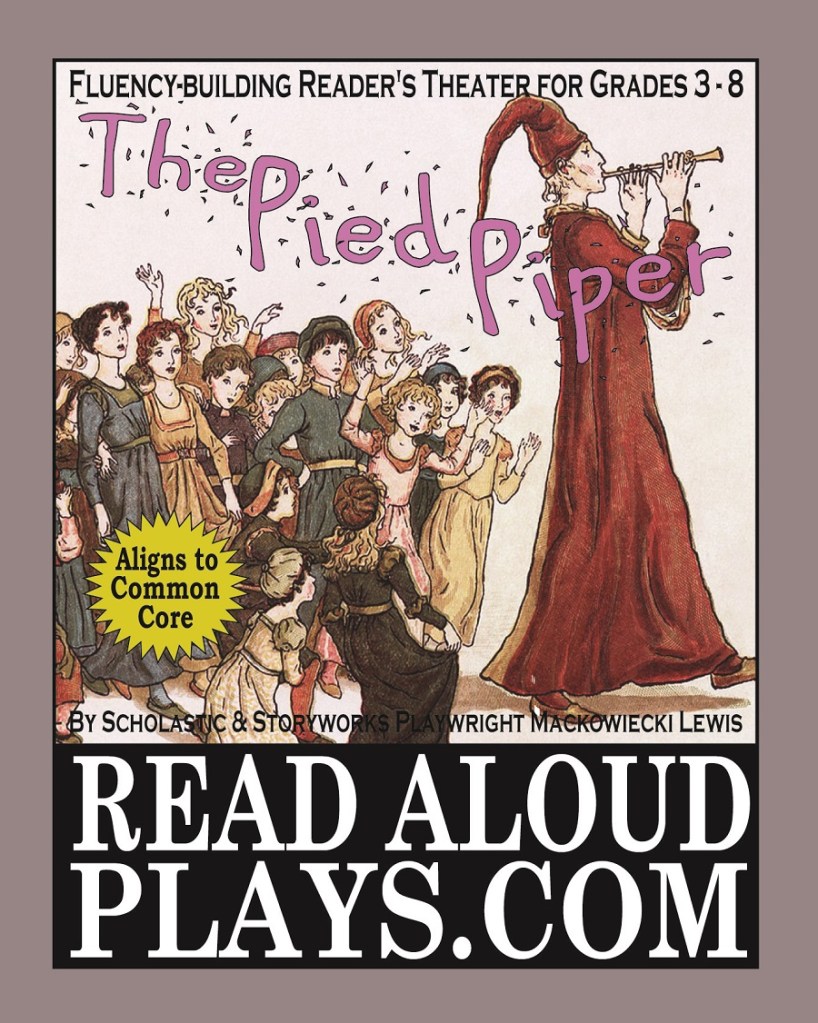
This slightly twisted version of the traditional pied piper is based on the 13th-century European folktale from whence we get the idiom “You have to pay the piper.” The play is speckled with bits of absurdities such as giant rats (full-sized kids in rat-like costumes) that eat Cheetos and drink from coffee mugs, not to mention a 13th-century mayor with an intercom on his desk. Despite its strong main idea and accurate depiction of the original folktale, your kids will most enjoy the silliness of the script. There are enough parts for an entire class, but parts can be combined to enact the play with as few as ten kids. Ideal for reader’s theater, podcast, or stage performance, the play is most appropriate for grades 4 through 8 but could be handled by strong readers in younger grades or presented by high school students to younger audiences. (Click here to see my 5th graders enacting this fun script.)
Nature Talks Back

Four coordinated skits designed to give younger students insight into ecology and conservation. The main concepts are that trees communicate, that some perceived pests are considered beneficial insects, and that honeybees are super-important pollinators. Each “act” has around 10 characters, which can remain consistent throughout the play or be recast for each skit. Altogether there are fourteen unique parts. The play is aimed specifically at kids in 2nd and 3rd grade, but it’s also suitable for grade 4 and up for reader’s theater, podcast, or stage performance.
Winnie-the-Pooh
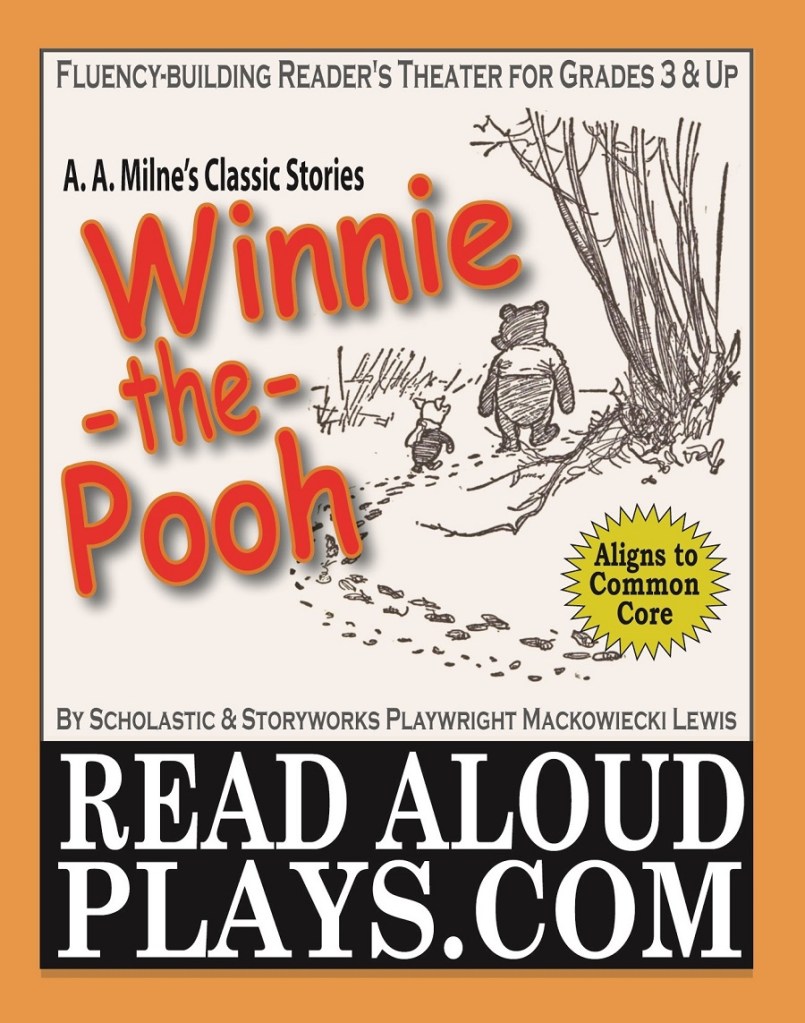
Who doesn’t love a Winnie-the-Pooh story? Here are the best of A.A. Milne’s 1926 collection including Winnie-the-Pooh and the Honey Tree, Pooh Tries Catching a Woozle, Piglet Meets a Heffalump, and two others. They’re well-suited to reader’s theater or full stage production in third grade and up. (A strong second grade could probably handle them too.) Consider splitting your elementary-aged class into five groups and have each group present one of the plays. With older students, consider staging a presentation for younger students. Collectively there are about 30 parts, while each individual play has 5 or 6 characters plus extras such as bees and “rabbit’s relatives.”
King Edward & the Siege of Calais
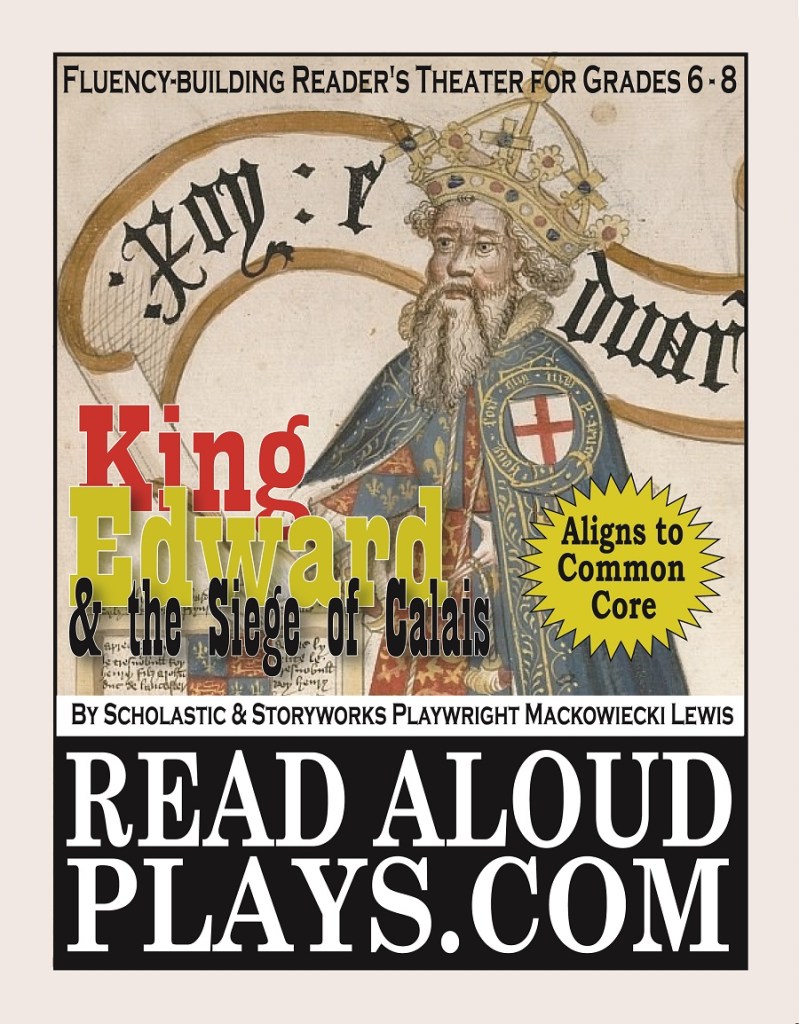
King Edward and the Siege of Calais—During the 100 Years War (1337–1453), King Edward III of England laid siege to the French city of Calais. After almost a year, starvation led the Calesians to bargain terms of surrender. The King agreed to lift the siege, but only if six of the city’s most prominent citizens gave themselves up to be executed. Six “burghers” complied—only to be saved when the King’s wife, Queen Philippa, intervened. It’s a stirring tale of woe, self-sacrifice, and redemption, and an exciting portrayal of medieval times. As written, the play has parts for 19 students and innumerable non-speaking extras, but it can be presented with as few as 12. Due to its content, it’s aimed at sixth grade and up.
Goldilocks and the Three Bears

Imagine Goldi as a television home renovation expert! With the help of her three little pig contractors, she dares to turn the bears’ dreary, worn out space into their “forever home.” If only the bears were in on it! Kids love this fun spoof of all those HGTV home renovation shows, especially if you let them freelance a bit by interjecting their favorite home-decor clichés. Looking for a more traditional version? That’s included too! Two plays and an original text in one! Parts for 11 students in the spoof and 6 more in the traditional version. Consider enacting them together, or use the traditional version with youngers and the spoof with olders.
Barbed Wire
How much is your reputation worth? Barbed Wire is a revision of Guy de Maupassant’s classic cautionary tale, A Piece of String. My editors at Storyworks once termed my String play the best thing I’d ever written (to that point in my career, I hope). String is still available here in the catalog–and still excellent–but there’s little doubt it’s more appropriate for middle school and up. By changing the setting to the Wild West, making the characters animals, and giving those characters a western dialect, I’ve aged it down while “funning it up.” Your students will learn some important lessons as they watch Festus Grunge, a worn out ol’ bull in overalls, learn the value of a good reputation. A great play for full stage production! Speaking parts for 16 with room for innumerable extras.
Giants in the Land

At a time in history when the study of science was in its infancy, the medical profession was largely unregulated, and reporting was limited to local newspapers, people were susceptible to falling for hoaxes such as the Cardiff Giant. When in 1869 a farmer “discovered” a ten foot tall “petrified man” in his field, it became a sensation. It earned its “owner” tens of thousands of dollars, a huge sum in that era. The famous showman P.T. Barnum successfully copied it, and Mark Twain wrote a short story about it, but by the time the facts finally caught up with it, the perpetrators had already cashed out and fled. Includes enough parts for the whole class—24 as written, with room for additional non-speaking “onlookers.” Suitable for reader’s theater or full stage production, the play takes about 20 minutes to enact. You can further extend the play by six parts and 10 minutes by pairing it with Twain’s A Ghost Story.
Hans in Luck

Based on the classic Brothers Grimm tale of the same name. After having worked seven years as an indentured servant, Hans is given a lump of silver “as big as his head,” which he takes and then travels home. He soon tires of lugging it around, so he trades it for a horse, which he eventually trades for a cow, and then a pig, and so on until he has nothing left. All the while, Hans sees himself as incredibly fortunate, which perhaps he is. From his simplistic perspective, arriving home to find his grandmother still living proves he’s the luckiest man alive! Your students will enjoy uncovering the story’s numerous morals about trust, innocence, luck, foolishness, and money. If you’d like to have your students create a video book in which their voices are paired with the awesome old school illustrations from 1906, you’ll find the images here. You can hear 5th graders performing it here.
The Mouse, the Bird, and the Sausage
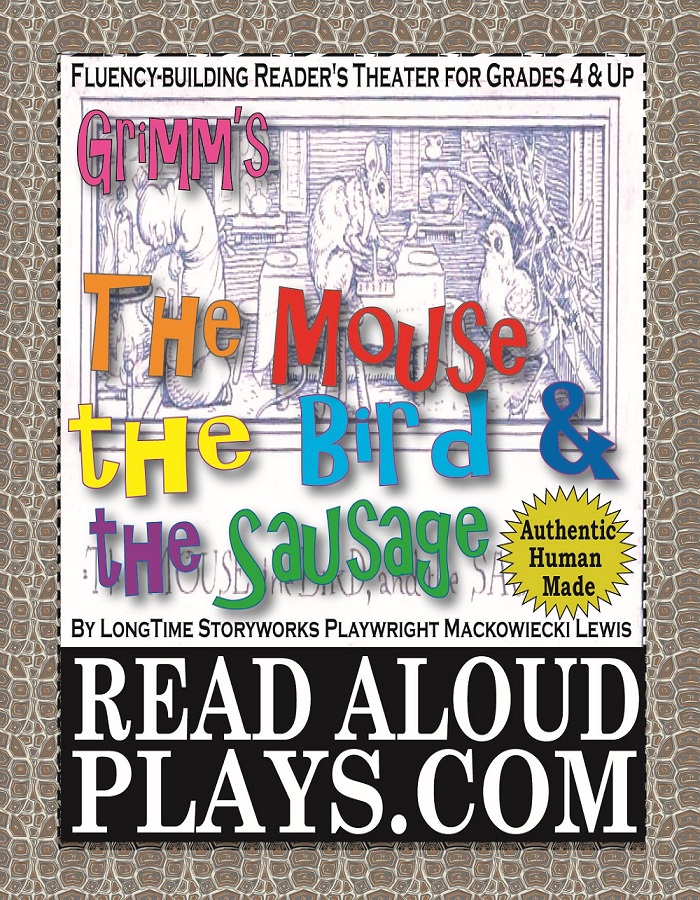
In typical Brothers Grimm fashion, this cringe-worthy story about contentment, cooperation, and friendship will leave your student actors in stitches. In the original story, the three “roommates” ruin their contentment when they’re cajoled into altering their routine. The result is that Sausage gets eaten, Mouse gets boiled, and Bird drowns. Our version is no less cringey, but we’ve managed to save all their lives while having a ton of fun doing it! All five animal roles demand students willing to sell out on stage and steal the show: Sausage’s Italian bravado, Mouse’s death scene, Bird’s over-baked remorse, Crow’s creepiness, and Dog’s indifference. This one’s a blast! Find it at TpT!
Toad’s Wild Ride
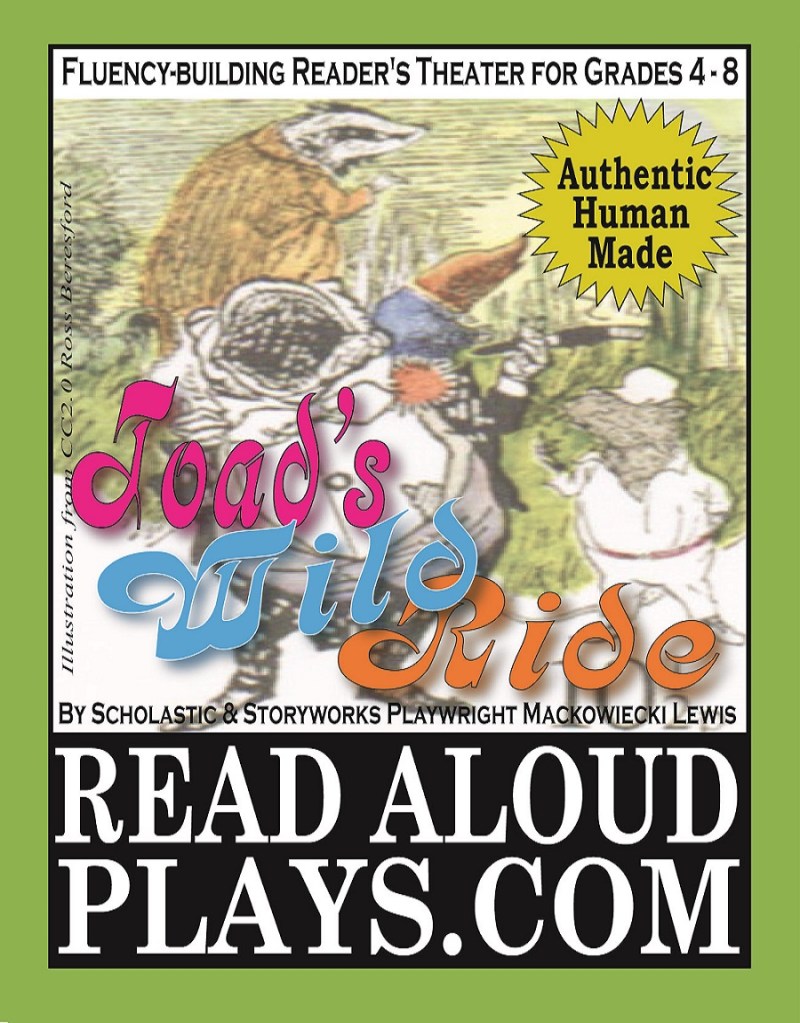
We’ve narrowed Wind in the WIllows down to its best, most humorous elements. It shows how Mr. Toad becomes infatuated with motor cars, how his friends attempt to “cure” him, and how he goes on a maniacal drive through the village. Yes, Scene 7 resembles the Disneyland ride! The whole play is full of pratfalls, subtle humor, and grand entrances, making it as kid-friendly as it gets. Enjoy Mole’s innocence, Badger’s stodginess, and Otter’s “charisma, but don’t forget Ratty and Toad! The play includes full stage directions, making it ideal for a full production. You’ll find Toad on TeachersPayTeachers!
 ReadAloudPlays.com